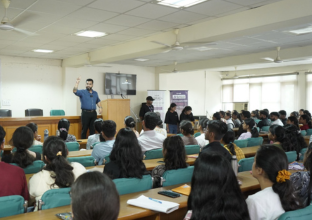
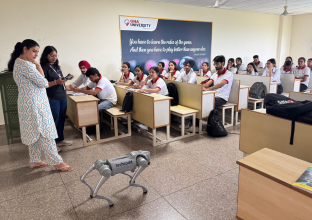
TechCadd offers cutting-edge AI coding classes in Mohali, designed to transform you into an industry-ready artificial intelligence and machine learning professional. Our program combines foundational programming with advanced AI concepts, ensuring you build real-world applications from day one. Join us to master Python, neural networks, and data science with personalized mentorship.

Comprehensive AI Coding Course in Mohali: Your Pathway to Becoming an Artificial Intelligence Expert
Artificial Intelligence is no longer a futuristic concept—it is the driving force behind today's most innovative technologies. From self-driving cars to personalized recommendations, from medical diagnosis to financial forecasting, AI is reshaping every industry. The global AI market is projected to reach $1.8 trillion by 2030, creating unprecedented demand for skilled professionals who can build, deploy, and manage AI systems. At TechCadd in Mohali, we offer the most comprehensive AI coding classes designed to make you an expert in this transformative field.
Our AI coding program goes beyond teaching you to use AI tools—it empowers you to build them. You'll gain deep understanding of algorithms, data structures, machine learning models, and neural networks. You'll work on projects that solve real problems, from building chatbots to developing predictive models. With personalized coaching from industry experts, you'll develop the skills that top tech companies are actively seeking. Whether you're a student looking to launch a career in AI, a professional seeking to upskill, or an entrepreneur wanting to leverage AI for your business, our program provides the knowledge and practical experience you need.
The Mohali region, part of the Chandigarh tricity, has emerged as a major IT and startup hub in North India. With numerous tech parks, incubators, and global companies establishing presence here, the demand for AI talent is skyrocketing. By choosing TechCadd for your AI coding classes in Mohali, you position yourself at the heart of this growing ecosystem. Our training is designed to make you job-ready from day one, with a curriculum that mirrors what leading tech companies expect from AI professionals.
Module 1: Python Programming Fundamentals – The Language of AI
Python has become the dominant programming language for artificial intelligence and machine learning, thanks to its simplicity, versatility, and powerful libraries. Our AI coding classes begin with a comprehensive immersion into Python programming, ensuring you have a rock-solid foundation before moving to advanced AI concepts.
1.1 Python Basics and Advanced Programming Concepts
We start from the ground up, covering variables, data types, control structures, functions, and object-oriented programming. But we don't stop at the basics. You'll dive deep into Python's advanced features including list comprehensions, generators, decorators, context managers, and multithreading. Understanding these advanced concepts is crucial for writing efficient, production-ready AI code.
Your mentor will guide you through practical coding exercises that reinforce each concept. You'll build small projects like data processing scripts, automation tools, and command-line applications that demonstrate your growing proficiency. By the end of this module, you'll be writing clean, efficient Python code with confidence.
1.2 Essential Python Libraries for AI and Data Science
Python's power for AI comes from its rich ecosystem of libraries. You'll gain hands-on experience with the essential libraries that form the backbone of AI development:
NumPy: The fundamental package for numerical computing in Python. You'll learn to work with multidimensional arrays, perform mathematical operations, and manipulate data efficiently. Understanding NumPy is essential for any AI work, as it underpins most other data science libraries.
Pandas: The go-to library for data manipulation and analysis. You'll learn to load, clean, transform, and analyze datasets using DataFrames. Real-world data is messy, and Pandas gives you the tools to make it usable for AI models. You'll work with missing data, merge datasets, and perform complex aggregations.
Matplotlib and Seaborn: Visualization libraries that help you understand data and communicate insights. You'll create various plots—histograms, scatter plots, bar charts, heatmaps—that reveal patterns and relationships in data. Visualizations are crucial for exploratory data analysis and presenting results to stakeholders.
Module 2: Mathematics for Machine Learning – The Theoretical Foundation
AI is built on mathematics. Understanding the mathematical concepts behind algorithms will set you apart from practitioners who only know how to call library functions. Our AI coding classes include a thorough exploration of the mathematics that powers AI.
2.1 Linear Algebra Fundamentals
Linear algebra is the language of machine learning. You'll learn about vectors, matrices, eigenvalues, eigenvectors, and matrix decompositions. These concepts are fundamental to understanding how neural networks work, how dimensionality reduction techniques operate, and how optimization algorithms converge. Your mentor will explain these concepts in intuitive terms, connecting them to practical applications in AI.
2.2 Calculus and Optimization
Machine learning models learn by optimizing mathematical functions. You'll learn about derivatives, gradients, and the chain rule—the foundation of backpropagation in neural networks. Understanding gradient descent, the optimization algorithm that trains most AI models, will help you tune hyperparameters effectively and diagnose training issues.
2.3 Probability and Statistics
AI deals with uncertainty. You'll learn probability distributions, Bayes' theorem, hypothesis testing, and statistical inference. These concepts are essential for understanding model predictions, evaluating performance, and quantifying uncertainty. You'll apply statistical techniques to validate models and ensure they generalize to new data.
Module 3: Machine Learning – Building Predictive Models
Machine learning is the core of AI. This module transforms you from a programmer into a data scientist who can build models that learn from data.
3.1 Supervised Learning Algorithms
You'll master the algorithms that power most predictive AI systems. Starting with linear regression and logistic regression, you'll understand how models learn relationships between inputs and outputs. You'll then explore more sophisticated algorithms:
Decision Trees and Random Forests: Powerful ensemble methods that handle complex relationships and provide interpretable results. You'll learn how these algorithms work, how to tune them for better performance, and when to use them over other approaches.
Support Vector Machines (SVMs): Algorithms that find optimal boundaries between classes. You'll understand kernel tricks that allow SVMs to handle non-linear classification problems.
Naive Bayes and K-Nearest Neighbors: Simple but effective algorithms for classification tasks. You'll understand their assumptions, strengths, and limitations.
3.2 Unsupervised Learning and Clustering
Not all data comes with labels. You'll learn algorithms that find patterns in unlabeled data:
K-Means Clustering: A method for grouping similar data points. You'll apply it to customer segmentation, image compression, and anomaly detection.
Hierarchical Clustering: A technique that builds a hierarchy of clusters, useful for understanding data structure.
Principal Component Analysis (PCA): A dimensionality reduction technique that simplifies data while preserving important information. You'll use PCA for visualization, noise reduction, and feature engineering.
3.3 Model Evaluation and Selection
Building a model is just the beginning. You'll learn to evaluate model performance using appropriate metrics—accuracy, precision, recall, F1-score, ROC curves—and select the best model for your problem. Cross-validation techniques ensure your models generalize to new data. Hyperparameter tuning using grid search and random search helps you squeeze maximum performance from your algorithms.
Module 4: Deep Learning and Neural Networks – The Cutting Edge of AI
Deep learning has revolutionized AI, enabling breakthroughs in computer vision, natural language processing, and game playing. This module takes you from understanding neural networks to building state-of-the-art deep learning models.
4.1 Artificial Neural Networks (ANNs)
You'll start with the building blocks: artificial neurons, activation functions, and network architectures. You'll understand forward propagation, how information flows through a network, and backpropagation, how networks learn from errors. Using frameworks like TensorFlow and Keras, you'll build your first neural networks and train them on real datasets.
4.2 Convolutional Neural Networks (CNNs) for Computer Vision
CNNs have transformed how machines see. You'll learn about convolutional layers, pooling layers, and how these networks learn hierarchical features from images. You'll build models that can classify images, detect objects, and even generate new images. Projects include building a digit recognizer, an image classifier for medical images, and a real-time object detection system.
4.3 Recurrent Neural Networks (RNNs) and LSTMs for Sequence Data
Many problems involve sequential data: text, time series, audio. You'll learn RNNs and their advanced variants like LSTMs and GRUs that can capture long-range dependencies. You'll build models for sentiment analysis, text generation, and time series forecasting. Understanding attention mechanisms, the foundation of modern language models, prepares you for transformer architectures.
4.4 Transfer Learning and Pre-trained Models
Training large neural networks from scratch requires massive data and computing power. You'll learn transfer learning—taking pre-trained models and fine-tuning them for your specific tasks. You'll work with models like VGG16, ResNet, BERT, and GPT, understanding how to leverage these powerful tools for your projects.
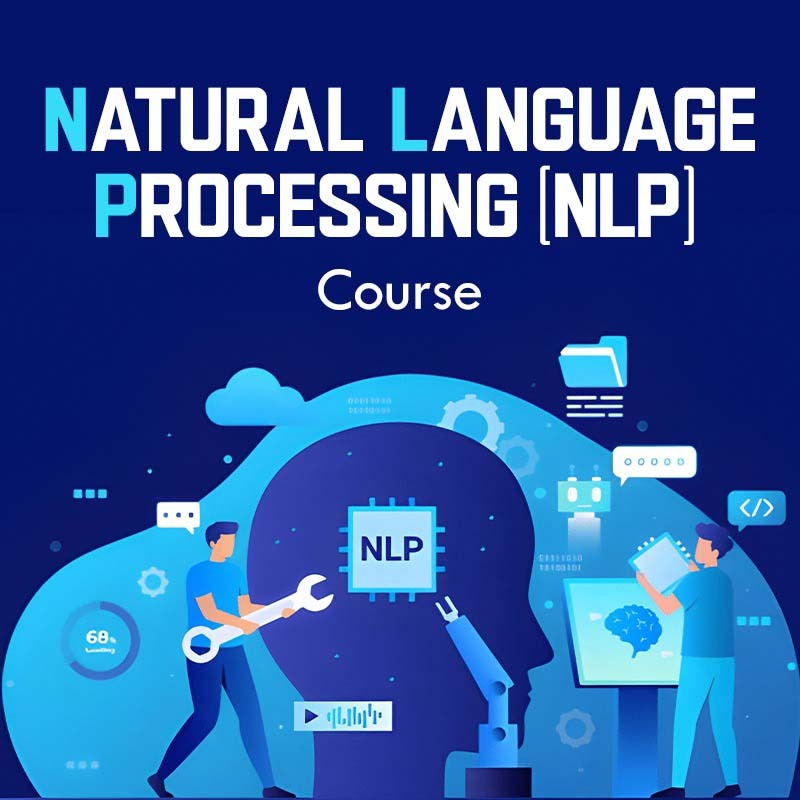
Module 5: Natural Language Processing (NLP) – Teaching Machines to Understand Language
NLP enables machines to understand, interpret, and generate human language. This module gives you the skills to build chatbots, sentiment analyzers, and language translation systems.
5.1 Text Processing and Feature Extraction
You'll learn techniques for processing raw text: tokenization, stemming, lemmatization, part-of-speech tagging, and named entity recognition. You'll convert text into numerical representations using bag-of-words, TF-IDF, and word embeddings like Word2Vec and GloVe.
5.2 Transformer Architecture and Large Language Models
The transformer architecture has revolutionized NLP. You'll understand self-attention mechanisms, positional encodings, and how models like BERT and GPT work under the hood. You'll learn to fine-tune these models for tasks like text classification, question answering, and text generation. Working with libraries like Hugging Face Transformers, you'll build applications that leverage state-of-the-art language models.
Module 6: Data Engineering and MLOps – From Model to Production
Building a model is only part of the story. This module teaches you to deploy, monitor, and maintain AI systems in production environments.
6.1 Data Pipeline Building
Real-world AI requires clean, well-structured data pipelines. You'll learn to extract data from various sources, transform it for analysis, and load it into databases. Using tools like SQL, Apache Spark, and cloud data services, you'll build pipelines that can handle large-scale data.
6.2 Model Deployment
You'll learn to package your models as APIs, deploy them on cloud platforms like AWS, GCP, or Azure, and scale them to handle real-world traffic. Containerization with Docker and orchestration with Kubernetes give you production-grade deployment skills.
6.3 Model Monitoring and Maintenance
Models degrade over time as data changes. You'll learn to monitor model performance, detect drift, and implement retraining strategies. Understanding MLOps best practices ensures your AI systems remain reliable and accurate.
Module 7: Capstone Project – Building Your AI Portfolio
The culmination of your AI coding journey is a substantial capstone project that demonstrates your skills. Working with your mentor, you'll choose a real-world problem, design a solution, implement it, and present your work. Past projects have included:
- A real-time object detection system for security cameras
- A sentiment analysis tool for monitoring brand perception on social media
- A recommendation engine for an e-commerce platform
- A medical image classification system for disease detection
- A chatbot for customer service automation
- A time series forecasting model for sales prediction
This project becomes the centerpiece of your portfolio, demonstrating to employers that you can deliver real AI solutions. You'll receive guidance throughout the process, from problem definition to final presentation, ensuring you produce work that showcases your capabilities.
Conclusion: Your AI Career Starts at TechCadd, Mohali
Artificial intelligence is reshaping our world, and skilled AI professionals are in unprecedented demand. By joining TechCadd's AI coding classes in Mohali, you're not just learning to code—you're positioning yourself at the forefront of technological innovation. Our comprehensive curriculum, experienced mentors, practical projects, and career support ensure you're ready for the opportunities ahead. Whether you dream of working at tech giants like Google, Microsoft, or Amazon, joining innovative startups, or building your own AI-powered venture, TechCadd gives you the foundation you need. Join us and start your journey to becoming an AI expert today.