DRAG
TechCADD

best short term courses in Mohali for students

  • Home
  • Course
  • best short term courses in Mohali for students
best short term courses in Mohali for students

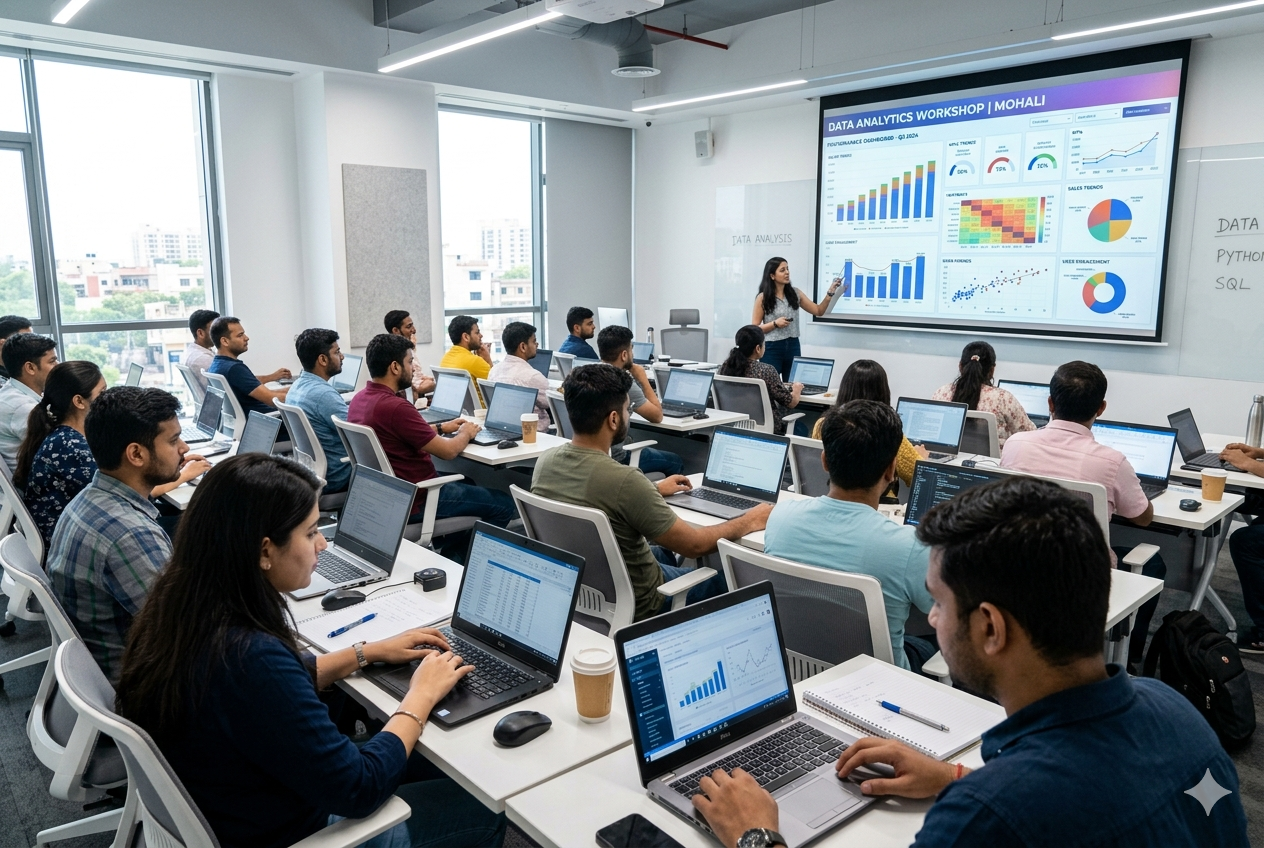
short-term courses in Mohali are ideal for students who want quick, job-ready skills in fields like web development, digital marketing, graphic design, and data analytics. These courses focus on practical training, live projects, and industry-relevant tools. They also offer flexible durations and placement support, helping students start their careers faster.

Best Short-Term Courses in Mohali for Students: A Comprehensive 3000-Word Overview

Introduction: The Rise of Skill-Based Education in Mohali

Mohali, part of the Chandigarh Tricity region, has emerged as a significant education and IT hub in Punjab. The city is home to numerous universities, technical institutes, and training centers that cater to the growing demand for skill-based education. For students—whether pursuing degrees in computer science, engineering, commerce, or humanities—short-term courses have become an essential pathway to enhance employability, gain practical skills, and bridge the gap between academic learning and industry requirements.

The importance of short-term courses cannot be overstated in today's competitive job market. Traditional degree programs often focus heavily on theoretical concepts, leaving graduates underprepared for real-world professional challenges. Short-term certification programs, typically ranging from a few weeks to six months, offer focused, hands-on training in specific domains that employers actively seek .

This comprehensive overview explores the best short-term courses available in Mohali, covering information technology, web development, data science, digital marketing, creative design, and specialized government-certified programs. Each section provides details on course content, duration, key features, and career outcomes to help students make informed decisions about their skill development journey.

Part 1: Why Short-Term Courses Matter for Students

1.1 The Skills Gap Challenge

India produces millions of graduates annually, yet a significant portion face challenges securing employment due to the skills gap. According to industry reports, employers increasingly prioritize practical skills and project experience over academic credentials alone. Short-term courses directly address this gap by providing targeted, industry-aligned training that makes students job-ready .

1.2 Benefits of Short-Term Certification Programs

Time Efficiency: Unlike full-degree programs that require years of commitment, short-term courses typically last between 1 to 6 months, allowing students to acquire new skills without disrupting their academic schedules significantly .

Cost-Effectiveness: Short-term programs are substantially more affordable than full degree programs, making skill development accessible to a broader range of students.

Industry-Relevant Curriculum: Training institutes constantly update their course content based on current industry trends, ensuring students learn technologies and tools actually used in professional environments .

Hands-On Project Experience: The best short-term courses emphasize practical learning through live projects, enabling students to build portfolios that demonstrate their capabilities to potential employers .

Flexible Learning Options: Many institutes in Mohali offer both online and offline classes, weekend batches, and evening sessions to accommodate students with existing college commitments .

Part 2: IT and Web Development Short-Term Courses

2.1 Full Stack Web Development

Full Stack Development remains one of the most in-demand skills in the IT industry. These courses prepare students to handle both front-end and back-end aspects of web application development.

Course Duration: 3 to 6 months

Key Technologies Covered: HTML5, CSS3, JavaScript, React.js, Node.js, Express.js, MongoDB, SQL databases, Git/GitHub, deployment on cloud platforms 

Course Structure:

  • Front-end development with responsive design principles

  • Back-end development with RESTful APIs

  • Database integration and management

  • Version control using Git and GitHub

  • Live project implementation

Best ForB.Tech, BCA, MCA students, and anyone aspiring to become a professional web developer

Career Outcomes: Full Stack Developer, Front-End Developer, Back-End Developer, Web Application Developer

2.2 Python Programming

Python has become the go-to language for automation, data analysis, artificial intelligence, and web development. Short-term Python courses provide a solid foundation in programming concepts while covering practical applications.

Course Duration: 1 to 3 months

Key Topics Covered: Python syntax and fundamentals, object-oriented programming, data structures, file handling, libraries including Pandas, NumPy, and Matplotlib, web frameworks like Flask/Django 

Learning Approach: Students work on automation scripts, data analysis projects, and basic web applications

Best For: Beginners with no prior coding experience, data science aspirants, and automation enthusiasts

Career Outcomes: Python Developer, Automation Engineer, Data Analyst, Software Developer

2.3 Java Programming

Java remains a staple in enterprise software development, Android app development, and backend systems. Short-term Java courses focus on both core concepts and practical application.

Course Duration: 2 to 4 months

Key Topics Covered: Core Java, object-oriented programming, exception handling, collections framework, JDBC for database connectivity, basic GUI development with Swing/JavaFX 

Project Work: Students typically build desktop applications, inventory management systems, or banking software simulations

Best For: Students pursuing B.Tech, BCA, MCA, and those interested in enterprise software development

Career Outcomes: Java Developer, Android Developer, Software Engineer, Backend Developer

2.4 Front-End Development with React

Specialized front-end courses focus on creating responsive, interactive user interfaces using modern JavaScript frameworks.

Course Duration: 2 to 3 months

Key Technologies Covered: HTML5, CSS3, JavaScript ES6+, React.js, state management, component architecture, API integration 

Project Examples: Portfolio websites, e-commerce product galleries, weather applications, social media dashboards

Best For: Students interested in UI/UX development, creative design, and interactive web applications

Career Outcomes: Front-End Developer, React Developer, UI Developer

Part 3: Data Science, AI, and Analytics Courses

3.1 Data Science and Machine Learning

Data science has emerged as one of the most lucrative career paths. Short-term programs in this domain cover the end-to-end data analysis workflow.

Course Duration: 3 to 6 months

Key Topics Covered: Python programming for data science, statistics and probability, data cleaning and preprocessing, machine learning algorithms, model evaluation, data visualization with Power BI and Tableau 

Tools and Libraries: Pandas, NumPy, Scikit-learn, Matplotlib, Seaborn, SQL, Power BI, Tableau

Project Work: Students work on real datasets, build predictive models, and create interactive dashboards

Best For: Students with analytical aptitude, mathematics background, or those interested in AI careers

Career Outcomes: Data Analyst, Data Scientist, Machine Learning Engineer, Business Analyst

3.2 Artificial Intelligence and Deep Learning

Specialized AI courses delve deeper into advanced concepts like neural networks, natural language processing, and computer vision.

Course Duration: 3 to 6 months

Key Topics Covered: Machine learning fundamentals, deep learning architectures, neural networks, natural language processing, computer vision basics, TensorFlow or PyTorch frameworks 

Learning Format: Instructor-led sessions with hands-on coding, real-world AI applications including chatbots and image recognition systems

Best For: Students with programming background interested in cutting-edge AI technologies

Career Outcomes: AI Engineer, Machine Learning Engineer, NLP Specialist, Computer Vision Engineer

3.3 Data Analytics and Visualization

Focused analytics courses prepare students for roles that require interpreting data and communicating insights effectively.

Course Duration: 2 to 4 months

Key Topics Covered: Excel for data analysis, SQL for data extraction, Python for analytics, Power BI and Tableau for visualization, statistical analysis, business intelligence concepts 

Practical Training: Students analyze real business datasets, create executive dashboards, and present findings

Best For: Commerce and business students, IT students interested in analytics, working professionals

Career Outcomes: Data Analyst, Business Intelligence Analyst, Analytics Consultant

Part 4: Digital Marketing and Creative Design Courses

4.1 Digital Marketing

Digital marketing skills are in high demand across industries. Short-term programs cover all major aspects of online marketing.

Course Duration: 2 to 4 months

Key Topics Covered: Search Engine Optimization (SEO), Google Ads and PPC, social media marketing (Facebook, Instagram, LinkedIn), content marketing, email marketing, WhatsApp marketing, Google Analytics, reporting and performance tracking 

Hands-On Experience: Students run live campaigns, create content strategies, and analyze real campaign data

Best For: Marketing students, entrepreneurs, business graduates, and anyone interested in digital careers

Career Outcomes: Digital Marketing Specialist, SEO Analyst, Social Media Manager, PPC Specialist, Marketing Consultant

4.2 Advanced Digital Marketing

For students seeking deeper expertise, advanced courses cover technical SEO, marketing automation, and growth strategies.

Course Duration: 3 to 6 months

Key Topics Covered: Technical SEO and schema markup, advanced paid media strategies, marketing automation funnels, brand positioning, lead generation scaling, performance analytics 

Best For: Students with basic digital marketing knowledge seeking specialized expertise

Career Outcomes: Digital Marketing Manager, Growth Hacker, Performance Marketing Specialist

4.3 UI/UX and Graphic Design

Creative design courses focus on user experience principles and visual communication.

Course Duration: 2 to 4 months

Key Topics Covered: UI/UX design principles, wireframing, prototyping tools, user research methodologies, Adobe Photoshop, Adobe Illustrator, Adobe Lightroom 

Project Work: Students create complete website designs, mobile app interfaces, branding materials, and portfolios

Best For: Design enthusiasts, creative students, those interested in user experience careers

Career Outcomes: UI/UX Designer, Graphic Designer, Visual Designer, Product Designer

4.4 AI Video Editing and Photography

Emerging courses combine creative skills with AI-powered tools for modern content creation.

Course Duration: 2 to 3 months

Key Topics Covered: AI-powered video editing, automated effects, smart transitions, professional post-production, studio lighting, advanced exposure techniques, Adobe Photoshop, Adobe Lightroom Classic 

Best For: Media students, content creators, aspiring filmmakers, photography enthusiasts

Career Outcomes: Video Editor, Photographer, Content Creator, Post-Production Specialist

Part 5: Government and University Certification Programs

5.1 Punjabi University Mohali Centre: AI and Data Science Courses

Punjabi University's Mohali centre, in collaboration with Sabudh Foundation, offers 33 short-term courses focused on emerging technologies. These programs carry the credibility of a recognized university.

Course Offerings: Python programming, data science, machine learning, deep learning, certificate in data analytics, natural language processing 

Course Duration: 1 to 12 weeks (flexible duration options)

Target Audience: Students, working professionals, and businessmen can enroll

Key Features: University-recognized certification, collaboration with industry foundation, curriculum designed for emerging technology skills

Best For: Students seeking university-affiliated credentials in AI and data science

5.2 C-DAC Mohali: Work Based Learning Programme

The Centre for Development of Advanced Computing (C-DAC) Mohali offers a prestigious Work Based Learning Programme (WBLP) sponsored by the government. This is an exceptional opportunity for eligible students.

Duration: 6 months

Stipend: ₹10,000 per month

Domains Offered: Health Informatics, Cyber Security, Artificial Intelligence, eGovernance, Embedded Systems, VLSI 

Eligibility: SC, ST, EWS, and Women candidates; seventh/eighth semester B.Tech students or last 3-year pass-outs of B.Tech/MCA/MSc in Computer Science, IT, Electronics, or related fields 

Unique Features:

  • Mentorship by C-DAC scientists and experts

  • Work on major government projects including eSanjeevani (National Telemedicine Service), SehatOPD (Tri-services Teleconsultation), and Heal in India initiative

  • Hands-on experience with real-world implementations

  • Government certification and stipend support

Best For: Eligible SC/ST/EWS/Women engineering and computer science students seeking premium government-affiliated training

Career Outcomes: Enhanced employability with government project experience, strong networking with C-DAC experts

5.3 NIPER SAS Nagar: Computational and Pharmaceutical Courses

For students in pharmaceutical and life sciences fields, the National Institute of Pharmaceutical Education and Research (NIPER) offers specialized short-term courses.

Course Offerings: Computational Pharmaceutics, Data Analytics using JMP, Systematic Review Methodology, Regulatory Sciences 

Duration: 2 days to several weeks

Best For: Pharmacy students, life sciences graduates, research scholars

Career Outcomes: Pharmaceutical Data Analyst, Regulatory Affairs Specialist, Computational Scientist

Part 6: Industrial Training and Internship Programs

6.1 3-Month Industrial Training

Many institutes in Mohali offer structured industrial training programs designed to simulate real work environments.

Duration: 3 months

Key Features:

  • Instructor-led practical sessions

  • Live project experience

  • Career and interview support

  • Resume preparation guidance

  • Industry-recognized completion certificate 

Available Domains: Website design and development, UI/UX design, Python programming, digital marketing, AI video editing

Best For: Students requiring mandatory industrial training as part of their degree program

6.2 Project-Based Training Programs

Project-based training focuses on building complete applications rather than learning isolated concepts.

Key Features:

  • Students work on actual real-world projects

  • End-to-end development experience

  • Portfolio building with live projects

  • Documentation and demo support for college submissions

  • Project reports and presentations 

Popular Programs: Full-stack development projects, PHP/Java final year projects, AI/ML capstone projects, data science projects

Best For: MCA and B.Tech final year students needing major/minor projects, students seeking internship experience

6.3 Summer Training Programs

Summer training programs are designed to fit into academic breaks, typically running from June to July.

Duration: 4 to 8 weeks

Key Features: Compact curriculum, intensive hands-on sessions, focus on completing one major project

Best For: Students who want to utilize summer breaks productively

Available Domains: Web development, Python programming, digital marketing, data analytics

Part 7: How to Choose the Right Short-Term Course

7.1 Factors to Consider

Identify Your Goal: Are you fulfilling a degree requirement (final year project, internship), learning for placement preparation, or upskilling for a career change? Choose accordingly .

Check for Live Project Exposure: The most valuable courses emphasize practical, hands-on learning over theory. Ask about project samples, previous student work, and the balance between theory and practice .

Verify Industry Relevance: Ensure the course curriculum covers tools and technologies currently used in the industry, not outdated concepts.

Consider Flexibility: Students with existing college commitments should check for evening batches, weekend classes, or online learning options .

Look for Support Services: Quality institutes offer resume building, interview preparation, placement assistance, and documentation support for college submissions .

Check Certification Value: Industry-recognized certifications or university-affiliated programs carry more weight with employers.

7.2 Red Flags to Avoid

  • Courses that emphasize only theory without practical components

  • Institutes unable to show previous student projects or success stories

  • Unrealistic placement guarantees

  • Outdated curriculum not reflecting current industry trends

Part 8: Career Outcomes and Placement Support

8.1 Job Roles After Short-Term Courses


Course Category Entry-Level Roles Average Starting Salary Range
Full Stack Development Full Stack Developer, Web Developer ₹3-5 LPA
Python Programming Python Developer, Automation Engineer ₹3-4 LPA
Data Science Data Analyst, Junior Data Scientist ₹3.5-5 LPA
Digital Marketing Digital Marketing Executive, SEO Analyst ₹2.5-4 LPA
UI/UX Design UI Designer, Graphic Designer ₹2.5-4 LPA

8.2 Placement Assistance Features

Leading training institutes in Mohali provide comprehensive placement support:

Portfolio Development: Guidance on creating GitHub repositories, personal portfolio websites, and project documentation that showcase skills to employers 

Interview Preparation: Mock interviews, technical question banks, behavioral interview coaching, and project demonstration practice 

Resume Optimization: Professional resume building tailored to specific job roles and industries

Industry Connections: Tie-ups with IT companies, startups, and corporate recruiters for placement opportunities

Freelancing Guidance: For students interested in independent work, institutes provide guidance on freelancing platforms, client acquisition, and project pricing 

Part 9: Top Institutes for Short-Term Courses in Mohali

9.1 Techcadd Technical Training

Techcadd specializes in programming, web development, data analytics, AI, and full-stack development. The institute is known for experienced trainers, hands-on project-based learning, and strong placement support .

Key Features: Module-wise structured curriculum, live technical project implementation, mentorship from IT professionals, career guidance and certification

Popular Courses: Python, Java, Web Development, Full-Stack Development, Data Analytics, AI

9.2 Digital Bonjour

Digital Bonjour offers comprehensive 3-month industrial training programs designed for IT students and freshers. The institute focuses on bridging classroom learning with real company projects .

Key Features: Instructor-led practical sessions, live project experience, career and interview support, industry-recognized certification

Popular Courses: Website Design and Development, UI/UX and Graphic Design, Python Programming, Digital Marketing, AI Video Editing

9.3 Meander Training

Meander Training specializes in project-based training programs for students, interns, and aspiring developers. The institute emphasizes "learn by building" with actual real-world projects .

Key Features: 200+ international projects completed, 5,500+ students trained, strong placement outcomes, flexible batch formats, documentation support for college assignments

Popular Courses: Full Stack Development, Python Programming, AI/ML Live Projects, Data Science, Cybersecurity, Cloud Computing, Software Testing

9.4 Five Trainers Pvt. Ltd.

Five Trainers Pvt. Ltd. offers career-oriented courses including digital marketing, web development, data science, artificial intelligence, and graphic designing. The institute provides both online and offline learning options .

Key Features: Hands-on projects, real-time campaign training, personalized mentorship, strong placement support, industry certifications

Popular Courses: Digital Marketing, Data Analysis, Artificial Intelligence, Data Science, Full Stack Development

9.5 CGC University Mohali

CGC University offers computer application programs with strong industry integration. While primarily a degree-granting institution, it provides practical learning opportunities through internships, real-life projects, and regular industry interactions .

Key Features: 86% placement rate, 1,600+ offers from 650+ recruiters, top recruiters include Microsoft, Amazon, Deloitte, Accenture, IBM, strong industry-academia partnerships

Best For: Students seeking degree programs with integrated short-term certifications and internships

Part 10: Conclusion and Recommendations

The landscape of short-term courses in Mohali is rich and diverse, offering students numerous pathways to enhance their skills and employability. Whether pursuing a career in information technology, data science, digital marketing, or creative design, there are well-structured programs designed to meet varying needs and schedules.

For students just beginning their journey, Python programming or web development courses provide excellent entry points into the IT industry. Those with analytical aptitude should consider data science or AI programs. Marketing enthusiasts will find comprehensive digital marketing courses that prepare them for dynamic careers. Creative students can explore UI/UX design, graphic design, or video editing programs.

The most valuable courses share common characteristics: emphasis on hands-on project work, industry-aligned curriculum, experienced mentors, and placement support. Government-affiliated programs like C-DAC's Work Based Learning Programme offer exceptional opportunities for eligible students, combining prestigious certification with stipend support.

When selecting a short-term course, students should carefully evaluate their career goals, verify the practical components of the program, and consider the institute's track record with previous students. The right short-term course can transform a student's career trajectory, providing the skills, portfolio, and confidence needed to succeed in competitive job markets.

With Mohali's growing reputation as an education and IT hub, students in the region have access to quality skill development opportunities that can significantly enhance their career prospects. The investment in short-term certification—whether in time, effort, or resources—pays dividends through improved employability, higher starting salaries, and a stronger foundation for long-term career growth.



Why Choose Techcadd for Web Development in Mohali: A Comprehensive 3200-Word Analysis

Introduction: Making the Right Choice for Your Tech Career

In the rapidly evolving landscape of information technology, choosing the right training institute can be the defining factor between a successful career and missed opportunities. Mohali, as a thriving IT hub in Punjab, hosts numerous educational institutions claiming to offer quality web development training. Among these, Techcadd has emerged as a distinguished name, consistently producing job-ready developers who excel in the competitive IT industry.

The decision to invest time, effort, and resources into professional training requires careful consideration. Students and working professionals alike seek institutes that offer not just theoretical knowledge but practical skills that translate directly to workplace demands. This comprehensive analysis explores the compelling reasons why Techcadd stands out as the preferred choice for web development and technical training in Mohali.

1. Industry-Aligned Curriculum Designed for Employability

1.1 Comprehensive and Updated Course Structure

Techcadd's curriculum is meticulously designed to reflect current industry requirements rather than outdated academic concepts. The institute continuously updates its course content based on emerging technologies and market demands, ensuring students learn what employers actually need.

The web development curriculum covers the complete spectrum of modern development:

  • Front-End Development: HTML5, CSS3, JavaScript ES6+, responsive design principles, and React.js framework

  • Back-End Development: Node.js, Express.js, Python with Django/Flask

  • Database Management: MySQL, PostgreSQL, MongoDB for both relational and NoSQL databases

  • Full-Stack Integration: Combining front-end and back-end skills to build complete applications

  • Version Control: Git and GitHub for professional code management and collaboration

1.2 Structured Module-Based Learning

The institute follows a well-organized module structure that ensures progressive skill development. Students begin with fundamentals and advance to complex concepts at a manageable pace:

Module 1 – Fundamentals of Technical Training: Students establish a strong foundation in programming basics, IT concepts, logical thinking, and software development workflows. They learn to set up professional development environments that mirror industry standards.

Module 2 – Core Programming Concepts: This module covers variables, loops, conditionals, functions, object-oriented programming principles, file handling, exception management, and debugging techniques. These concepts form the backbone of professional software development.

Module 3 – Data Structures and Algorithms: Students master arrays, linked lists, stacks, queues, searching and sorting algorithms, and complexity analysis—essential knowledge for technical interviews and efficient coding.

Module 4 – Web Development and Full-Stack Essentials: Hands-on training in front-end technologies, back-end frameworks, and database integration prepares students for full-stack development roles.

Module 5 – Live Project Implementation: Students apply everything they've learned to build real-world applications under mentor guidance, creating portfolio-worthy projects.

Module 6 – Career Guidance and Certification: The final module focuses on resume building, portfolio creation, mock interviews, and certification, ensuring students are fully prepared for job applications.

2. Hands-On Project-Based Learning Methodology

2.1 Learning by Doing: The Core Philosophy

What truly sets Techcadd apart is its unwavering commitment to practical, project-based learning. The institute operates on the fundamental belief that coding cannot be mastered through theory alone—students must build, debug, and deploy real applications to develop genuine expertise.

Throughout the program, students work on multiple projects of increasing complexity:

Beginner Projects: Students build static portfolio websites, interactive landing pages, and simple web applications that reinforce fundamental concepts. These initial projects build confidence and demonstrate basic proficiency.

Intermediate Projects: As skills develop, students tackle dynamic web applications with user authentication, data storage, and API integrations. Task management systems, weather applications, and content management systems showcase growing capabilities.

Advanced Projects: The pinnacle of Techcadd training involves complete e-commerce platforms, social media dashboards, and full-stack applications incorporating payment gateways, user role management, and cloud deployment.

2.2 Real-World Project Walkthrough

To illustrate Techcadd's practical approach, consider how students build an e-commerce website:

Phase 1 – Planning and Design: Students identify required features—product catalog, shopping cart, checkout process, user authentication, and order management. They create wireframes, plan database schemas, and define API endpoints.

Phase 2 – Front-End Development: Using React.js components, students build responsive product pages with state management for the shopping cart, dynamic product filtering, and mobile-friendly interfaces.

Phase 3 – Back-End Development: Students set up Node.js or Django servers, create RESTful APIs for product data and user management, and implement secure authentication using JWT or session-based authentication.

Phase 4 – Database Integration: Designing MySQL or MongoDB schemas, writing optimized queries for product retrieval and order processing, and ensuring database scalability.

Phase 5 – Testing and Deployment: Form validation, payment flow testing, user acceptance testing, and deployment on platforms like Heroku or AWS. Students document code, create README files, and upload projects to GitHub for professional portfolios.

3. Comprehensive Coverage of Industry-Standard Tools

3.1 Technology Stack Mastery

Techcadd ensures students become proficient with the exact tools and technologies used in professional development environments:

Programming Languages: Python, Java, C++, JavaScript, HTML5, CSS3—the essential languages for modern web development

Frameworks and Libraries: React.js for front-end, Node.js and Express.js for back-end, Django and Flask for Python-based development

Database Management: MySQL, PostgreSQL, and MongoDB, with training in efficient database schema design and query optimization

Version Control and Collaboration: Git and GitHub are integral to training, as students learn to manage code versions, collaborate with team members, and maintain professional repositories that showcase their work

Development Environments: VS Code, PyCharm, Eclipse, IntelliJ IDEA—the IDEs professionals use daily

Deployment Platforms: Heroku and AWS training ensures students understand how to make their projects live and accessible

3.2 Cybersecurity and Social Media Marketing Courses

Beyond web development, Techcadd offers specialized programs that complement technical skills:

Cyber Security Course: Students learn ethical hacking techniques, network security, penetration testing, vulnerability assessment, and web application security using tools like Kali Linux, Nmap, Burp Suite, and Metasploit.

Social Media Marketing: The institute provides comprehensive training in organic and paid marketing strategies across Facebook, Instagram, YouTube, and LinkedIn, including content creation, ad campaign management, and analytics tracking.

4. Experienced Mentorship and Personalized Guidance

4.1 Learning from Industry Practitioners

Techcadd's faculty consists of experienced IT professionals and software developers who bring real-world insights into the classroom. Unlike institutes where instructors lack industry exposure, Techcadd's mentors have worked on actual development projects and understand the challenges students will face in professional settings.

4.2 One-on-One Support Structure

Each student receives personalized attention through multiple support channels:

Individual Feedback Sessions: Mentors regularly review code quality and suggest improvements, helping students develop professional coding standards

Debugging Assistance: When students encounter challenging programming problems, dedicated support helps them understand root causes and develop solutions

Project Guidance: Mentors ensure projects meet industry standards, code quality expectations, and best practices before they're added to portfolios

Career Advice: Professionals who understand the job market provide guidance on career paths, skill development priorities, and job search strategies

4.3 Continuous Learning Resources

Techcadd provides comprehensive learning materials that support student growth:

  • Step-by-step coding manuals for project implementation

  • Video tutorials covering advanced concepts and techniques

  • Reference materials for ongoing learning beyond the course

  • Hands-on lab sessions where students can experiment and practice

  • Live Q&A sessions for immediate doubt resolution

5. Collaborative and Team-Based Learning Environment

5.1 Simulating Real-World Work Environments

Techcadd recognizes that professional web development is rarely a solo endeavor. The institute incorporates team-based projects that mirror how development teams operate in companies.

Students are assigned specific roles based on their strengths and interests:

  • Front-End Developers focus on UI/UX implementation and responsive design

  • Back-End Developers handle server logic, APIs, and database integration

  • Database Managers design schemas and optimize queries

  • Quality Assurance Professionals test functionality and identify bugs

  • Project Leads coordinate tasks and manage timelines

5.2 Professional Collaboration Tools

Teams use industry-standard tools that prepare students for corporate environments:

  • Git and GitHub for code management and version control

  • Trello for task tracking and project management

  • Slack for team communication and coordination

  • Regular standup meetings to track progress and address challenges

5.3 Soft Skills Development

Through team-based learning, students develop essential soft skills that are often overlooked in traditional education:

  • Communication: Articulating technical concepts clearly to team members

  • Leadership: Taking initiative and guiding others through challenges

  • Conflict Resolution: Handling disagreements professionally and finding solutions

  • Time Management: Meeting deadlines and balancing multiple responsibilities

6. Comprehensive Career Guidance and Placement Support

6.1 Portfolio Development Focus

Techcadd places significant emphasis on helping students build portfolios that impress employers:

GitHub Repositories: Students learn to maintain professional repositories that showcase code quality, proper documentation, and project organization

Personal Portfolio Websites: Each student builds a personal website demonstrating design capabilities and serving as a centralized showcase of their work

Live Project Links: Completed applications are deployed and linked from portfolios, allowing potential employers to interact with functional projects

Project Documentation: Students learn to document development approaches, challenges overcome, and problem-solving strategies—demonstrating their thinking process to employers

6.2 Interview Preparation

Students receive thorough preparation for both technical and behavioral interviews:

Technical Interview Training covers:

  • JavaScript, React, Node.js, and framework-specific questions

  • Algorithm and data structure problem-solving

  • System design discussions

  • Code review and optimization scenarios

  • Database design and query optimization

Behavioral Interview Preparation includes:

  • Communication and teamwork examples

  • Problem-solving approach demonstrations

  • Professional etiquette and presentation

  • Career goal articulation

6.3 Placement Assistance

Techcadd's placement support infrastructure includes:

  • Connections with IT companies and startups in Mohali and beyond

  • Job opportunity alerts for suitable positions matching student skills

  • Resume optimization tailored to web development roles

  • Freelancing guidance for students interested in independent work

6.4 Career Roles Graduates Pursue

Upon completing training, Techcadd graduates are prepared for diverse roles:

  • Front-End Web Developer

  • Back-End Developer

  • Full-Stack Engineer

  • Software Developer

  • Web Application Developer

  • Data Analyst

  • Technical Consultant

  • Freelance Developer

7. Student Success Stories and Proven Track Record

7.1 Real Alumni Achievements

Techcadd's effectiveness is best demonstrated through the achievements of its alumni:

Student A – Software Developer: A computer science student with basic academic knowledge joined Techcadd seeking practical experience. Through the institute's project-based approach, they built multiple full-stack applications, including an e-commerce platform and a content management system. Their comprehensive GitHub portfolio helped them secure a position at a leading IT firm immediately after certification.

Student B – Web Developer: A working professional from a non-technical background wanted to transition into web development. Techcadd's comprehensive program taught them HTML, CSS, JavaScript, and React.js. Their final project—a responsive portfolio website with dynamic content—demonstrated their capabilities and led to placement at a top web development agency.

Student C – Data Analyst: After completing Python and analytics projects at Techcadd, a student with analytical aptitude secured placement in a data-focused IT company. Their project work included data cleaning, visualization dashboards, and predictive modeling.

Student D – Freelance Programmer: An aspiring freelancer joined Techcadd to acquire Python and web development skills. During training, they completed automation scripts and web development projects that became the foundation of their freelance portfolio. Today, they successfully manage client projects independently.

8. Flexible Learning Options and Accessibility

8.1 Programs for Diverse Learners

Techcadd caters to a wide range of learners with different backgrounds and goals:

Students: Those pursuing computer science, IT, or related fields who need practical skills complementing their academic education

Working Professionals: Individuals seeking upskilling in programming, web development, or data analytics to advance their careers

Beginners: Those with little or no coding experience aspiring to start careers in IT and software development

Freelancers: Independent professionals seeking coding skills to execute client projects and expand service offerings

8.2 Flexible Batch Options

Understanding that students have varying schedules and commitments, Techcadd offers:

  • Regular weekday batches for full-time learners

  • Weekend batches for working professionals

  • Evening batches for college students

  • Online learning options for remote accessibility

9. Comparison with Other Institutes

9.1 What Makes Techcadd Different

While Mohali has numerous training institutes, Techcadd distinguishes itself through:

Practical Focus Over Theory: Unlike institutes that prioritize theoretical knowledge, Techcadd ensures students graduate with demonstrable skills and completed projects

Industry-Aligned Curriculum: Courses are continuously updated to reflect current industry requirements rather than relying on outdated syllabi

Experienced Trainers: Instructors bring real-world software development experience, providing insights that go beyond textbook knowledge

Comprehensive Support: From initial mentorship to placement assistance, Techcadd supports students throughout their learning journey

Strong Industry Connections: Techcadd's reputation in Mohali's IT community means students benefit from employer connections and industry partnerships

10. Conclusion: Your Path to a Successful Web Development Career

Choosing the right training institute is one of the most critical decisions for anyone aspiring to build a career in web development. In Mohali's competitive IT landscape, Techcadd has established itself as a trusted partner for students seeking practical, career-oriented education.

The institute's comprehensive curriculum, experienced mentorship, emphasis on real-world projects, and strong placement support create an ecosystem where students can thrive. From beginners with no coding experience to professionals seeking career advancement, Techcadd provides the resources, guidance, and practical experience needed to succeed.

What truly sets Techcadd apart is its unwavering commitment to ensuring students are genuinely job-ready. The institute doesn't just teach programming—it transforms learners into developers who can build, deploy, and maintain real web applications that solve actual business problems.

For anyone considering a career in web development or looking to enhance their programming skills, Techcadd offers a structured, supportive, and practical pathway to professional success. The institute's track record of student success, combined with its comprehensive training approach, makes it the preferred choice for web development education in Mohali.

Whether you aspire to join a top IT company, start your own freelance practice, or build innovative digital products, Techcadd provides the foundation, skills, and confidence to turn your ambitions into reality. The journey to becoming a professional web developer begins with choosing the right training partner—and Techcadd has proven itself as that partner for countless successful developers in Mohali and beyond

Future Scope of Web Development After Techcadd Training: A Comprehensive 3000-Word Analysis

Introduction: The Evolving Landscape of Web Development

The field of web development is undergoing a profound transformation that makes it one of the most promising career paths for today's students. For those completing training at Techcadd Web Development Institute in Mohali, understanding the future scope of this industry is essential for making informed career decisions and maximizing the return on their educational investment.

The global web development market reached $56 billion in 2021 and is projected to grow at a CAGR of 8.03%, reaching $89 billion by 2027 . More importantly, web developer jobs are expected to grow by 16% from 2022 to 2032—three times faster than the average for all occupations . In India specifically, the technology sector continues its remarkable growth trajectory, with web development playing a central role in this expansion.

This comprehensive analysis explores the future scope of web development after Techcadd training, examining job market projections, emerging technologies, required skills, career pathways, and how Techcadd's training aligns with industry trends to position students for long-term success.

Part 1: The Current State of Web Development Employment

1.1 India's Thriving IT Sector

India's position as a global technology hub continues to strengthen. The country's IT exports have shown consistent growth, and the developer ecosystem is expanding rapidly. India is projected to lead global software development by 2030, with a massive developer base that continues to grow year over year .

For Techcadd graduates, this translates into abundant opportunities across multiple sectors. Major tech hubs like Bengaluru and Hyderabad lead with 10% and 8% job growth forecasts respectively, while emerging cities like Coimbatore and Jaipur are also showing strong demand for web development talent .

1.2 Employment Rates and Salary Projections

Current employment statistics paint an encouraging picture for aspiring web developers. Web developers in India enjoy a high employment rate of 94%, significantly above the national average . Leading employers actively recruiting web developers include Amazon, Microsoft, Google, TCS, and Infosys. Hyderabad alone offers over 3,400 front-end developer positions and 4,707 back-end development roles .

Salary growth in web development remains strong, with clear progression paths based on experience:


Experience Level Average Annual Salary (₹)
Entry-Level ₹232,074
Mid-Level ₹589,443
Experienced (advanced skills) ₹1,006,429+

For specialized roles like AI/ML engineering, salaries can reach even higher—entry-level positions start at ₹6 lakhs and can exceed ₹60 lakhs for senior roles . Product Managers and senior engineers in top firms can command packages between ₹15 lakhs and ₹45 lakhs annually .

Part 2: Emerging Technologies Shaping Web Development's Future

2.1 Artificial Intelligence: The AI-First Web

The single most transformative trend for web development is the shift to an AI-First development paradigm. According to industry analysis, Artificial Intelligence is moving from being a feature to becoming a foundational layer impacting everything from code generation and testing to hyper-personalization and conversational interfaces .

Impact on Web Development Roles: Nandan Nilekani, co-founder and chairman of Infosys, provided crucial insights at the company's Investor Day 2026 about how AI is transforming IT jobs. He noted that front-end web developers are among four IT jobs that AI is significantly transforming—not eliminating entirely, but fundamentally changing . AI tools can now generate sophisticated interfaces in seconds, shifting the developer's role from writing code to orchestrating AI agents and ensuring quality outcomes.

However, Nilekani emphasized that this transformation creates new opportunities. Five emerging roles are gaining prominence:

  1. AI Engineers – Building and fine-tuning AI systems

  2. AI Forensic Analysts – Debugging AI systems when they malfunction

  3. Forward-Deployed Engineers – Embedding AI directly into customer solutions

  4. AI Leads – Strategists guiding AI adoption across organizations

  5. Data Annotators – Labeling data to train smarter models 

For Techcadd graduates, this means understanding both traditional web development and how to work alongside AI tools will be essential. The institute's project-based approach, which emphasizes understanding what you're building rather than just generating code, aligns perfectly with this need.

2.2 Headless Architecture and Modern CMS

Headless web development is becoming the standard for scalable digital platforms. This approach separates the front-end presentation layer from the back-end content management system, allowing developers to deliver content across multiple platforms using APIs while maintaining full control over design, speed, and user experience .

Benefits for Businesses: 90% of global retail brands plan to adopt PWA strategies by 2026 to enhance mobile web experiences . Headless architecture improves scalability by enabling independent updates to content and front-end interfaces. Businesses gain flexibility to experiment with new layouts, devices, and integrations without disrupting core systems.

For web developers, this means skills in API design, headless CMS platforms, and multi-channel content delivery will be increasingly valuable. Techcadd's training in back-end development, API integration, and database management provides a strong foundation for this trend.

2.3 Progressive Web Apps (PWAs)

Progressive Web Apps continue to mature, offering the best of both web and mobile applications: fast loading, offline capabilities, and push notifications. PWAs are increasingly popular in India due to their ability to deliver fast, reliable experiences even on low-bandwidth networks .

Key Performance Benchmarks:

  • Time to Interactive: < 3.8 seconds

  • First Contentful Paint: < 1.8 seconds

  • Offline capability: Essential for business continuity

  • Installation rate: > 5% of users indicates strong engagement 

Faster load times, push notifications, and immersive experiences make PWAs effective at boosting engagement and conversions. Businesses adopting PWAs often see improved session duration and reduced bounce rates across devices.

2.4 Speed-First Development and Core Web Vitals

Performance optimization has become a critical priority. Speed-first development prioritizes performance metrics such as loading speed, interactivity, and visual stability . Optimizing Core Web Vitals improves search visibility and user satisfaction, making performance a foundational element of modern web strategies.

Studies consistently show that every second of delay in page load time can decrease conversions by up to 7% . For e-commerce businesses, that translates directly to revenue loss. Modern web app development demands a performance-first approach from the architecture stage, including implementing lazy loading, code splitting, and leveraging Content Delivery Networks (CDNs).

2.5 Cloud and Edge Computing Architectures

Modern web development is increasingly cloud-native. By 2026, hybrid cloud has become the default architecture for enterprise applications, with 90% of businesses now using cloud services .

Key Cloud Trends:

  • Serverless Computing: Function-as-a-Service models eliminate infrastructure management

  • Edge Computing: Bringing application logic closer to end-users reduces latency significantly

  • Containerization: Docker and Kubernetes have become standard tools for deploying web applications 

For Techcadd graduates, familiarity with cloud platforms like Heroku and AWS—covered during training—provides a solid foundation for this cloud-first future.

2.6 API-Led and Microservices Architecture

The monolithic application approach has given way to API-driven architectures that offer flexibility and scalability. RESTful APIs remain popular, but GraphQL has gained significant traction for applications requiring flexible data fetching .

Microservices architecture allows different parts of an application to scale independently. Your payment processing service might need more resources than your content management system, and microservices make this possible. Modern web developers must think in terms of API design, microservices, and system integration rather than isolated applications.

2.7 Cybersecurity Integration

As web applications handle increasingly sensitive data, cybersecurity is becoming embedded by design rather than added as an afterthought. Security breaches make headlines regularly, and Indian companies are increasingly targeted by sophisticated attacks .

Modern web app development requires treating security as an integral part of architecture:

  • HTTPS everywhere

  • Secure authentication mechanisms with multi-factor authentication (MFA)

  • Data encryption both in transit and at rest

  • Content Security Policy (CSP) headers to prevent XSS attacks

  • Parameterized queries to protect against SQL injection

  • Regular security audits and penetration testing 

Data privacy regulations like India's Digital Personal Data Protection Act require strict compliance, making security knowledge increasingly valuable for web developers.

Part 3: Essential Skills for Future Web Developers

3.1 Technical Skills Demand

Based on current industry analysis and employer demands, web developers need proficiency across multiple domains :

Front-End Skills (Required by 40%+ of employers):

  • HTML5, CSS3 with Flexbox and Grid

  • JavaScript (required by 80% of companies)

  • Modern frameworks: React, Vue.js, Angular

  • Responsive design principles

Back-End Skills:

  • Server-side languages: Python, Node.js, Java

  • Frameworks: Django, Express.js, Flask

  • API development and integration

  • Authentication and authorization

Database Management:

  • SQL databases: MySQL (used by 74.9% of websites), PostgreSQL

  • NoSQL databases: MongoDB

  • Data modeling and query optimization

Cloud and DevOps Skills (increasingly essential):

  • Git version control

  • CI/CD pipelines

  • Cloud platforms: AWS, Google Cloud, Azure

  • Containerization: Docker

3.2 The Importance of Fundamentals

Addy Osmani, formerly Google's Director of Engineering, emphasizes a critical point: if AI writes most of your code, do you lose the ability to evaluate whether it's actually good? His suggestion is to use AI as a learning tool, not a crutch—implement projects twice, once with AI assistance and once without .

This aligns perfectly with Techcadd's project-based approach. The goal isn't just to ship something; it's to genuinely understand what you're building. Developers who understand fundamentals will thrive alongside AI; those who only know how to prompt AI without understanding output will struggle.

3.3 Soft Skills and Professional Competencies

Technical skills alone are insufficient for long-term career success. Employers increasingly value:

  • Communication: Articulating technical concepts clearly to team members and stakeholders

  • Team collaboration: Working effectively in development teams

  • Problem-solving: Debugging and analytical thinking

  • Project management: Meeting deadlines and managing scope

  • Continuous learning: Adapting to new technologies

Part 4: Career Pathways After Techcadd

4.1 Immediate Career Opportunities

Techcadd graduates are prepared for diverse entry-level roles with competitive starting salaries:


Role Core Skills Required Typical Starting Salary
Front-End Developer HTML, CSS, JavaScript, React ₹2.5-4 LPA
Back-End Developer Python/Node.js, Databases, APIs ₹3-5 LPA
Full-Stack Developer Combined front-end + back-end skills ₹3.5-6 LPA
Web Application Developer Framework expertise, deployment ₹3-5 LPA
Junior Software Developer Programming fundamentals, problem-solving ₹3-5 LPA

4.2 Roles in High Demand Through 2030

Industry projections identify several roles that will be critical through 2030 :

Software Engineer: While coding has long been a staple of the Indian job market, the Software Engineer role by 2026 will be unrecognizable from its predecessor. Beyond writing simple code, these professionals will be the architects of complex, cloud-native systems, embedded IoT devices, and secure platforms. Demand is increasing by 30% year-over-year .

Data Scientist: By 2026, Data Scientist will be one of the most vital strategic roles in any Indian enterprise. The ability to collect data is no longer the challenge; the value lies in translating petabytes of data into actionable business intelligence. 80% of Indian companies are increasing their investments in analytics, but many report a critical shortage of experienced Data Scientists .

AI Expert: This role moves beyond pure research into practical application and integration. By 2026, AI won't be a standalone department; it will be infused into every facet of business operations. Global Capability Centers (GCCs) in India have fueled much of the demand for AI expertise .

Product Manager: As the marketplace becomes more competitive, the Product Manager role evolves into the strategic glue holding together engineering, data science, marketing, and customer experience. Demand has skyrocketed, with salaries for Product Managers rivaling those of senior engineers .

4.3 Freelance and Independent Opportunities

India's digital economy creates substantial freelance opportunities. Techcadd's training in project-based development prepares students for:

  • Building websites and web applications for small businesses

  • Creating e-commerce platforms for entrepreneurs

  • Developing custom automation scripts

  • Providing maintenance and support services

The ability to showcase live projects on GitHub and personal portfolios is essential for freelance success.

4.4 International Opportunities

The international hiring landscape for Indian tech professionals has seen a significant shift toward high-value, specialized roles. India now ranks second globally in hiring demand as of early 2026 .

Global Demand Hubs:

  • USA: Approximately 7.2 million active job openings, with software developers and data analysts as top roles

  • Germany: Faces a severe IT shortage with 100,000 to 150,000 unfilled vacancies

  • UAE: Over 45% of employers plan to increase staff 

International Salary Benchmarks:


Role India Salary (Annual) International/US Salary
Software Engineer ₹4L – ₹34L $85,000 – $130,000+
Data Scientist ₹12L – ₹25L $100,000 – $150,000
AI/ML Expert ₹6L – ₹60L+ $120,000 – $200,000+
Product Manager ₹15L – ₹45L $120,000 – $175,000

Senior AI engineers in India working remotely for US-based firms can earn between ₹60L and ₹80L .

Part 5: How Techcadd Training Aligns with Future Scope

5.1 Curriculum Relevance

Techcadd's curriculum is designed to address current and emerging industry requirements :

  • Modules 1-3 (Fundamentals, Core Programming, Data Structures) establish the foundational understanding essential for evaluating AI-generated code and solving complex problems

  • Module 4 (Web Development & Full-Stack Essentials) covers HTML, CSS, JavaScript, React, Node.js, Django/Flask, and database integration—the core technologies driving modern web applications

  • Module 5 (Live Project Implementation) provides hands-on experience building real-world applications, which industry experts identify as more valuable than certificates

5.2 Tools and Technologies Coverage

Techcadd ensures students gain practical experience with industry-standard tools:

  • Version Control: Git, GitHub, GitLab

  • IDEs: VS Code, PyCharm, Eclipse, IntelliJ IDEA

  • Deployment: Heroku, AWS, Docker

  • Databases: MySQL, PostgreSQL, MongoDB

  • Frameworks: React, Node.js, Django, Flask 

5.3 Portfolio Development Focus

Techcadd emphasizes building GitHub repositories and personal portfolio websites with live projects. This aligns with industry expert recommendations that demonstrated skills matter more than credentials. A well-built project that you can talk about intelligently will open more doors than a certificate ever will .

5.4 Adaptation to AI Trends

Techcadd's workshops and industry connections help students understand emerging technologies. The institute conducts workshops on "Future Trends in IT" covering AI, Machine Learning, Cloud Computing, Cybersecurity, and Data Science . This exposure helps students prepare for the AI-first web development landscape.

5.5 Placement Support

Techcadd's placement assistance includes connections with IT companies, resume optimization, interview preparation, and freelancing guidance . Given the competitive job market, this structured support is valuable for graduates entering the workforce.

Part 6: Challenges and Considerations

6.1 AI Disruption

The transformation of front-end web development roles requires honest acknowledgment. While AI tools can generate interfaces quickly, the need for developers who understand code quality, user experience, security, and system integration remains strong . The key is developing skills that complement AI rather than compete with it.

6.2 The Legacy System Challenge

Nandan Nilekani highlights that while AI handles new "greenfield" projects well, most companies sit on trillions in "brownfield" legacy systems—outdated systems with technical debt, data silos, and undocumented quirks . Modernizing these systems requires developers who understand both legacy technologies and modern approaches—a significant opportunity for skilled professionals.

6.3 Quality Over Quantity

With AI making code generation easier, Nilekani warns: "You can generate stuff, which means you can generate slop." Without strict guidelines, quality checks, and demands for explainability, organizations drown in junk output . Developers who understand quality, testing, and maintainability will be invaluable.

6.4 Continuous Learning Requirement

Technology evolves rapidly. Web developers must commit to continuous learning throughout their careers. The frameworks and tools popular today may be replaced in 3-5 years. Adaptability is essential for long-term success.

Part 7: Conclusion: A Promising Future with the Right Preparation

The future scope of web development is exceptionally promising for those who prepare adequately. The industry is projected to grow substantially, salaries remain competitive, and opportunities span corporate employment, freelancing, and international careers.

However, the nature of web development work is changing. The shift to AI-first development, cloud-native architectures, edge computing, and integrated security requires developers who understand fundamentals, can work alongside AI tools, and continuously adapt to new technologies.

Techcadd's approach—combining comprehensive curriculum, project-based learning, industry-standard tools, and placement support—aligns well with these future requirements. The emphasis on building real projects, maintaining GitHub portfolios, and understanding both front-end and back-end technologies provides graduates with a solid foundation.

For students completing Techcadd training, the path forward involves:

  1. Building a strong portfolio of live projects that demonstrate skills

  2. Staying current with emerging technologies like AI integration and cloud platforms

  3. Developing fundamental understanding to evaluate and guide AI-generated code

  4. Cultivating soft skills for team collaboration and communication

  5. Pursuing continuous learning through certifications and advanced courses

The web development industry in India is poised for continued growth, with major tech hubs, global companies, and emerging startups all seeking skilled developers. With proper training and ongoing skill development, Techcadd graduates are well-positioned to build successful, rewarding careers in this dynamic field.

The journey from training to professional success requires dedication, continuous learning, and adaptability. But for those willing to invest in their skills, the future scope of web development offers exceptional opportunities for growth, creativity, and professional fulfillment. As Nandan Nilekani noted, the transformation is "root-and-branch"—companies must rethink everything, creating unprecedented opportunities for those prepared to evolve with the industry

5
10 reviews
5
10
4
0
3
0
2
0
1
0
R
Rohit Sharma

I completed my web development course at techcadd - 6 Months & Weeks industrial/internship Training | AI Course | Digital Marketing in Chandigarh & Mohali. The training was practical and helped me build real projects.”

S
simar
  • “Great learning experience at VM Websoft Best Website Designing Training in Mohali. Trainers are supportive and explain concepts clearly.”
S
Sonam rani

I joined ThinkNEXT Technologies - digital marketing industrial training internship chandigarh mohali for full stack training. They focus on job-ready skills and interview preparation.”

S
Sonia

The environment at AS Webinfo - Computer Institute is very practical. Students start working on projects from day one.”

D
deep

“I learned web designing from Techlive Solutions : Best IT Trainings. The course structure is industry-oriented and easy to follow.”

E
ekam deep

Highly recommended Certiwise - Industrial Training in Chandigarh, Mohali for beginners. Trainers provide step-by-step guidance and personal attention.”

W
Wilian

At QUASTECH - Software Testing Course, Python Development, Java Development course, Python Full Stack Development in Mohali, I gained strong backend skills with hands-on practice.”

S
sourav

The infrastructure and teaching methods at institutes in Mohali are excellent, with flexible timings and supportive staff.”

R
Rahul gupta

“Training centers like Cryptographic Training Institute Web Designing Course, Web Development & Digital Marketing in Mohali provide real-time projects which boost confidence.”

J
Jaspreet Singh

“I had a great experience learning full stack development in Mohali. The courses focus on practical skills and career growth.”

Frequently Asked Questions

1 What are the best short-term courses available in Mohali?

Popular options include web development, digital marketing, graphic design, data analytics, and Python programming.

2 Who can join short-term courses?

Students, graduates, and even working professionals can enroll in these courses.

3 What is the duration of short-term courses?

Most short-term courses range from 1 to 6 months depending on the subject.

4 Are these courses job-oriented?

Yes, they are designed to provide practical skills and improve job opportunities quickly.

5 Do institutes in Mohali provide placement support?

Many institutes offer placement assistance, resume building, and interview preparation.

6 Is prior experience required?

No, most beginner-level courses do not require any prior experience.

7 What is the fee structure for short-term courses?

Fees vary depending on the course and institute but are generally affordable.

8 Are online classes available?

Yes, many institutes offer both online and offline learning options.

9 Which course is best for quick career growth?

Courses like full stack development, digital marketing, and data analytics are highly in demand.

10 How can I choose the right course?

Choose based on your interest, career goals, course content, and placement opportunities.

WhatsApp