


The Ultimate Guide to the MERN Stack Career: Scope and Future in 2026
The landscape of web development has shifted dramatically over the last decade. If you are a developer or an aspiring tech professional, you’ve likely heard the term "MERN" echoed in every job board and LinkedIn post. But in a world where new frameworks appear every Tuesday, is it still the powerhouse it once was?
As we navigate through 2026, the MERN stack career remains one of the most stable and lucrative paths in the software industry. In this guide, we’ll dive deep into the current scope of MERN stack and why the future of MERN stack developers is brighter than ever.
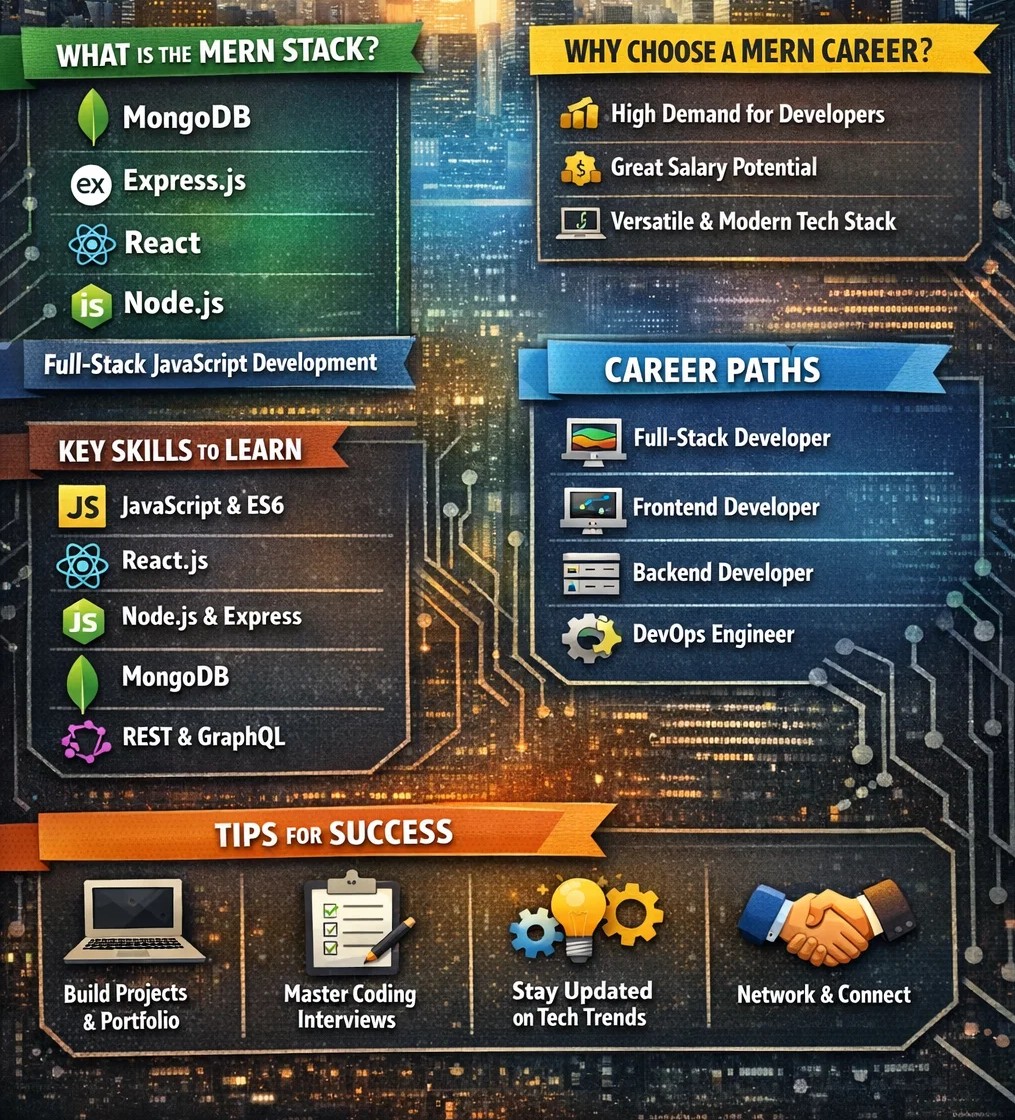
What Makes MERN the "Gold Standard"?
Before we talk about the future, let’s quickly recap why this stack—comprising MongoDB, Express.js, React, and Node.js—dominates. The secret sauce is JavaScript Unification. MERN allows you to use one language for everything:
-
MongoDB: A flexible, NoSQL database for modern data.
-
Express.js: A minimalist web framework for Node.js.
-
React: The king of frontend libraries for building interactive UIs.
-
Node.js: The powerhouse runtime that brings JavaScript to the server.
The Scope of MERN Stack in 2026
The scope of MERN stack has expanded beyond simple web apps. Today, it is the go-to choice for building:
-
SaaS (Software as a Service) Platforms: Most modern startups use MERN to build scalable subscription models.
-
Real-time Applications: Think of collaboration tools like Slack or Discord, which rely on the non-blocking I/O of Node.js.
-
AI-Integrated Web Apps: With the 2026 surge in AI, MERN developers are now integrating LLM APIs (like Gemini and OpenAI) directly into React frontends and Node backends.
-
E-commerce Giants: The modular nature of React makes it perfect for managing complex product catalogs and high-traffic storefronts.
Industry Demand and Salary Trends
The market is currently seeing a 17-20% growth in demand for full-stack JavaScript roles. Companies are moving away from hiring separate frontend and backend specialists; they want "unicorns" who can handle the entire lifecycle of a product.
| Experience Level | Average Salary (Annual) | Top Paymasters |
| Entry-Level | ₹5.5 LPA - ₹8 LPA | Startups, Service MNCs |
| Mid-Level (3-5 years) | ₹12 LPA - ₹25 LPA | Product-based Startups |
| Senior/Architect | ₹30 LPA - ₹60+ LPA | FAANG, FinTech, SaaS |
Building a MERN Stack Career: The 2026 Roadmap
If you are starting today, a MERN stack career requires more than just knowing the four core technologies. The bar has been raised. To stand out, you need to master the "MERN+" ecosystem:
-
TypeScript is No Longer Optional: In 2026, "Plain JavaScript" is mostly for hobbyists. Professional MERN projects are now written in TypeScript for better maintainability and fewer bugs.
-
Cloud & DevOps: Knowledge of AWS (Lambda/S3) or Vercel for deployment is critical.
-
State Management: Moving beyond basic hooks to Redux Toolkit or Zustand for complex enterprise applications.
The Future of MERN Stack Developers: Is it "Future-Proof"?
A common question is: Will AI replace MERN developers? The answer is a resounding no. While AI can write code snippets, it cannot design scalable system architectures or understand unique business logic. The future of MERN stack developers lies in becoming Architects of Experience.
Key Future Trends to Watch:
-
Serverless MERN: Moving away from traditional servers to "Edge functions" and serverless environments.
-
Micro-Frontends: Using React to build tiny, independent pieces of a larger application.
-
The "AI-First" Stack: Developers who can build web interfaces that talk to AI models will be the highest-paid professionals in the next five years.
Conclusion: Should You Dive In?
The verdict for 2026 is clear: The MERN stack isn't just a trend; it's the foundation of the modern internet. Its flexibility, massive community support, and the sheer speed of development it offers make it an unbeatable choice for businesses and developers alike.
If you enjoy building things from scratch and seeing your code come to life on both the screen and the server, a MERN stack career is arguably the best move you can make in the current tech economy.

Comments
No comments yet. Be the first to comment.
Leave a Comment