DRAG
Techcadd

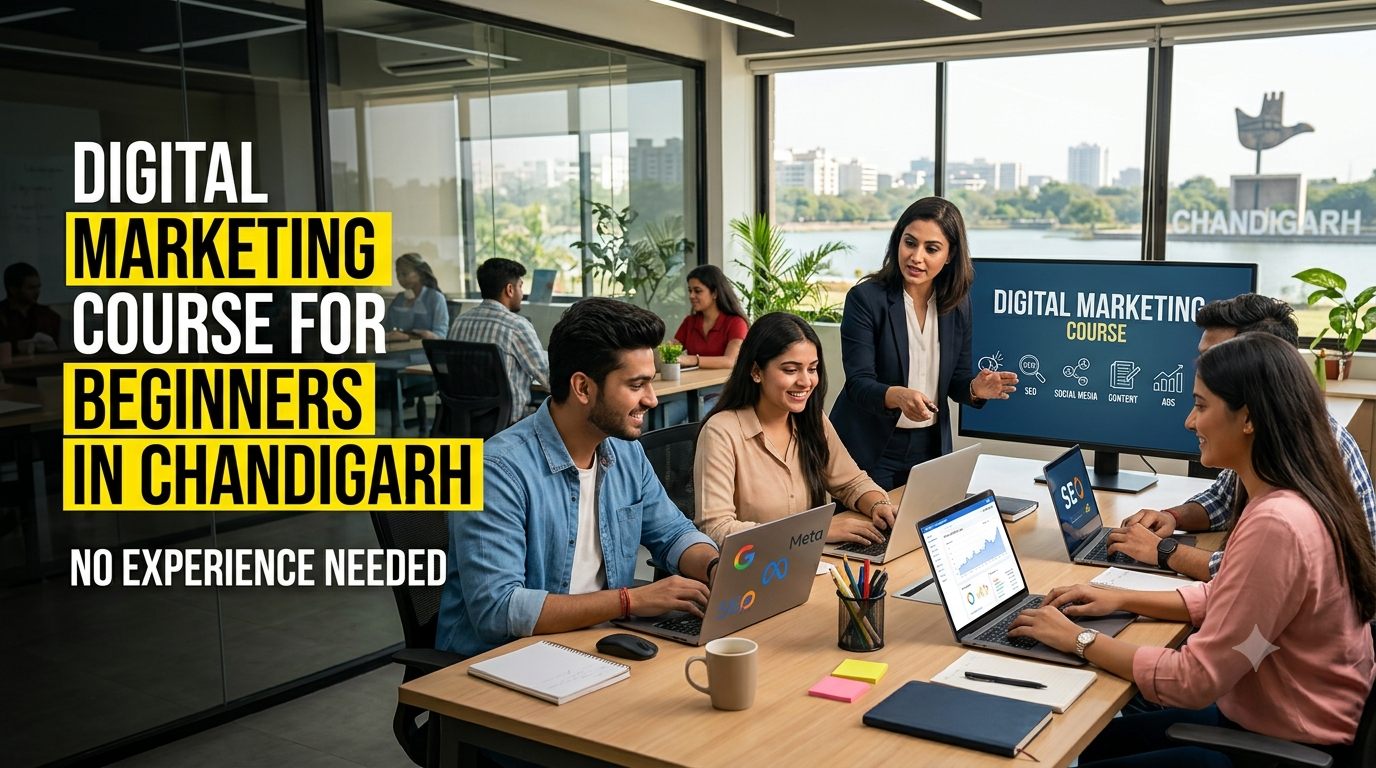
Digital Marketing Course for Beginners in Chandigarh — No Experience Needed

Digital Marketing Course for Beginners in Chandigarh — No Experience Needed Start your digital marketing journey with a beginner-friendly Digital Marketing Course in Chandigarh designed for students, freshers, graduates…

Industry-Ready Curriculum
Expert Mentors
100% Placement Support
  • Home
  • Courses
  • Digital Marketing Course for Beginners in Chandigarh — No Experience Needed
13+
Years of Experience
10K+
Students Trained
4.9
14 Student Reviews
95%
Placement Rate
Digital Marketing Course for Beginners in Chandigarh — No Experience Needed

Digital Marketing Course for Beginners in Chandigarh — No Experience Needed

Start your digital marketing journey with a beginner-friendly Digital Marketing Course in Chandigarh designed for students, freshers, graduates, job seekers, freelancers, and aspiring entrepreneurs. If you have no previous experience in marketing or technology, this course provides a structured way to understand the fundamentals of online marketing and gradually develop practical skills.

The course introduces you to essential areas of digital marketing, including Search Engine Optimization (SEO), Social Media Marketing (SMM), Google Ads, Pay-Per-Click (PPC), Content Marketing, Email Marketing, Local SEO, and Google Analytics. You will learn how businesses use different digital channels to increase online visibility, reach target audiences, generate leads, and build stronger customer relationships.

A major focus of the training is practical learning. Instead of only studying theoretical concepts, learners can work on assignments, keyword research, content planning, SEO activities, social media strategies, campaign planning, and marketing analytics. These activities help beginners understand how digital marketing concepts are applied in real business situations.

The course is especially suitable for learners who want to start their career from scratch. You do not need advanced coding skills to begin. Basic computer knowledge, an interest in online marketing, and a willingness to practice are enough to get started. The curriculum progresses from fundamental concepts to practical digital marketing techniques.

Students can also explore different career directions after developing their skills, such as Digital Marketing Executive, SEO Executive, Social Media Executive, Content Marketing Executive, PPC Executive, Email Marketing Executive, and Digital Marketing Analyst. Those interested in freelancing or entrepreneurship can also use their skills to promote websites, brands, products, and services online.

With practical projects, structured learning, and career-oriented guidance, this Digital Marketing Course for Beginners in Chandigarh can help you build a strong foundation and understand the rapidly evolving digital marketing industry. Whether you are a complete beginner or looking to add a new skill to your existing profile, this course provides a starting point for building practical and career-relevant digital marketing knowledge.

Course Overview – Digital Marketing Course for Beginners in Chandigarh

The Digital Marketing Course for Beginners in Chandigarh — No Experience Needed is designed for students, freshers, graduates, job seekers, aspiring freelancers, entrepreneurs, and anyone who wants to build practical digital marketing skills from the ground up. In today’s technology-driven business environment, companies rely heavily on digital platforms to promote their products, reach customers, generate leads, and build their online presence. This has created a growing need for professionals who understand how different digital marketing channels work.

This beginner-friendly course provides a structured learning path for learners who have little or no prior knowledge of marketing or digital technologies. Instead of assuming that students already understand SEO, advertising, analytics, or social media marketing, the course starts with the fundamentals and gradually introduces more advanced concepts through practical learning.

The curriculum covers important areas such as Search Engine Optimization (SEO), Google Ads and PPC, Social Media Marketing, Content Marketing, Email Marketing, Local SEO, Google Analytics, keyword research, online advertising, and digital marketing strategy. Learners get an opportunity to understand how these channels work individually and how they can be combined to create an effective digital marketing campaign.

Introduction to Digital Marketing

The course begins with the fundamentals of digital marketing. Students learn what digital marketing means, why businesses use online marketing, and how digital marketing differs from traditional marketing. Important concepts such as websites, search engines, social media platforms, online advertisements, content, leads, conversions, and customer journeys are introduced in a simple manner.

Students also learn about different digital marketing channels and their role in business growth. This foundation helps beginners understand the bigger picture before moving into specialized areas.

Website and Landing Page Basics

A website is an important part of many digital marketing strategies. The course introduces students to basic website concepts and explains how websites and landing pages support marketing campaigns.

Learners understand important concepts such as website structure, landing pages, calls-to-action, user experience, and conversion-focused content. The objective is not to turn students into professional web developers but to help them understand how marketers work with websites and landing pages.

Search Engine Optimization (SEO)

SEO is one of the core components of the course. Students learn how search engines help users discover information, products, and services online. The course introduces important SEO concepts including on-page SEO, off-page SEO, technical SEO fundamentals, search intent, website optimization, and content optimization.

Learners understand how factors such as page titles, headings, URLs, keywords, internal links, content quality, and website structure can influence search visibility. They also learn the importance of creating useful content that matches the needs of the target audience.

Keyword Research and Content Strategy

Keyword research helps marketers understand what people search for online. Students learn how to identify relevant keywords and organize them according to search intent and marketing objectives.

The course also introduces content strategy. Learners understand how to plan blogs, website content, social media posts, and other forms of digital content. They learn how content can be used to attract visitors, educate audiences, build trust, and support business objectives.

Practical exercises help students understand the difference between informational, commercial, navigational, and transactional search intent.

Google Ads and PPC Marketing

Paid advertising is another important component of digital marketing. Students are introduced to Google Ads and Pay-Per-Click (PPC) marketing and learn how businesses use paid campaigns to reach potential customers.

The course covers basic concepts such as campaign structure, keywords, advertisements, targeting, budgets, bidding, landing pages, and performance measurement. Students learn why campaign objectives and audience targeting are important when planning paid marketing activities.

The focus is on developing a practical understanding of how paid search advertising works rather than simply learning definitions.

Social Media Marketing

Social media has become an important communication and marketing channel for businesses. The course introduces students to Social Media Marketing and explains how businesses use platforms such as Instagram, Facebook, LinkedIn, YouTube, and other social channels to connect with audiences.

Students learn about content planning, audience research, engagement, brand communication, social media strategies, and campaign planning. They also understand how different platforms can require different types of content and communication styles.

Instagram and Facebook Marketing

The course provides additional practical understanding of popular social media platforms such as Instagram and Facebook. Students learn how businesses can use social platforms to create awareness, engage audiences, promote products or services, and generate leads.

Topics include content ideas, post planning, audience targeting, engagement strategies, basic advertising concepts, and performance tracking. Students can apply these concepts while developing sample social media campaigns.

Content Marketing

Content marketing focuses on creating and distributing useful and relevant information for a specific audience. Students learn how blogs, articles, videos, social media content, infographics, and other formats can contribute to a digital marketing strategy.

The course explains the importance of understanding the target audience before creating content. Learners also explore basic content planning, content calendars, topic research, headlines, calls-to-action, and content optimization.

Email Marketing

Email marketing remains useful for communication, customer engagement, and promotional activities. Students are introduced to the fundamentals of email marketing and learn how businesses use email campaigns to communicate with subscribers and customers.

The course covers concepts such as email lists, campaign planning, subject lines, newsletters, calls-to-action, audience segmentation, and basic performance measurement. Learners understand that effective email marketing should provide relevant value rather than simply sending promotional messages.

Google Analytics and Marketing Measurement

Digital marketing involves measuring results and understanding user behavior. The course introduces learners to analytics concepts and explains how marketers evaluate website and campaign performance.

Students learn about important metrics such as traffic, engagement, conversions, acquisition, and campaign performance. They also understand why data is important when making marketing decisions.

The objective is to help beginners develop a data-driven mindset and understand how marketers can use performance information to improve future campaigns.

Local SEO and Google Business Profile

Local businesses need to reach customers within specific geographical areas. The course introduces Local SEO and explains how businesses can improve their visibility for location-based searches.

Students learn about local search optimization, business information, customer reviews, local keywords, and Google Business Profile fundamentals. These concepts are particularly useful for learners interested in working with local businesses, agencies, or small enterprises.

Affiliate and Influencer Marketing Basics

The course also provides an introduction to affiliate and influencer marketing. Students learn how these approaches can be used to promote products and services through external creators, publishers, and online communities.

Learners understand basic concepts such as partnerships, promotional content, audience relevance, tracking, and campaign objectives. This gives students an overview of additional opportunities available within the broader digital marketing ecosystem.

Practical Assignments and Projects

A major part of the course focuses on practical learning. Beginners can understand concepts more effectively when they apply them to realistic marketing situations.

Students can work on activities such as keyword research, SEO exercises, content planning, social media calendars, sample advertising campaigns, website optimization tasks, analytics exercises, and local SEO activities.

A practical digital marketing project can bring multiple skills together. Students can create a sample marketing strategy for a business, identify its target audience, research keywords, prepare content ideas, plan social media activities, and determine suitable digital marketing channels.

These activities help learners develop confidence and create examples of their work that can be useful when preparing a portfolio.

Career and Freelancing Preparation

The course also introduces learners to different career possibilities in digital marketing. Depending on their skills and interests, students can explore roles such as Digital Marketing Executive, SEO Executive, Social Media Executive, Content Marketing Executive, PPC Executive, Email Marketing Executive, or Digital Marketing Analyst.

Learners interested in freelancing can also understand how digital marketing skills can be applied to projects for different businesses. They can explore areas such as SEO services, content management, social media management, website optimization, and basic advertising support.

The course emphasizes skill development, practical understanding, portfolio building, communication, and continuous learning so that students can better prepare for entry-level opportunities.

Who Can Join This Course?

This course is suitable for:

  • Students who want to learn digital marketing from scratch

  • Freshers looking for practical career skills

  • Graduates interested in online marketing

  • Job seekers exploring digital marketing careers

  • Entrepreneurs wanting to understand online promotion

  • Freelancing beginners

  • Small-business owners interested in digital visibility

  • Anyone interested in learning modern marketing techniques

No advanced technical background is assumed. Beginners can start with fundamental concepts and gradually develop their understanding through structured learning.

Learning Approach

The course follows a beginner-friendly approach where concepts are introduced step by step. Instead of overwhelming learners with complicated terminology, important concepts are explained through examples and practical activities.

The combination of SEO, paid advertising, social media, content, email marketing, analytics, and local SEO provides learners with a broad understanding of digital marketing. Practical assignments allow students to connect theoretical concepts with real marketing situations.

By the end of the course, learners should have a stronger understanding of how digital marketing channels work, how campaigns are planned, how online audiences are targeted, and how marketing performance can be evaluated.

Conclusion

The Digital Marketing Course for Beginners in Chandigarh — No Experience Needed provides a structured starting point for anyone who wants to enter the digital marketing field. From basic marketing concepts to SEO, Google Ads, social media, content marketing, email marketing, analytics, and Local SEO, the course introduces the essential skills required to understand modern online marketing.

With practical assignments, project-based learning, career preparation, and exposure to multiple digital marketing channels, beginners can build a strong foundation and gradually develop specialized skills. Whether the goal is to pursue an entry-level digital marketing role, support a business, explore freelancing, or simply understand how online marketing works, this course offers a practical pathway to get started.

Why Choose Techcadd for a Digital Marketing Course in Chandigarh?

Choosing the right institute is an important decision when starting a career in digital marketing. Beginners often have many questions before joining a course: Where should I start? Do I need technical knowledge? Will I get practical exposure? Which digital marketing skills should I learn first? How can I prepare for a job or freelance work? A well-structured training program can make the learning journey easier by providing proper guidance, practical activities, and a clear learning path.

Techcadd can be considered by learners looking for a structured and beginner-friendly approach to digital marketing training in Chandigarh. The Digital Marketing Course for Beginners in Chandigarh — No Experience Needed is designed to introduce learners to essential digital marketing concepts while helping them understand how these skills can be applied in practical situations.

From SEO and social media marketing to Google Ads, content marketing, analytics, and Local SEO, learners can explore multiple areas of digital marketing and gradually identify the skills they want to develop further.

1. Beginner-Friendly Learning Approach

One of the major reasons beginners look for a specialized course is that digital marketing can initially seem overwhelming. There are many concepts, tools, platforms, and marketing channels to understand.

A beginner-friendly learning approach helps students start with fundamental concepts before moving toward specialized topics. At Techcadd, learners can follow a structured learning path that introduces digital marketing step by step.

Students can first understand what digital marketing is and how online businesses attract customers. They can then move into areas such as SEO, social media, paid advertising, content marketing, email marketing, and analytics.

This approach can be useful for students and freshers who are starting without previous marketing experience.

2. No Previous Digital Marketing Experience Required

The course is designed for learners who are new to digital marketing. Students do not need to already be experts in SEO, advertising, social media, or analytics before beginning their learning journey.

The fundamentals are introduced in a way that allows beginners to understand important terminology and concepts gradually.

Whether a learner is a student, graduate, job seeker, aspiring freelancer, or entrepreneur, the course can provide a starting point for understanding how digital marketing works.

The focus is on building knowledge progressively rather than expecting students to know everything before joining.

3. Comprehensive Digital Marketing Curriculum

Digital marketing consists of several interconnected areas. Learning only one topic may not provide a complete understanding of how online marketing works.

The course provides exposure to multiple important areas, including:

  • Digital Marketing Fundamentals

  • Search Engine Optimization

  • Keyword Research

  • Content Marketing

  • Google Ads and PPC

  • Social Media Marketing

  • Instagram and Facebook Marketing

  • Email Marketing

  • Google Analytics

  • Local SEO

  • Affiliate Marketing Basics

  • Influencer Marketing Basics

  • Digital Marketing Strategy

  • Career and Freelancing Preparation

Learning these areas together can help students understand how different marketing channels support one another.

4. Practical Learning

Digital marketing is a practical field, and simply memorizing definitions is not enough to develop confidence. Learners need opportunities to apply concepts through activities and projects.

Practical learning can include keyword research, SEO exercises, content planning, social media calendars, campaign planning, website optimization activities, analytics exercises, and local marketing tasks.

These activities allow students to connect classroom concepts with realistic marketing situations.

For beginners, practical exercises can also make it easier to identify areas that require additional practice.

5. Focus on SEO Skills

SEO is one of the most important areas covered in digital marketing training. Techcadd's course introduces learners to fundamental SEO concepts and helps them understand how websites can be optimized for search visibility.

Students can explore topics such as keyword research, search intent, on-page SEO, content optimization, internal linking, basic technical SEO, off-page SEO, and Local SEO.

Understanding these concepts can help learners build a foundation for future SEO-focused roles.

Students interested in becoming SEO Executives can further develop their knowledge through regular practice and real-world projects.

6. Exposure to Google Ads and PPC

Paid advertising is another important digital marketing skill. Businesses use online advertising platforms to reach specific audiences and promote products or services.

The course introduces beginners to Google Ads and PPC concepts, including campaign objectives, keywords, advertisements, audience targeting, budgets, bidding concepts, landing pages, and performance measurement.

Learning the fundamentals can help students understand how paid marketing campaigns are planned and evaluated.

Learners can then continue developing their skills through practical exercises and deeper study of advertising platforms.

7. Social Media Marketing Training

Social media is an important channel for modern businesses. Companies use platforms such as Instagram, Facebook, LinkedIn, and YouTube to communicate with audiences and promote their products or services.

Techcadd's digital marketing training gives learners an understanding of social media marketing fundamentals.

Students can learn about content planning, audience research, engagement, social media strategies, content calendars, campaign ideas, and basic performance analysis.

This can be particularly useful for learners interested in creative digital marketing roles.

8. Content Marketing Knowledge

Content plays an important role across SEO, social media, email marketing, and other digital channels.

Students learn how useful and relevant content can support business objectives. The course introduces concepts such as content planning, topic research, blog content, social media content, headlines, calls-to-action, and content calendars.

Learners can develop the ability to think about content from the perspective of both the business and the target audience.

This foundation can be useful for individuals interested in content marketing, copywriting, SEO content, or social media management.

9. Understanding Digital Marketing Analytics

Marketing decisions increasingly depend on data. Understanding performance metrics helps marketers determine whether a campaign is moving toward its objectives.

The course introduces learners to analytics concepts and important marketing measurements. Students can learn about traffic, engagement, conversions, acquisition, campaign performance, and other relevant metrics.

Learning analytics at an early stage can encourage students to think beyond simply creating content or advertisements. They can begin understanding the importance of measuring results and improving strategies based on performance.

10. Local SEO Exposure

Local SEO is particularly relevant for businesses that serve customers in specific geographical areas.

The course introduces students to concepts such as local search, location-based keywords, business information, reviews, and Google Business Profile fundamentals.

This knowledge can help learners understand how local businesses can improve their online visibility.

Students can also use Local SEO skills when working on practical projects for sample businesses.

11. Project-Based Skill Development

Projects can help learners demonstrate what they have learned. Instead of studying each digital marketing channel separately, students can combine multiple skills in a complete marketing project.

For example, a learner may select a sample business, identify its target audience, perform keyword research, prepare SEO recommendations, create a social media content plan, develop content ideas, and outline a paid advertising strategy.

Such projects encourage learners to think strategically and understand how different marketing channels can work together.

A portfolio containing practical work can also be useful when preparing for interviews or discussing skills with potential clients.

12. Career-Oriented Learning

A digital marketing course should not only focus on concepts but also help learners understand possible career directions.

After developing foundational knowledge, students can explore roles such as:

  • Digital Marketing Executive

  • SEO Executive

  • Social Media Executive

  • Content Marketing Executive

  • PPC Executive

  • Email Marketing Executive

  • Digital Marketing Analyst

The exact responsibilities of these roles can vary between organizations. However, understanding the different career paths can help beginners identify the areas in which they would like to specialize.

13. Suitable for Students and Freshers

Students and fresh graduates often want to develop additional skills alongside their formal education.

Digital marketing can be learned progressively, allowing students to begin with fundamentals and develop practical knowledge over time.

A structured course can help learners organize their preparation rather than trying to learn every marketing concept independently.

Freshers can also use practical assignments and projects to demonstrate their knowledge when preparing for entry-level opportunities.

14. Helpful for Freelancing Aspirants

Digital marketing skills can also be applied to freelance projects. Businesses may require services such as SEO support, social media management, content planning, local SEO, website optimization, or advertising assistance.

Techcadd's course introduces learners to several of these areas so they can understand the services available within the digital marketing ecosystem.

However, successful freelancing requires more than completing a course. Learners also need communication skills, project management, professionalism, portfolio development, and continuous practice.

The course can provide a foundation on which students can continue building these abilities.

15. Portfolio Development

A portfolio can be an important tool for beginners because it provides evidence of practical work.

Students can build portfolio examples from their assignments and projects, such as:

  • SEO audits

  • Keyword research reports

  • Content calendars

  • Social media strategies

  • Sample advertising campaign structures

  • Local SEO plans

  • Blog content

  • Analytics reports

  • Complete digital marketing strategies

A portfolio can help learners explain their skills more effectively during interviews or client discussions.

16. Industry-Relevant Skill Development

Digital marketing continues to evolve as businesses adopt new platforms and technologies. A good training program should therefore focus on practical concepts that learners can continue developing after completing the course.

Techcadd's curriculum covers major areas of digital marketing, allowing learners to develop a broad foundation.

Students can continue expanding their skills as platforms, tools, and marketing practices change.

17. Support for Continuous Learning

Completing a digital marketing course is only the beginning. Because digital platforms and marketing practices change regularly, professionals need to continue learning.

Learners can build on their course knowledge by practicing SEO, exploring advertising platforms, studying analytics, experimenting with content strategies, and following changes in the digital marketing industry.

A strong foundation makes it easier to understand new tools and techniques as they emerge.

18. Development of Multiple Skills

Digital marketing combines creative, analytical, technical, and communication skills.

SEO requires research and analytical thinking. Content marketing requires creativity and communication. Paid advertising involves planning, targeting, budgeting, and measurement. Social media marketing requires audience understanding and content skills. Analytics requires interpretation of data.

Learning digital marketing therefore allows students to develop a combination of skills rather than focusing on only one type of ability.

19. Chandigarh-Based Learning Opportunity

For learners looking for digital marketing training in Chandigarh, choosing a local institute can provide a structured environment for learning and interaction.

Students can focus on developing practical skills while receiving guidance throughout their learning journey.

The course is particularly positioned for beginners who want to start learning digital marketing without assuming advanced prior knowledge.

20. A Foundation for Long-Term Growth

Digital marketing offers many areas for future specialization. Once learners understand the fundamentals, they can choose a direction according to their interests.

Someone interested in search engines can focus on SEO. A creative learner may prefer social media or content marketing. Someone interested in numbers may explore marketing analytics. Learners interested in advertising can specialize in PPC and paid media.

This flexibility makes digital marketing suitable for individuals with different interests and career goals.

21. Learning Digital Marketing Alongside Other Skills

Digital marketing can become even more useful when combined with complementary skills.

For example, learners can combine digital marketing with:

  • Excel

  • Data Analytics

  • SQL

  • Power BI

  • Graphic Design

  • Video Editing

  • Copywriting

  • Web Development

  • Communication Skills

A combination of skills can help learners understand marketing from different perspectives and potentially expand the types of roles they can explore.

22. Emphasis on Building Confidence

Beginners may initially feel uncertain because digital marketing includes many unfamiliar terms and platforms.

A structured learning process, practical assignments, and project work can help students become more comfortable with the subject.

The goal is to help learners move from understanding basic concepts to applying them in practical situations.

With regular practice, learners can gradually become more confident in discussing digital marketing strategies and explaining their work.

23. Learning with a Career Mindset

Students can approach the course with a long-term career mindset instead of treating it only as a certificate course.

They can identify their interests, practice regularly, build portfolio projects, improve communication skills, and explore different digital marketing roles.

This approach can make the learning experience more meaningful because students understand why each skill is being taught and how it can potentially be applied.

24. Overall Value for Beginners

The main advantage of choosing a structured beginner-focused digital marketing course is that it provides direction.

Instead of randomly learning different marketing tools, students can follow a planned curriculum that covers the major areas of the field.

Techcadd's digital marketing course can serve as a starting point for learners who want to understand online marketing, develop practical skills, work on projects, and explore future career possibilities.

Conclusion

Choosing the right training environment can make a significant difference when learning a new professional skill. The Digital Marketing Course for Beginners in Chandigarh — No Experience Needed is designed to provide beginners with a structured introduction to the major areas of digital marketing.

With exposure to SEO, Google Ads, PPC, Social Media Marketing, Content Marketing, Email Marketing, Local SEO, Analytics, and digital strategy, learners can develop a broad understanding of how modern online marketing works.

The combination of beginner-friendly learning, practical activities, project-based development, portfolio preparation, and career-oriented guidance can help students build a foundation for further growth.

For students, freshers, graduates, aspiring freelancers, entrepreneurs, and individuals interested in digital careers, Techcadd can be considered as a starting point for developing practical digital marketing knowledge.

Ultimately, long-term success in digital marketing depends on continuous learning, regular practice, adaptability, creativity, analytical thinking, and the ability to apply knowledge to real marketing situations. A structured course can provide the foundation, while consistent effort and practical experience can help learners continue developing their skills and exploring new opportunities in the digital marketing field.

Future Scope of Digital Marketing Course for Beginners in Chandigarh

Digital marketing has become an important part of how businesses communicate with customers, promote products, generate leads, and build their online presence. As more businesses use websites, search engines, social media platforms, online advertising, email campaigns, and other digital channels, the need for people with practical digital marketing skills continues to grow. This makes digital marketing a useful career area for students, freshers, graduates, entrepreneurs, and individuals looking to develop modern professional skills.

The Digital Marketing Course for Beginners in Chandigarh — No Experience Needed provides learners with a foundation in major areas such as Search Engine Optimization (SEO), Social Media Marketing, Google Ads, PPC, Content Marketing, Email Marketing, Local SEO, Analytics, and digital strategy. These skills can be developed further after completing the course, allowing learners to explore different career directions and areas of specialization.

Growing Importance of Digital Marketing

Businesses today need to be visible where their customers spend time: online. A company may have a website, social media profiles, online advertisements, blogs, videos, or business listings, but these channels require proper planning and management to be effective.

Digital marketing professionals help businesses understand their target audiences, create useful content, improve online visibility, manage campaigns, and evaluate results. As businesses continue to adopt digital channels, individuals with relevant skills can explore opportunities across agencies, startups, e-commerce businesses, service companies, educational organizations, technology companies, and other industries.

The future scope of digital marketing is therefore not limited to one particular industry. The skills can be applied to different types of organizations and business models.

Career Opportunities After Learning Digital Marketing

One of the biggest advantages of learning digital marketing is the variety of career paths available. Beginners do not necessarily have to become experts in every digital marketing channel. After understanding the fundamentals, they can identify the area they enjoy and develop deeper expertise.

1. Digital Marketing Executive

A Digital Marketing Executive can work on multiple areas of online marketing. Depending on the organization, responsibilities may include supporting SEO activities, managing social media, assisting with advertising campaigns, preparing content, monitoring website performance, and reporting campaign results.

This can be a suitable starting role for freshers because it provides exposure to several digital marketing channels.

2. SEO Executive

Search Engine Optimization is an important area of digital marketing. SEO professionals work on improving a website's visibility in search engine results.

A beginner can gradually develop skills in keyword research, on-page optimization, content optimization, internal linking, technical SEO fundamentals, local SEO, and SEO performance analysis.

With experience, an SEO professional can move toward specialized roles involving SEO strategy, technical optimization, content strategy, or SEO management.

3. Social Media Marketing Executive

Social media provides businesses with opportunities to communicate directly with their audiences. Social Media Marketing professionals may work on content calendars, posts, audience engagement, campaign planning, social media research, and performance analysis.

Students interested in creative communication, content, trends, and online communities may find this area particularly interesting.

4. Content Marketing Professional

Content is a major part of digital marketing. Businesses require blogs, website pages, social media posts, newsletters, videos, guides, and other useful resources.

A learner with strong writing, research, and communication skills can develop a career in content marketing. With experience, they can specialize in content strategy, SEO content, editorial planning, or brand communication.

5. PPC and Google Ads Professional

Paid advertising is another important specialization. PPC professionals help businesses reach relevant audiences through paid advertising platforms.

A learner can gradually develop knowledge of campaign structures, keywords, audience targeting, budgets, advertisements, landing pages, conversion tracking, and performance analysis.

Because paid campaigns involve measurable results, professionals also need analytical thinking and continuous optimization skills.

6. Email Marketing Specialist

Email marketing allows businesses to communicate with subscribers and customers directly. Professionals working in this area may create newsletters, promotional campaigns, automated communication flows, and customer engagement strategies.

Learners can develop skills in audience segmentation, campaign planning, email copywriting, calls-to-action, and performance measurement.

7. Digital Marketing Analyst

Digital marketing increasingly depends on data. Businesses want to understand where visitors come from, how audiences interact with campaigns, and which activities contribute to business goals.

Learners who enjoy numbers and analysis can build additional skills in analytics, reporting, spreadsheets, SQL, visualization tools, and marketing measurement. This can open a path toward analytical roles within digital marketing teams.

Scope of Freelancing

Digital marketing can also provide opportunities for people interested in freelancing. Businesses may require individual services such as SEO support, social media management, content creation, keyword research, website optimization, local SEO, or advertising assistance.

A beginner should first focus on developing genuine skills and building a small portfolio. Practical projects can demonstrate what the learner knows and provide examples that can be discussed with potential clients.

Freelancing also requires communication, time management, project planning, professionalism, and client relationship skills. Therefore, technical knowledge alone is not enough; professional skills are equally important.

Opportunities for Entrepreneurs and Small Businesses

Digital marketing knowledge is not useful only for people seeking jobs. Entrepreneurs and small-business owners can also benefit from understanding digital marketing.

A business owner who understands SEO, social media, content, local search, online advertising, and analytics can make better decisions about promoting a business online. They can understand what different marketing activities are designed to achieve and communicate more effectively with agencies or marketing professionals.

For local businesses, areas such as Local SEO, Google Business Profile optimization, social media, customer reviews, and location-based content can be particularly relevant.

E-Commerce and Online Business Growth

The growth of online shopping has increased the importance of digital marketing for e-commerce businesses. Online stores need to attract visitors, promote products, communicate with customers, and encourage conversions.

Digital marketing professionals can contribute through search optimization, paid advertising, social media campaigns, content marketing, email communication, and analytics.

Learners interested in e-commerce can therefore combine digital marketing with knowledge of online stores, customer behavior, product promotion, and conversion optimization.

Scope in Local Digital Marketing

Local businesses such as educational institutes, restaurants, salons, clinics, service providers, retailers, and professional services often need to reach customers within specific geographical areas.

This creates opportunities for people who understand Local SEO and location-based marketing. Professionals can work on local keywords, business information, online listings, customer reviews, location-based content, and social media strategies.

For beginners in Chandigarh and nearby areas, understanding local digital marketing can be particularly useful because many businesses depend on visibility among customers in their surrounding locations.

Digital Marketing and Personal Branding

Digital marketing skills can also be applied to personal branding. Students, professionals, creators, freelancers, and entrepreneurs can use digital platforms to communicate their knowledge and professional interests.

Understanding content strategy, social media, SEO, and audience engagement can help individuals build a professional online presence.

For example, a learner interested in content creation could develop educational posts or articles around a specific area of expertise. Over time, consistent and useful content can help demonstrate knowledge and communication skills.

Growth Through Specialization

Digital marketing is a broad field, so learners do not need to remain at a general level forever. After developing a strong foundation, they can specialize in one or more areas.

Possible specializations include:

  • SEO and Technical SEO

  • Local SEO

  • Google Ads and PPC

  • Social Media Marketing

  • Content Marketing

  • Email Marketing

  • E-commerce Marketing

  • Marketing Analytics

  • Conversion Rate Optimization

  • Influencer Marketing

  • Affiliate Marketing

  • Digital Strategy

Specialization allows professionals to develop deeper knowledge and take on more focused responsibilities.

Importance of Analytics and Data

One of the major future directions of digital marketing is the increasing importance of data. Marketing teams need to understand campaign performance and make decisions based on measurable information.

A digital marketer who can interpret traffic, engagement, conversions, advertising performance, and customer behavior can provide more meaningful insights to a business.

Learners can strengthen their future prospects by combining digital marketing knowledge with tools such as spreadsheets, analytics platforms, dashboards, and basic data analysis.

This combination can be particularly valuable for people interested in both marketing and analytical work.

Digital Marketing with Artificial Intelligence

Artificial intelligence is increasingly becoming part of the digital marketing ecosystem. AI-based tools can assist marketers with tasks such as idea generation, content planning, data analysis, audience research, automation, and workflow support.

However, digital marketers still need human skills such as strategy, critical thinking, creativity, fact-checking, communication, ethical decision-making, and understanding customer needs.

Therefore, the future is not simply about using AI tools. Successful professionals are likely to be those who understand marketing fundamentals and know how to use technology responsibly to improve their workflows.

Continuous Learning and Career Growth

Digital marketing changes frequently. Search algorithms, advertising platforms, social media features, analytics tools, consumer behavior, and marketing technologies can evolve over time.

Because of this, completing a course should be viewed as the beginning of a learning journey rather than the end. Professionals can continue learning through practical projects, industry resources, certifications, experimentation, and regular analysis of marketing campaigns.

Continuous learning can help professionals remain familiar with new tools and changing digital marketing practices.

Building a Strong Portfolio

A portfolio can be valuable for beginners because it gives them a way to demonstrate practical skills. Instead of relying only on course completion, learners can create examples of their work.

A beginner portfolio may include:

  • Keyword research samples

  • SEO website audits

  • Blog or content samples

  • Social media content calendars

  • Sample Google Ads campaign structures

  • Local SEO projects

  • Marketing strategy documents

  • Analytics reports

  • Digital marketing project presentations

These projects can help learners explain their knowledge during interviews and discussions with potential clients.

Career Growth from Beginner to Professional

The career journey in digital marketing can develop gradually. A beginner may start by learning basic concepts and completing practical assignments. After gaining experience, they can take on more responsibilities and specialize in specific channels.

A possible progression could involve starting as a Digital Marketing Executive or SEO/Social Media Executive, developing practical experience, moving toward specialized responsibilities, and eventually taking on senior, strategist, consultant, or managerial roles.

The exact career path depends on an individual's skills, experience, interests, organization, and continuous learning.

Scope for Students and Freshers

Digital marketing can be an accessible skill area for students and fresh graduates because learners can begin with fundamentals without requiring extensive previous professional experience.

Students can start by learning one skill at a time, completing practical projects, and gradually expanding their knowledge. They can also combine digital marketing with their existing education or another technical or creative skill.

For freshers, practical knowledge, communication skills, portfolio projects, and a willingness to learn can help in preparing for entry-level opportunities.

Why Start with a Beginner-Friendly Course?

A structured beginner course can make the learning process easier because digital marketing contains many interconnected topics. Trying to learn SEO, paid advertising, analytics, content, and social media independently can sometimes feel confusing.

A beginner-focused course provides a sequence in which fundamental concepts are introduced first and specialized topics are added gradually. This allows learners to understand how different channels connect with each other.

The Digital Marketing Course for Beginners in Chandigarh — No Experience Needed is designed around this approach, helping learners develop a broad foundation before choosing an area for deeper specialization.

Long-Term Scope of Digital Marketing

The long-term scope of digital marketing is connected to the continued importance of online communication and digital customer experiences. Businesses need ways to reach audiences, communicate value, understand customer behavior, and measure marketing activities.

As technology continues to evolve, the tools used by marketers may change, but fundamental skills such as understanding audiences, creating useful content, communicating clearly, analyzing results, and developing effective strategies remain important.

This makes digital marketing a field where learners can continue adding new skills throughout their careers.

Conclusion

The future scope of digital marketing is broad and includes opportunities in employment, freelancing, entrepreneurship, e-commerce, social media, SEO, paid advertising, content marketing, email marketing, analytics, and local marketing.

For beginners, the most important step is to build a strong foundation and then gradually develop practical expertise. Learning the basics of SEO, Google Ads, social media, content, email marketing, analytics, and Local SEO can provide a starting point for exploring different career directions.

The Digital Marketing Course for Beginners in Chandigarh — No Experience Needed can help learners understand these core areas and develop practical knowledge through structured learning and projects. With continuous practice, portfolio development, professional communication, and regular upskilling, learners can explore a variety of opportunities in the evolving digital marketing ecosystem.

4.9
14 reviews
5
12
4
2
3
0
2
0
1
0
H
Harshdeep Gill

I joined as a complete beginner and initially knew very little about digital marketing. The step-by-step explanation helped me understand SEO, social media and content marketing much more confidently.

S
Simran Kaur

The beginner-friendly teaching approach was the best part for me. Practical assignments made the concepts easier to understand and gave me useful experience while learning.

M
Manav Bhatia

I was looking for a course that did not assume prior marketing knowledge. The trainers started from the basics and gradually introduced SEO, Google Ads and analytics.

J
Jasleen Arora

The social media and content marketing sessions were very useful. I learned how to plan content, understand audiences and create a basic marketing strategy.

R
Rohan Sethi

Good course for someone starting digital marketing from zero. The practical exercises helped me understand how different marketing channels work together.

N
Navneet Dhillon

I liked the way SEO concepts were explained with practical examples. Keyword research, on-page SEO and local SEO became much easier after practicing them.

T
Tanya Mehra

The course gave me a clear understanding of digital marketing fundamentals. I especially enjoyed working on content planning and social media assignments.

K
Karan Ahuja

Before joining, I was confused about where to start in digital marketing. The structured modules helped me understand the field and identify areas I want to explore further.

I
Ishita Malhotra

A helpful learning experience for beginners. The trainers explain terminology clearly and encourage students to practice instead of only learning theory.

G
Gurkirat Singh

The Google Ads basics and analytics topics were interesting. I now have a much better idea about how paid campaigns and marketing performance are measured.

R
Ritika Kapoor

I wanted to learn digital marketing for my career but had no previous experience. The course helped me build a foundation in SEO, content, social media and online advertising.

A
Amanpreet Brar

The practical project was a great learning experience. It helped me connect different topics and understand how a digital marketing strategy is planned.

M
Mahima Walia

The course is easy to follow even if you are completely new to marketing. I found the examples and assignments especially useful for remembering the concepts.

Y
Yuvraj Chawla

A good starting point for anyone interested in digital marketing. I learned the basics systematically and gained confidence in discussing SEO, social media and paid marketing.

Frequently Asked Questions

1 Can I join the Digital Marketing Course if I have no experience?

Yes. The course is designed for beginners and starts with digital marketing fundamentals. You do not need previous professional marketing experience to start learning.

2 Is digital marketing difficult for a complete beginner?

The basics can be learned step by step with regular practice. The course introduces concepts gradually and uses practical examples so beginners can understand the different marketing channels.

3 What will I learn in a beginner digital marketing course?

You can learn SEO, keyword research, social media marketing, Google Ads basics, content marketing, email marketing, local SEO and analytics. Practical assignments help you apply these concepts.

4 Do I need to know coding to learn digital marketing?

No advanced coding knowledge is required for most digital marketing activities. The course focuses mainly on marketing strategy, SEO, content, social media, advertising and analytics.

5 Can a student join this course after 12th?

Yes, students who are interested in online marketing can start learning the fundamentals. The course is suitable for beginners who want to develop practical digital marketing skills.

6 Which digital marketing skill should a beginner learn first?

It is useful to first understand digital marketing fundamentals and then explore SEO, content, social media, paid advertising and analytics. This gives beginners a clear picture of how different channels work together.

7 Will I get practical projects during the course?

Yes, practical assignments and projects can help you apply the concepts you learn. These may include keyword research, content planning, SEO exercises, social media strategies and campaign analysis.

8 Can I learn SEO without technical knowledge?

Yes. Beginners can start with keyword research, search intent, on-page SEO, content optimization and local SEO. Technical SEO concepts can then be introduced gradually as your knowledge improves.

9 What is the difference between SEO and Google Ads?

SEO focuses on improving organic visibility in search engines, while Google Ads is a paid advertising method. Learning both helps beginners understand two important approaches to search marketing.

10 Can digital marketing be a career option after graduation?

Yes. Graduates can explore entry-level opportunities in SEO, social media, content marketing, PPC, email marketing and digital marketing operations. Practical skills and portfolio projects can strengthen your profile.

11 Can I use digital marketing skills for freelancing?

Yes. After building practical skills and a portfolio, learners can explore freelance services such as SEO support, social media management, content planning and digital marketing assistance.

12 How can beginners build a digital marketing portfolio?

You can create sample projects such as an SEO audit, keyword research report, content calendar, social media strategy or marketing campaign plan. These projects demonstrate practical understanding to potential employers.

13 Is digital marketing useful for small businesses?

Yes. Small businesses can use SEO, local search, social media, content and online advertising to reach potential customers. Learning digital marketing can help business owners understand and plan their online presence.

14 What career options are available after learning digital marketing?

Beginners can explore roles such as Digital Marketing Executive, SEO Executive, Social Media Executive, Content Marketing Executive, PPC Executive and Digital Marketing Analyst as they gain skills and experience.

Ready to Launch Your Career in Digital Marketing Course for Beginners in Chandigarh — No Experience Needed?

Join Techcadd Mohali and learn from industry experts with hands-on projects, live training, and dedicated placement support.

Book Your Free Demo
WhatsApp
✨ Gini AI asks:

What is the difference between Web Dev & AI courses?

👋