


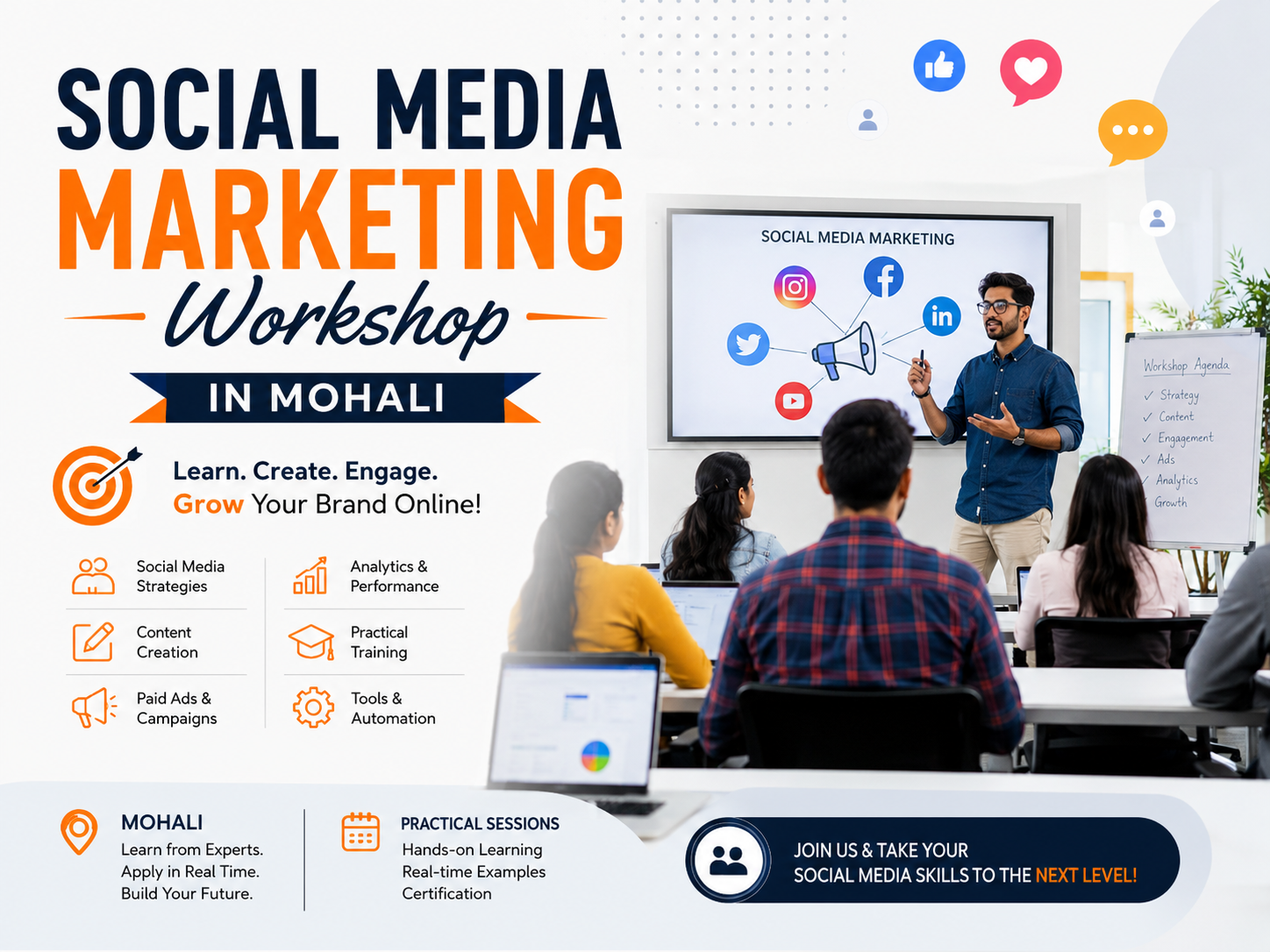
Beyond the Double-Tap: Reclaiming Human Connection in a Digital World
The Workshop is Not About the Algorithm; It’s About the Audience
If you came here looking for the "secret hack" to beat the Instagram algorithm or the "magic time" to post on LinkedIn, you might be in the wrong place. Or, perhaps, you are in exactly the right place—you just don’t know it yet.
The digital landscape has become a cacophony of noise. We are bombarded with content, ads, and "influencers" all vying for a sliver of our attention. In this chaos, the brands that win aren't the ones with the most sophisticated automation; they are the ones that sound the most human.
A Social Media Marketing Workshop isn’t about mastering a dashboard; it’s about mastering empathy. It’s about stepping away from the vanity metrics—the likes, the shares, the follower counts—and stepping into the psyche of the person on the other side of the screen. We are not marketing to "users" or "traffic." We are marketing to people who are tired, distracted, and craving authenticity.
The Narrative Shift: From Broadcaster to Storyteller
For years, social media was treated as a megaphone. Brands would shout their message, hoping it would reach the masses. But the megaphone is broken. Nobody is listening to the shouters anymore. They are listening to the storytellers.
The Death of the "Corporate Voice"
The first thing we do in this workshop is kill the "corporate voice." You know the one I mean: the sterile, jargon-filled, overly professional tone that sounds like it was written by a committee of robots. It’s safe, but safe is boring. And boring doesn’t get shared.
Instead, we adopt a conversational tone. We ask questions. We use humor. We admit when we make mistakes. We treat our followers like friends we haven't met yet, not customers we need to close.
Crafting Stories that Stick
Data is the skeleton of your marketing; stories are the flesh and blood. If your content doesn’t evoke an emotion, it’s forgettable. During our time together, we move away from the "Features-Benefits" model and towards the "Hero's Journey" model.
-
The Problem: We identify the pain point your audience is feeling.
-
The Guide: Your brand becomes the wise mentor (think Obi-Wan, not a used car salesman).
-
The Solution: We show how your product or service helps them overcome the challenge, but we do it through case studies, testimonials, and narrative.
This isn't manipulation; it's resonance. We are finding the common ground where our brand’s purpose meets our audience’s desires.
"Content Buckets" and the Art of Conversation
Effective social media is balanced. If you are constantly selling, you are killing your reach. We need a healthy diet of content. I call these our "Conversation Buckets."
1. The Educational Bucket (Value Add)
This is the "What’s in it for me?" content. This includes how-to guides, tips, industry insights, and tutorials. You are establishing yourself as an authority, not by saying "We are the best," but by showing how much you know. It’s about generosity. Give away your best secrets for free; it builds trust that cannot be bought.
2. The Relational Bucket (Community Building)
This is where we engage directly. It’s the behind-the-scenes look at your business. It’s user-generated content. It’s asking questions like, "What do you struggle with most on Monday mornings?" This bucket is about validation. When you respond to a comment, you aren't just "replying"; you are making someone feel seen.
3. The Promotional Bucket (The Ask)
This is the sales content. This is the "buy now," "sign up," or "download here." If you’ve done the first two buckets correctly, this third bucket feels natural, not pushy. The "Ask" should represent only 20% of your content.
The Visual Identity: Emotion in Pixels
Text is powerful, but visual is visceral. In a world of infinite scroll, you have microseconds to make an impact.
Less "Stock Photo," More "Authentic Capture"
We ban generic stock photos in this workshop. You know the ones—the painfully staged images of "happy coworkers" or "diverse teams" that look nothing like your actual office. Instead, we lean into the raw, the real, and the imperfect.
Use your phone. Shoot vertical video. Show the process. Show the messy desk, the product testing, the shipment going out. This "imperfect" content is often more engaging than a high-budget commercial because it feels more trustworthy.
The Psychology of Color and Composition
While we are using authentic imagery, we don’t ignore the psychology of design. We discuss how color influences perception: blue builds trust, red creates urgency, green promotes growth. We look at composition and how to use space, leading lines, and contrast to guide the eye. It’s not about being an artist; it’s about being a communicator.
The Algorithm: Friend or Foe?
The elephant in the room is the algorithm. We can't ignore it. But we treat it like the weather. We can complain about it, or we can learn to dance in the rain.
Understanding "Dwell Time"
The algorithm is fundamentally obsessed with "dwell time"—how long people stay on your content.
Hook, Value, and Call to Action:
We break down a simple framework: Hook them in the first 2 seconds (use a shocking question or a bold visual), deliver value in the middle (teach them something or make them laugh), and give a clear Call to Action at the end (ask them to save, share, or comment). The more time they spend with your post, the more the algorithm rewards you.
Analytics: The Mirror, Not the Master
We need numbers to survive, but they shouldn’t define our confidence.
Moving Beyond Vanity Metrics
Reach and Followers are vanity. They feel good, but they don’t pay the bills. We focus on actionable metrics:
-
Engagement Rate: Are people actually interacting?
-
Click-Through Rate (CTR): Are they taking action?
-
Conversion Rate: Are they turning into leads or sales?
We use analytics to listen. If a piece of content bombs, it’s not a failure—it’s a message from the audience. It’s data telling us, "This didn’t resonate. It’s not a judgment on you; it’s a signpost for your next piece of content.
Content Planning: Finding Your Rhythm
Spontaneity is great for stories, but consistent growth requires strategy. We utilize a content calendar.
The Batching Method
Instead of scrambling to post every day, we use the "Batching" approach. Dedicate one day to content creation. You shoot a month’s worth of photos, write a week’s worth of captions, and schedule them out. This frees up the rest of your week to actually engage with your audience. This is the key to avoiding burnout and maintaining consistency.
The "Send It" Mindset
One of the biggest killers of social media success is perfectionism. We suffer from the "It’s not good enough" syndrome. We hold onto drafts, tweaking them endlessly until they’re stale.
In this workshop, I issue a challenge: "Perfection is the enemy of done." Post it. If it’s a flop, learn from it. If it works, replicate it. The faster you get your ideas out into the world, the faster you can iterate and improve. The audience doesn’t know what you intended to post; they only know what you did post.
Community Management: The Secret Superpower
This is where so many brands fail. Posting is only half the battle; listening is the other half. Community management is not just about responding to complaints; it’s about fostering a "tribe."
-
Don’t just "Like," Respond: When someone comments, reply. Ask a follow-up question.
-
Celebrate the Wins: If a follower achieves something with your product, share their story.
-
Handle the Heat: When you get negative comments, don't delete them (unless they are abusive). Respond with grace and accountability. Show the audience how you handle criticism. This level of transparency builds more trust than any ad campaign.
We are watering the relationships, pulling the weeds (spam), and making sure the environment is healthy for growth.
The Final Takeaway: Humanity is the Strategy
When you leave this "Social Media Marketing Workshop," I hope you leave behind the anxiety of the "like count." I hope you leave with a sense of purpose.
Social media is a tool. You are the artisan. Your content should reflect your values, your mission, and your personality. It should be an extension of the human experience, not a cold transaction.
But people don't just buy products; they buy into stories and relationships. If you can make someone feel understood, if you can offer them a moment of joy or a spark of inspiration, you haven’t just earned a "follow"—you’ve earned a loyal connection. And in the noisy digital world, that connection is the only currency that matters.
