


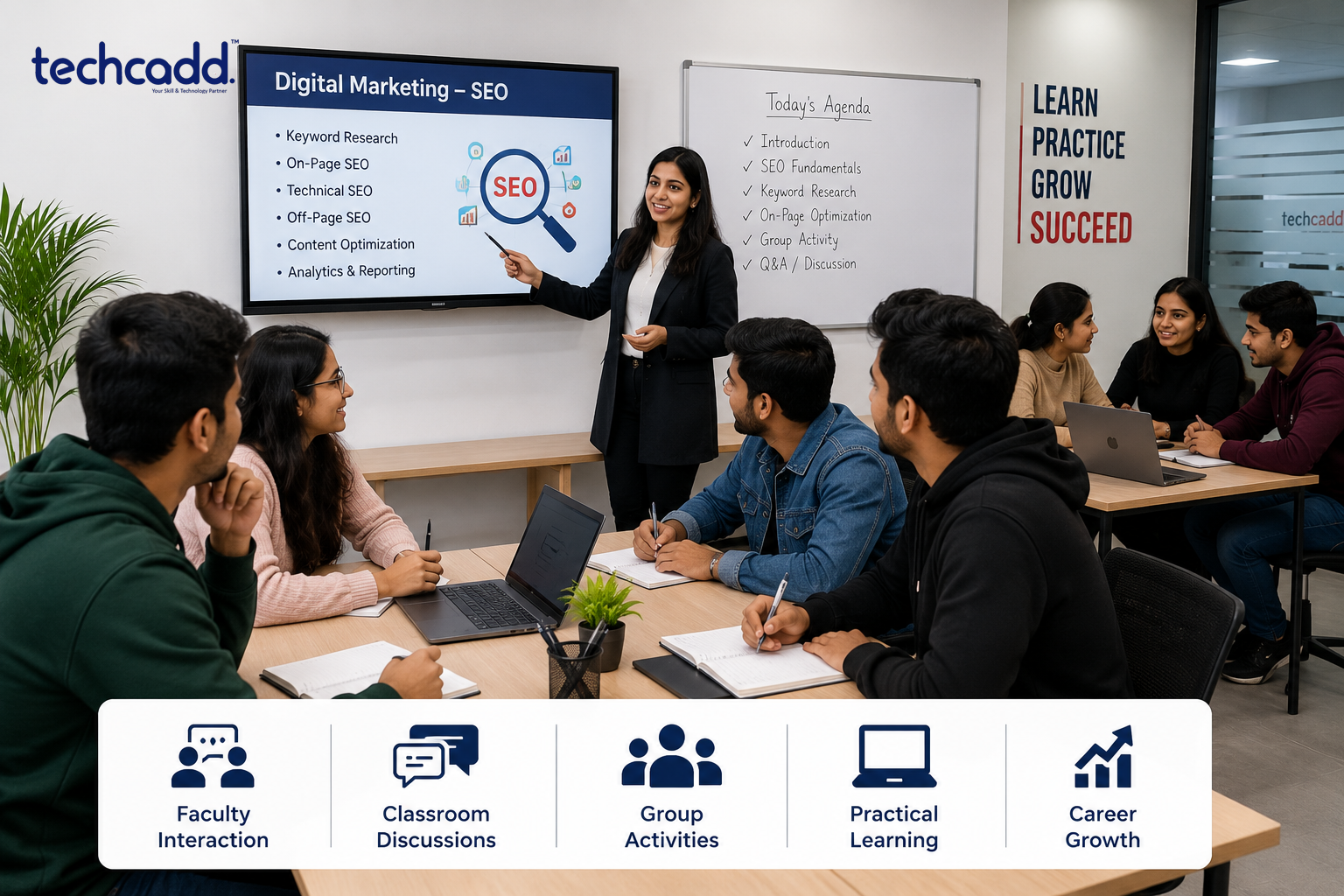
Classroom Learning Experience at Techcadd
The Classroom Learning Experience at Techcadd is designed to provide students with an interactive, engaging, and practical environment where they can learn concepts through faculty interaction, classroom discussions, group activities, demonstrations, and practical exercises. A positive classroom environment can make learning more effective because students get opportunities to ask questions, participate in discussions, share ideas, and understand concepts through practical examples.
At Techcadd, classroom sessions focus on creating an environment where students can actively participate rather than simply listening to lectures. Faculty interaction allows learners to clarify their doubts and understand topics step by step. Students can communicate with trainers, discuss different approaches, and receive guidance while working on assignments and practical activities.
Interactive Faculty Sessions
Faculty interaction is an important part of the classroom learning experience. Trainers explain concepts in a structured manner and encourage students to participate during sessions. Students can ask questions related to the topic being discussed and receive explanations based on practical examples.
Interactive sessions can help beginners feel more comfortable when learning new concepts. Instead of being hesitant about asking questions, students can discuss their difficulties with faculty members and improve their understanding through continuous interaction.
Classroom Discussions
Discussions provide students with an opportunity to share their thoughts and learn from different perspectives. During classroom discussions, learners can participate in conversations related to digital marketing, technology, business, websites, social media, SEO, content creation, and other relevant subjects.
Students may approach a topic from different viewpoints, which can encourage critical thinking and better understanding. Classroom discussions also help learners improve their communication skills and become more confident when explaining their ideas.
Group Activities
Group activities create opportunities for students to collaborate with their classmates. Learners can work together on assignments, marketing ideas, research activities, presentations, content planning, and practical tasks.
Working in groups helps students understand the importance of teamwork. They learn how to divide responsibilities, communicate with team members, share ideas, and complete tasks within a given timeframe. These skills can be useful in professional environments where employees frequently work as part of marketing and project teams.
Practical Learning Environment
A classroom becomes more valuable when students can connect theoretical concepts with practical applications. At Techcadd, practical learning activities can help learners understand how concepts are applied in real-world situations.
For example, students learning digital marketing may work on keyword research, content planning, social media activities, website optimization, SEO exercises, graphic design tasks, or other practical assignments. These activities allow learners to gain experience while receiving guidance from trainers.
Student Participation
Active student participation is an important part of an effective learning environment. Students can participate in questions and answers, discussions, presentations, group activities, and practical exercises. Participation encourages learners to become more involved in their education.
Students can also learn from one another during classroom activities. Different students may have different ideas or approaches, creating opportunities for peer learning and collaboration.
Doubt Resolution and Faculty Support
Learning a new skill often involves questions and challenges. Faculty interaction provides students with opportunities to discuss their doubts during classroom sessions. Trainers can explain difficult concepts through examples and step-by-step demonstrations.
This type of support can help learners build confidence and avoid confusion when moving from basic concepts to more advanced topics.
Collaborative Learning
Collaborative learning encourages students to work together and exchange knowledge. Group discussions and activities can help learners understand that successful projects often require teamwork, communication, creativity, and problem-solving.
Students can learn how to listen to others, provide suggestions, accept feedback, and contribute to shared assignments. These qualities can support their future academic and professional development.
Professional Learning Environment
A professional classroom environment can help students become familiar with the type of communication and collaboration expected in workplaces. Through presentations, group discussions, practical activities, and project-based exercises, learners can gradually develop professional confidence.
The classroom experience at Techcadd aims to combine structured instruction with active participation so students can learn in a comfortable and engaging environment.
Building Communication Skills
Classroom activities are not limited to technical learning. Discussions, presentations, and group tasks can also help students improve communication skills. Learners get opportunities to explain their ideas, participate in conversations, and communicate with faculty members and classmates.
Strong communication skills can be valuable during interviews, internships, client interactions, team meetings, and professional presentations.
A Positive Student Experience
The Classroom Learning Experience at Techcadd reflects an approach that combines faculty interaction, discussions, group activities, practical exercises, and collaborative learning. The objective is to create a learning environment where students can participate actively, ask questions, develop practical understanding, and build confidence.
Through classroom interaction and teamwork, students can gain more than subject knowledge. They can also develop communication, collaboration, problem-solving, and presentation skills that can support their future career development.
Overall, the classroom environment at Techcadd provides students with opportunities to learn, interact, collaborate, and practice concepts in an engaging setting. Faculty guidance, student discussions, group activities, and practical learning together contribute to a meaningful classroom experience for learners preparing to develop their professional skills.
