


Digital Marketing Certification Course in Punjab — 2026–27 Batch Details
Digital marketing has become one of the most important parts of modern business growth. As companies increasingly depend on websites, search engines, social media platforms, online advertising, and digital communication to reach customers, the demand for skilled digital marketing professionals continues to grow. A Digital Marketing Certification Course in Punjab — 2026–27 provides students, fresh graduates, entrepreneurs, working professionals, and business owners with an opportunity to develop practical knowledge and industry-oriented digital marketing skills.
The course is designed to introduce learners to the complete digital marketing ecosystem, from building an online presence and improving search engine visibility to running paid advertising campaigns and analyzing marketing performance. Instead of focusing only on theoretical concepts, a professional digital marketing certification program can help learners understand how digital strategies are planned, implemented, measured, and optimized in real-world situations.
What Is a Digital Marketing Certification Course?
A Digital Marketing Certification Course is a structured training program that teaches learners how businesses use digital channels to promote products, services, brands, and websites. These channels include search engines, social media, websites, email, online advertising platforms, video platforms, and other digital communication channels.
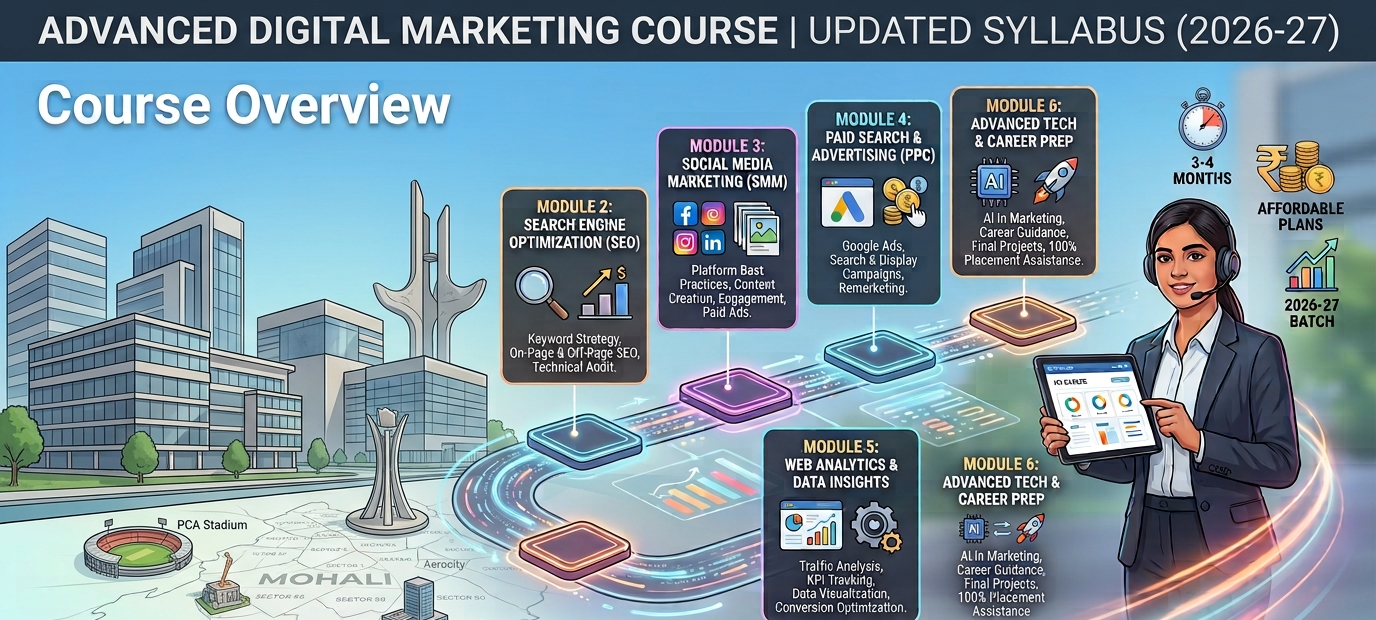
The Digital Marketing Certification Course in Punjab for the 2026–27 batch is intended to provide comprehensive exposure to important areas of digital marketing. Students can learn about Search Engine Optimization (SEO), Search Engine Marketing (SEM), Google Ads, Social Media Marketing (SMM), Content Marketing, Email Marketing, Affiliate Marketing, YouTube Marketing, Google Analytics, lead generation, conversion optimization, and AI tools for marketing.
By learning these concepts together, students can develop an understanding of how different digital marketing channels work individually and how they can be combined to create an effective marketing strategy.
Why Learn Digital Marketing in 2026–27?
The digital business environment is continuously changing. Consumers use search engines, social media, websites, mobile applications, and online marketplaces to discover information and make purchasing decisions. Businesses therefore need professionals who understand how to communicate with online audiences and measure the performance of digital campaigns.
The 2026–27 batch can be particularly useful for learners who want to understand current digital marketing practices and modern marketing technologies. Along with traditional digital marketing techniques, students can become familiar with analytics, automation, content creation tools, and AI-assisted marketing workflows.
Digital marketing is also a flexible career field. Learners can work with digital marketing agencies, startups, e-commerce companies, educational organizations, technology companies, local businesses, or corporate marketing teams. Some professionals also choose freelancing or develop their own online businesses after gaining sufficient knowledge and practical experience.
Digital Marketing Course Curriculum
A comprehensive digital marketing certification course should cover the major areas required to understand and execute online marketing campaigns.
1. Search Engine Optimization (SEO)
SEO is one of the core components of digital marketing. It focuses on improving a website's visibility in organic search engine results.
Students can learn important SEO concepts such as:
-
Keyword research
-
Search intent
-
On-page SEO
-
Off-page SEO
-
Technical SEO
-
Website optimization
-
Meta titles and descriptions
-
Heading optimization
-
Internal linking
-
Backlink fundamentals
-
Local SEO
-
SEO audits
-
Search performance analysis
Practical SEO exercises can help students understand how keywords are selected, how web pages are optimized, and how search performance can be monitored.
2. Google Ads and PPC Marketing
Paid advertising is another important part of digital marketing. PPC, or Pay-Per-Click advertising, allows businesses to promote their products and services through paid advertising platforms.
Students can learn concepts such as:
-
Campaign structure
-
Keyword targeting
-
Search advertisements
-
Display advertising
-
Audience targeting
-
Ad copy
-
Budget management
-
Bidding concepts
-
Conversion tracking
-
Campaign optimization
-
Performance analysis
Learning PPC helps students understand how businesses use paid campaigns to generate traffic, leads, sales, and brand awareness.
3. Social Media Marketing
Social media platforms provide businesses with opportunities to communicate directly with their target audiences. Social Media Marketing teaches students how to create, manage, and evaluate social media campaigns.
The course may cover:
-
Social media strategy
-
Content planning
-
Audience research
-
Facebook and Instagram marketing
-
LinkedIn marketing
-
YouTube marketing
-
Social media advertising
-
Engagement strategies
-
Content calendars
-
Social media analytics
Students can also learn how to create content strategies according to different audiences and business objectives.
4. Content Marketing
Content plays an important role in attracting and educating online audiences. Content marketing involves creating useful and relevant material for potential customers.
Students can learn how to create:
-
Blog posts
-
Website content
-
Social media posts
-
Video content ideas
-
Infographics
-
Promotional content
-
Email content
-
Landing page copy
The focus is generally on creating content that provides value while supporting marketing objectives such as traffic generation, engagement, lead generation, and conversions.
5. Website and Landing Page Fundamentals
A website is often the central component of a company's digital presence. Digital marketers should understand the basic elements that influence website performance.
Students can learn about:
-
Website structure
-
Landing pages
-
User experience fundamentals
-
Calls-to-action
-
Conversion-focused content
-
Website speed concepts
-
Mobile-friendly design
-
Basic website analytics
Understanding these concepts helps marketers communicate effectively with web developers and identify areas that may affect marketing performance.
6. Email Marketing
Email marketing is used by businesses to communicate with existing and potential customers. It can be useful for lead nurturing, promotions, newsletters, customer communication, and retention.
Students can learn about:
-
Email campaign planning
-
Subscriber lists
-
Email content
-
Subject lines
-
Segmentation
-
Automation concepts
-
Campaign measurement
-
Open and click performance
-
Lead nurturing
7. Lead Generation
Lead generation focuses on attracting potential customers and collecting relevant information through digital channels.
Students can learn how to develop lead-generation strategies using:
-
Landing pages
-
Contact forms
-
Social media
-
Search campaigns
-
Content marketing
-
Email campaigns
-
Paid advertising
They can also learn how leads move through different stages before becoming customers.
8. Google Analytics and Digital Marketing Analytics
Data plays an important role in modern marketing. Digital marketing analytics helps businesses understand where website visitors come from, what users do on websites, and which campaigns perform effectively.
Students can learn about:
-
Website traffic
-
User behavior
-
Traffic sources
-
Campaign performance
-
Conversions
-
Engagement metrics
-
Reporting
-
Performance measurement
Analytics knowledge helps digital marketers make decisions based on data rather than assumptions.
9. YouTube Marketing
Video has become a major digital communication format. YouTube marketing teaches learners how businesses can use video content to build awareness, educate audiences, and promote products or services.
Students can explore:
-
YouTube channel optimization
-
Video titles
-
Descriptions
-
Keywords
-
Thumbnail concepts
-
Video content planning
-
Audience engagement
-
YouTube analytics
-
YouTube advertising fundamentals
10. Affiliate Marketing
Affiliate marketing is a performance-based digital marketing model in which products or services are promoted through affiliate partners.
Students can understand:
-
Affiliate marketing concepts
-
Affiliate networks
-
Product selection
-
Content-based promotion
-
Tracking
-
Commissions
-
Performance measurement
This module can help learners understand another important digital business model.
AI in Digital Marketing
Artificial Intelligence is becoming increasingly useful in digital marketing. Modern marketers can use AI-assisted tools for tasks such as brainstorming, content planning, keyword research, data analysis, campaign ideas, customer segmentation, and workflow automation.
A modern Digital Marketing Certification Course in Punjab 2026–27 can introduce students to responsible and practical use of AI tools. The objective should not be to replace fundamental marketing knowledge but to help learners use technology to improve efficiency and productivity.
Students can learn how AI can support:
-
Content ideation
-
Marketing research
-
Campaign planning
-
Audience analysis
-
Content optimization
-
Reporting
-
Data interpretation
-
Marketing automation
Practical Training and Live Projects
Practical experience is an important part of digital marketing education. Students should have opportunities to apply concepts through assignments, case studies, campaign exercises, website projects, SEO audits, social media plans, and analytics reports.
Live-project-based learning can help students understand the complete process of developing and executing a digital marketing strategy. For example, learners may work on a sample business website, identify suitable keywords, prepare an SEO plan, create social media content, design a paid advertising strategy, and analyze campaign results.
Such activities can improve problem-solving abilities and give learners greater confidence when working on real marketing tasks.
Who Can Join the Digital Marketing Certification Course?
The course can be suitable for a wide range of learners, including:
-
Students pursuing graduation
-
BCA, BBA, B.Com, BA, and other degree students
-
Fresh graduates
-
Job seekers
-
Working professionals
-
Entrepreneurs
-
Small business owners
-
Freelancers
-
E-commerce professionals
-
Social media enthusiasts
-
Individuals interested in online business
Prior technical knowledge is generally not required to begin learning digital marketing. Basic computer and internet knowledge can be helpful, while advanced technical programming skills are not usually necessary for most digital marketing roles.
Career Opportunities After Digital Marketing Certification
After completing a digital marketing certification course, learners can explore different career paths depending on their interests and skills.
Possible job profiles include:
-
Digital Marketing Executive
-
Digital Marketing Specialist
-
SEO Executive
-
SEO Specialist
-
Social Media Executive
-
Social Media Specialist
-
PPC Executive
-
Google Ads Specialist
-
Content Marketing Executive
-
Email Marketing Executive
-
Digital Marketing Analyst
-
Performance Marketing Executive
-
E-commerce Marketing Executive
With experience, professionals may progress toward senior specialist, strategist, team-lead, or managerial roles.
Benefits of Digital Marketing Certification
A professional certification can provide several benefits to learners. It demonstrates that the learner has completed structured training and understands important concepts covered in the program.
Key benefits can include:
-
Industry-oriented digital marketing knowledge
-
Practical exposure to marketing tools
-
Understanding of SEO and paid advertising
-
Social media marketing skills
-
Analytics and reporting knowledge
-
Content marketing experience
-
Exposure to AI-assisted marketing tools
-
Portfolio-building opportunities
-
Better understanding of digital business strategies
-
Preparation for entry-level digital marketing roles
However, certification works best when it is supported by practical skills and demonstrable project work. Building a portfolio of assignments and projects can help learners present their capabilities more effectively.
Why Choose a Digital Marketing Course in Punjab?
Punjab has a growing ecosystem of businesses, startups, educational institutions, e-commerce companies, service providers, and digital agencies. As businesses expand their online presence, digital marketing skills can be useful across multiple industries.
Learning through a Punjab-based training institute can also provide students with access to structured classroom or online learning, depending on the institute's available format. Local learners may benefit from interacting with trainers, participating in practical activities, completing assignments, and receiving career-oriented guidance.
2026–27 Batch Details
The Digital Marketing Certification Course in Punjab — 2026–27 Batch is designed for learners who want to develop practical digital marketing knowledge and prepare themselves for opportunities in the digital industry.
The exact batch schedule, course duration, fee structure, class timings, mode of training, certification process, placement assistance, and eligibility criteria may vary according to the training institute. Students should check the institute's latest official batch announcement before enrollment.
Conclusion
The Digital Marketing Certification Course in Punjab — 2026–27 can be a valuable learning opportunity for students, freshers, professionals, entrepreneurs, and aspiring freelancers who want to understand the rapidly developing digital marketing industry. By covering essential areas such as SEO, Google Ads, PPC, Social Media Marketing, Content Marketing, Email Marketing, YouTube Marketing, Affiliate Marketing, Lead Generation, Analytics, and AI-powered marketing, the course can provide learners with a broad foundation in digital marketing.
The most effective learning approach combines theoretical understanding with practical assignments, projects, case studies, campaign exercises, and analytics. Students who consistently practice these skills can build a stronger portfolio and become better prepared for entry-level opportunities.
As businesses continue to invest in their online presence, digital marketing remains an important skill across industries. Choosing a structured certification course for the 2026–27 batch can help learners develop relevant knowledge, understand modern marketing tools, and take their first steps toward a career in digital marketing.

Comments (0)
No comments yet. Be the first to share your thoughts!