


What Is CAD CAM?
CAD stands for Computer-Aided Design, while CAM stands for Computer-Aided Manufacturing.
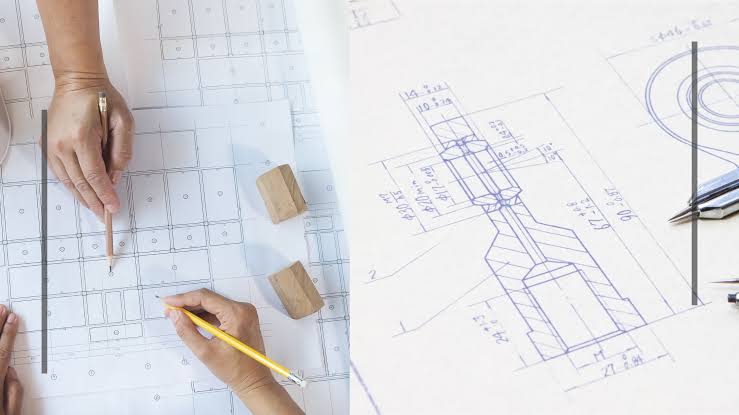
CAD is used to create and modify engineering drawings and 3D models using computer software. Designers can develop components, assemblies, layouts, and detailed manufacturing drawings digitally.
CAM focuses on using computer-based systems to plan and control manufacturing operations. CAD models can be used as a starting point for manufacturing processes such as machining and CNC programming.
Together, CAD and CAM create a digital workflow between design and manufacturing.
For example, a mechanical designer may first create a 3D component using CAD software. The design can then be prepared for manufacturing using CAM processes. This makes CAD CAM knowledge particularly relevant to mechanical engineering, manufacturing, automobile, industrial equipment, and product-development applications.
Why Choose a CAD CAM Training Institute in Mohali?
Mohali is part of the Chandigarh Tricity and has a growing ecosystem of technology, engineering, manufacturing, and industrial businesses. For students and professionals in Mohali, Chandigarh, Zirakpur, Panchkula, and nearby areas, learning CAD CAM locally can provide convenient access to structured classroom and practical training.
When selecting a CAD CAM institute, learners should consider more than just the course name. Important factors include:
- Practical software training
- Experienced instructors
- Industry-oriented syllabus
- 2D and 3D design practice
- Mechanical component modeling
- Assembly and drafting exercises
- Manufacturing-oriented concepts
- Project-based learning
- Practice assignments
- Engineering drawing knowledge
- Career guidance
The right training environment can help learners move from basic software commands to complete design workflows.
CAD CAM Course in Mohali — What Will You Learn?
A comprehensive CAD CAM course generally combines fundamental design concepts with software-based practical training.
1. Engineering Drawing Fundamentals
Students can begin with engineering drawing concepts such as:
- Drawing standards
- Orthographic views
- Sectional views
- Dimensioning
- Geometric construction
- Tolerances
- Isometric representation
- Basic mechanical drawing
Understanding these fundamentals is important because CAD software is a tool for creating engineering designs; software knowledge alone is not a substitute for design understanding.
2. 2D CAD Drafting
The next stage usually focuses on creating accurate 2D drawings.
Students learn concepts such as:
- Lines and construction geometry
- Circles and arcs
- Layers
- Dimensions
- Text and annotations
- Blocks
- Hatching
- Layouts
- Plotting
- Drawing management
2D drafting skills are useful for preparing manufacturing drawings, layouts, fabrication drawings, and engineering documentation.
3. 3D CAD Modeling
3D modeling is an important part of modern mechanical design.
Students can practice creating:
- Mechanical components
- Shafts
- Brackets
- Flanges
- Housings
- Plates
- Machine parts
- Complex profiles
Typical modeling concepts include sketches, constraints, extrusions, revolves, holes, patterns, fillets, chamfers, and feature-based modeling.
4. Assembly Design
After learning individual components, learners can work with assemblies.
Assembly training can include:
- Component insertion
- Assembly constraints
- Component positioning
- Sub-assemblies
- Exploded views
- Interference checking
- Assembly drawings
Assembly design helps students understand how individual mechanical parts work together as a complete product.
5. Engineering Drawing and Detailing
A CAD CAM course should also introduce learners to manufacturing documentation.
Students may practice:
- Detailed part drawings
- Dimensions
- Tolerances
- Section views
- Bill of materials
- Drawing annotations
- Revision information
- Manufacturing documentation
These skills are particularly useful when preparing designs for production.
CAD CAM Software Training
The exact software included in a course can vary by institute and program. Depending on the training curriculum, CAD CAM learners may encounter software used for mechanical design, drafting, product development, and manufacturing.
Common software categories include:
- 2D CAD drafting software
- 3D mechanical CAD software
- Product design software
- CAM software
- CNC programming software
- Manufacturing simulation tools
Students should check the current syllabus before enrolling and confirm which software versions and modules are included.
Who Can Join a CAD CAM Course?
CAD CAM training can be suitable for different types of learners.
Engineering Students
Students pursuing mechanical engineering, production engineering, automobile engineering, or related disciplines can use CAD CAM training to develop practical software skills alongside their academic studies.
Diploma Students
Diploma students in mechanical and related engineering fields can learn CAD modeling, drafting, assemblies, and manufacturing-oriented design concepts.
Graduates
Engineering graduates who want to move toward mechanical design, product development, CAD drafting, or manufacturing-related roles can use specialized CAD CAM training to strengthen their practical skills.
Working Professionals
Professionals can also learn CAD CAM to improve their existing design skills or transition toward a design-oriented role.
CAD CAM Course Eligibility
Eligibility depends on the individual institute and course level. In general, CAD CAM training can be pursued by students and professionals with an interest in engineering design and manufacturing.
A basic understanding of mathematics, engineering concepts, and technical drawing can be helpful for advanced mechanical CAD CAM training.
For beginners, it is usually better to start with fundamental drafting and modeling concepts before moving into advanced modules.
CAD CAM Course Duration
The duration of a CAD CAM course depends on the syllabus, software modules, practical hours, and learner level.
Short-term courses may focus on a particular software package, while comprehensive programs may cover multiple CAD and CAM modules.
Before enrolling, students should compare:
- Total course duration
- Number of practical sessions
- Software modules
- Project work
- Assignments
- Assessment method
- Certification
- Career support
A longer course is not automatically better. The quality and practical depth of training are equally important.
Practical Training Is Important in CAD CAM
One of the most important factors when choosing a CAD CAM Training Institute in Mohali is practical exposure.
Watching an instructor create a model is different from creating the same model independently.
A practical training program should give learners opportunities to:
- Understand the design requirement.
- Create a 2D sketch or engineering drawing.
- Build the 3D model.
- Apply dimensions and constraints.
- Create assemblies where required.
- Prepare detailed drawings.
- Review the design.
- Understand manufacturing considerations.
- Complete project-based assignments.
Regular practice can improve software familiarity and problem-solving ability.
CAD CAM Projects for Students
Projects can help learners apply multiple skills together.
Possible practice projects include:
- Mechanical brackets
- Bearing housings
- Flange assemblies
- Shaft components
- Coupling designs
- Machine components
- Gear-related assemblies
- Sheet-metal components
- Product assemblies
- Manufacturing-oriented component models
A project should ideally include more than a final 3D model. Learners can practice sketches, dimensions, individual components, assemblies, drawings, and design documentation as part of the complete workflow.
Career Opportunities After CAD CAM Training
CAD CAM skills can support several career paths within engineering design and manufacturing.
Depending on qualifications, experience, portfolio, and additional skills, learners may explore roles such as:
- CAD Designer
- CAD Engineer
- Mechanical Design Engineer
- CAD Draftsman
- Design Engineer
- Product Design Engineer
- 3D Modeler
- Mechanical Drafting Professional
- CAM Programmer
- CNC-related design or programming roles
- Manufacturing Design Professional
Career opportunities and job responsibilities vary between companies and positions. Candidates should build strong fundamentals rather than relying only on a certificate.
Skills That Can Improve Your CAD CAM Career
Learning software is only one part of becoming a strong CAD CAM professional.
Students should also develop:
Design Thinking
Learn to understand the purpose and function of a component before creating its geometry.
Engineering Drawing
Become comfortable reading and creating technical drawings.
Accuracy
Dimensions, constraints, tolerances, and design intent are important in engineering work.
3D Modeling
Practice creating clean and editable models instead of simply producing the required shape.
Assembly Understanding
Learn how components interact and fit together.
Manufacturing Awareness
Understand how design decisions can affect machining, fabrication, assembly, and production.
Problem Solving
Real design work often involves modifying existing models and solving geometry or assembly problems.
Communication
Engineers frequently need to explain designs through drawings, models, documentation, and presentations.
How to Choose the Best CAD CAM Training Institute in Mohali
There are several factors students should compare before selecting an institute.
Check the Syllabus
Look for a syllabus that covers both fundamentals and practical applications.
Check Practical Hours
CAD CAM is skill-based, so hands-on practice should be a major part of the training.
Check Software Modules
Confirm which CAD and CAM software packages are included.
Ask About Projects
Find out whether students complete individual projects and assignments.
Understand Certification
Check what type of course completion certificate is provided and what it represents.
Evaluate Faculty Experience
Experienced trainers can help students understand both software operations and engineering workflows.
Ask About Career Guidance
If your goal is employment, ask whether the institute provides interview preparation, portfolio guidance, resume support, or placement assistance.
CAD CAM Training in Mohali for Beginners
Beginners should not feel that they need advanced CAD knowledge before joining a course.
A well-structured beginner program can start with basic drafting and gradually introduce:
2D Drawing → Sketching → 3D Modeling → Assemblies → Detailing → Manufacturing Concepts → Projects
This progression allows students to build their skills step by step.
The most important habit for beginners is regular practice. CAD commands become easier to remember when they are repeatedly applied to real design problems.
CAD CAM for Mechanical Engineering Students
Mechanical engineering students can particularly benefit from CAD CAM knowledge because design and manufacturing are closely connected to mechanical engineering.
CAD can help students visualize components and assemblies in three dimensions, while CAM concepts can introduce them to the relationship between digital models and manufacturing processes.
Combining academic engineering knowledge with practical CAD CAM skills can therefore make a student's technical profile stronger.
Frequently Asked Questions About CAD CAM Training in Mohali
What is CAD CAM training?
CAD CAM training teaches computer-aided design and computer-aided manufacturing concepts. Depending on the course, it may include 2D drafting, 3D modeling, assemblies, engineering drawings, manufacturing concepts, and CAM workflows.
Which software is used in CAD CAM courses?
The software depends on the institute and course. A program may include 2D CAD, 3D mechanical CAD, CAM, or CNC-related software. Students should confirm the current syllabus before admission.
Is CAD CAM useful for mechanical engineers?
Yes. CAD CAM skills are relevant to mechanical design, product development, manufacturing, engineering documentation, and several related technical roles.
Can beginners learn CAD CAM?
Yes. Beginners can start with basic drafting and gradually progress to 3D modeling, assemblies, detailing, and advanced applications.
How long does it take to learn CAD CAM?
The learning time depends on the course depth, software covered, previous knowledge, and amount of practical practice. Consistent hands-on practice is important for developing proficiency.
Is a CAD CAM certificate enough to get a job?
A certificate alone does not guarantee employment. Employers may also evaluate technical knowledge, practical skills, projects, software proficiency, engineering fundamentals, communication, and interview performance.
What should I look for in a CAD CAM institute in Mohali?
Look for practical training, a relevant syllabus, experienced trainers, appropriate software, project work, assignments, certification, and career guidance.
Can diploma students learn CAD CAM?
Yes. Diploma students from mechanical and related engineering backgrounds can develop CAD CAM skills through suitable beginner or intermediate programs.
Conclusion
Choosing the right CAD CAM Training Institute in Mohali can help students and professionals build practical skills in computer-aided design and manufacturing. The best learning approach combines software training with engineering drawing, 2D drafting, 3D modeling, assembly design, detailing, manufacturing awareness, and project practice.
Before joining a course, compare the syllabus, practical training, software modules, course duration, projects, faculty, certification, and career support.
Most importantly, focus on developing the ability to create, understand, modify, document, and communicate engineering designs. These skills can provide a stronger foundation for progressing toward CAD, mechanical design, product development, and manufacturing-related career opportunities.

Comments (0)
No comments yet. Be the first to share your thoughts!