


Artificial Intelligence in 2026: Trends, Benefits, Uses and Future Scope
Artificial Intelligence, commonly known as AI, has become one of the most important technologies of the modern digital world. From smartphones and search engines to education, healthcare, banking, marketing and software development, AI is becoming part of almost every industry. Artificial Intelligence in 2026: Trends, Benefits, Uses and Future Scope In 2026, artificial intelligence is no longer simply a futuristic concept. It is a practical technology that individuals, students, businesses and organizations are using to improve productivity, automate repetitive tasks and make better decisions.
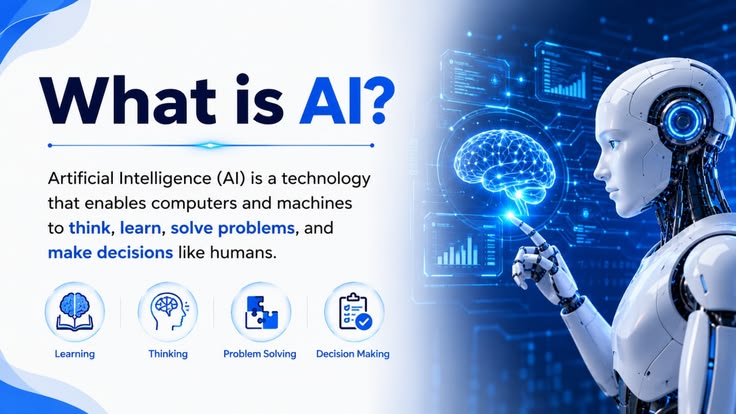
AI enables computers and machines to perform tasks that normally require human intelligence. These tasks can include learning from information, understanding language, recognizing images, solving problems, generating content and making predictions. The rapid development of machine learning, generative AI, natural language processing and computer vision has made AI more powerful and accessible than ever before.
What Is Artificial Intelligence?
Artificial Intelligence is a branch of computer science that focuses on creating systems capable of performing intelligent tasks. Traditional computer programs follow predefined instructions, while AI systems can analyze data, identify patterns and produce useful outputs based on what they have learned.
For example, an AI-powered application can understand a user's question and generate an answer. A recommendation system can analyze previous activities and suggest movies, products or music. Similarly, an AI image recognition system can identify objects or faces in photographs.
AI works through technologies such as machine learning, deep learning, natural language processing, computer vision and neural networks. These technologies allow computers to process large amounts of information and perform increasingly complex tasks.
Why Is AI Important in 2026?
The importance of AI continues to increase because businesses and individuals generate huge amounts of digital information every day. Manually analyzing all this information can be difficult and time-consuming. AI can process information quickly and identify patterns that may be difficult for humans to discover.
Organizations are using AI to improve customer service, automate workflows, analyze business data, create marketing content, detect fraud and develop new products. Students are using AI tools for learning, research, brainstorming and productivity.
The key advantage of AI is not simply automation. AI can help people make better use of their time by handling repetitive tasks and assisting with complex activities.
Major AI Trends in 2026
1. Generative AI
Generative AI is one of the most significant developments in artificial intelligence. These systems can create text, images, audio, video, presentations, code and other types of content from user instructions.
Businesses can use generative AI for content creation, marketing ideas, customer communication and documentation. Students can use it as a learning assistant, while developers can use AI tools to understand code and accelerate development.
However, users should always review AI-generated content because AI systems can sometimes produce inaccurate or incomplete information.
2. AI-Powered Automation
AI automation is helping businesses reduce repetitive manual work. Tasks such as data entry, document processing, customer support, scheduling and reporting can increasingly be supported by intelligent systems.
AI automation allows employees to spend more time on creative, strategic and customer-focused activities. This can improve productivity while reducing the time required for routine operations.
3. AI in Education
Education is another major area where AI is creating new opportunities. AI-powered learning platforms can provide personalized explanations, practice questions and learning recommendations.
Students can use AI to understand difficult concepts, improve writing, generate study ideas and practice technical subjects. Teachers can also use AI for creating educational resources, organizing information and developing customized learning materials.
The best approach is to use AI as a learning assistant rather than depending on it completely. Students should develop their own understanding and critical-thinking skills.
4. AI in Healthcare
AI is increasingly being used in healthcare for areas such as medical image analysis, research, patient monitoring and administrative automation.
AI can help professionals analyze large datasets and identify patterns that may support decision-making. Researchers can also use AI to analyze scientific information and accelerate certain stages of research.
Healthcare applications require careful human oversight because medical decisions involve safety, ethics and professional responsibility.
5. AI in Digital Marketing
Digital marketing has changed significantly with the growth of AI. Marketing teams can use AI to generate content ideas, analyze customer behavior, segment audiences and improve campaign planning.
AI can help identify trends in customer data and provide insights that marketers can use when creating campaigns. It can also support social media content creation, email marketing and search engine optimization.

Despite these advantages, successful marketing still requires creativity, strategy and a clear understanding of the target audience.
6. AI in Software Development
AI is also changing the way software development. AI coding assistants can help developers generate code suggestions, explain programming concepts, identify possible errors and create documentation.
For beginners, AI can be useful for learning programming concepts. For experienced developers, it can help speed up repetitive development tasks.
However, developers should review generated code carefully for security, performance and correctness before using it in production systems.
Benefits of Artificial Intelligence
AI offers many benefits across different industries.
Increased Productivity
AI can complete many repetitive tasks quickly, allowing employees to focus on more important responsibilities. This can improve overall productivity.
Faster Data Analysis
Organizations often have large amounts of data. AI can analyze this information and identify patterns, trends and relationships faster than traditional manual methods.
Better Customer Experience
AI-powered chatbots and virtual assistants can provide quick responses to common customer questions. Personalized recommendations can also improve user experiences.
Automation of Repetitive Tasks
Tasks that require repeated actions can often be automated using AI. This can save time and reduce human effort.
Personalized Experiences
AI can analyze individual preferences and behavior to provide personalized recommendations, learning experiences and services.
Support for Decision-Making
AI can provide data-based insights that help organizations understand situations and make informed decisions. Human judgment remains important, especially for complex decisions.
Applications of AI in Everyday Life
People interact with AI more frequently than they may realize. Smartphone voice assistants, navigation applications, online recommendations, spam filters, translation tools and search engines can all use AI technologies.
Streaming platforms use recommendation systems to suggest content. Online stores recommend products based on browsing and purchasing behavior. Email services can detect spam and organize messages.
AI is therefore not limited to large technology companies. It is becoming part of everyday digital experiences.
AI Skills for Students
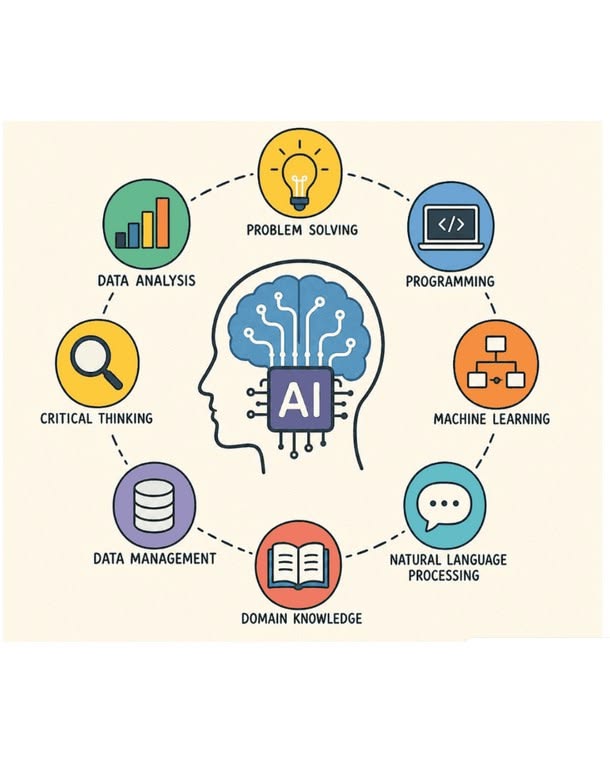
Students who want to build careers in technology can benefit from learning AI-related skills. A strong foundation in computer concepts, programming and problem-solving is useful.
Students can begin with programming languages such as Python and learn basic concepts of data structures, algorithms and databases. After developing these fundamentals, they can explore machine learning, data analysis, natural language processing and generative AI.
Students should also develop communication, creativity, analytical thinking and teamwork skills. Modern technology careers require a combination of technical and soft skills.
AI and Career Opportunities
The growth of AI is creating opportunities in several technology-related fields. Some career areas include AI development, machine learning, data analysis, software engineering, AI product development, automation and AI-assisted digital marketing.
There are also opportunities for professionals who understand how to use AI tools effectively within their existing industries. For example, marketers, designers, developers, teachers and business professionals can use AI to improve their workflows.
The future job market is likely to reward people who can work effectively with AI while also demonstrating strong human skills.
Challenges of Artificial Intelligence
Although AI provides many benefits, it also creates challenges.
One major challenge is accuracy. AI systems can sometimes generate incorrect information. Therefore, important information should be verified using reliable sources.
Privacy is another important concern. AI systems may process large amounts of data, so organizations need appropriate data protection practices.
Cybersecurity is also becoming increasingly important as AI technology develops. Organizations must protect AI systems and the data they process.
There are also concerns about employment and workforce changes. AI may automate some tasks, but it can also create new roles and change the skills required for existing jobs. Continuous learning will therefore become increasingly important.
Responsible Use of AI
Responsible AI use means using artificial intelligence carefully, ethically and transparently. Users should understand that AI is a tool and should not blindly accept every output it produces.
Organizations should consider privacy, security, fairness, transparency and accountability when implementing AI systems.
Students should use AI to improve their learning rather than submitting AI-generated work without understanding it. Professionals should review AI-generated content and ensure that it meets quality and accuracy requirements.


Comments (0)
No comments yet. Be the first to share your thoughts!