


The Ultimate Guide to Machine Learning: From Zero to Hero
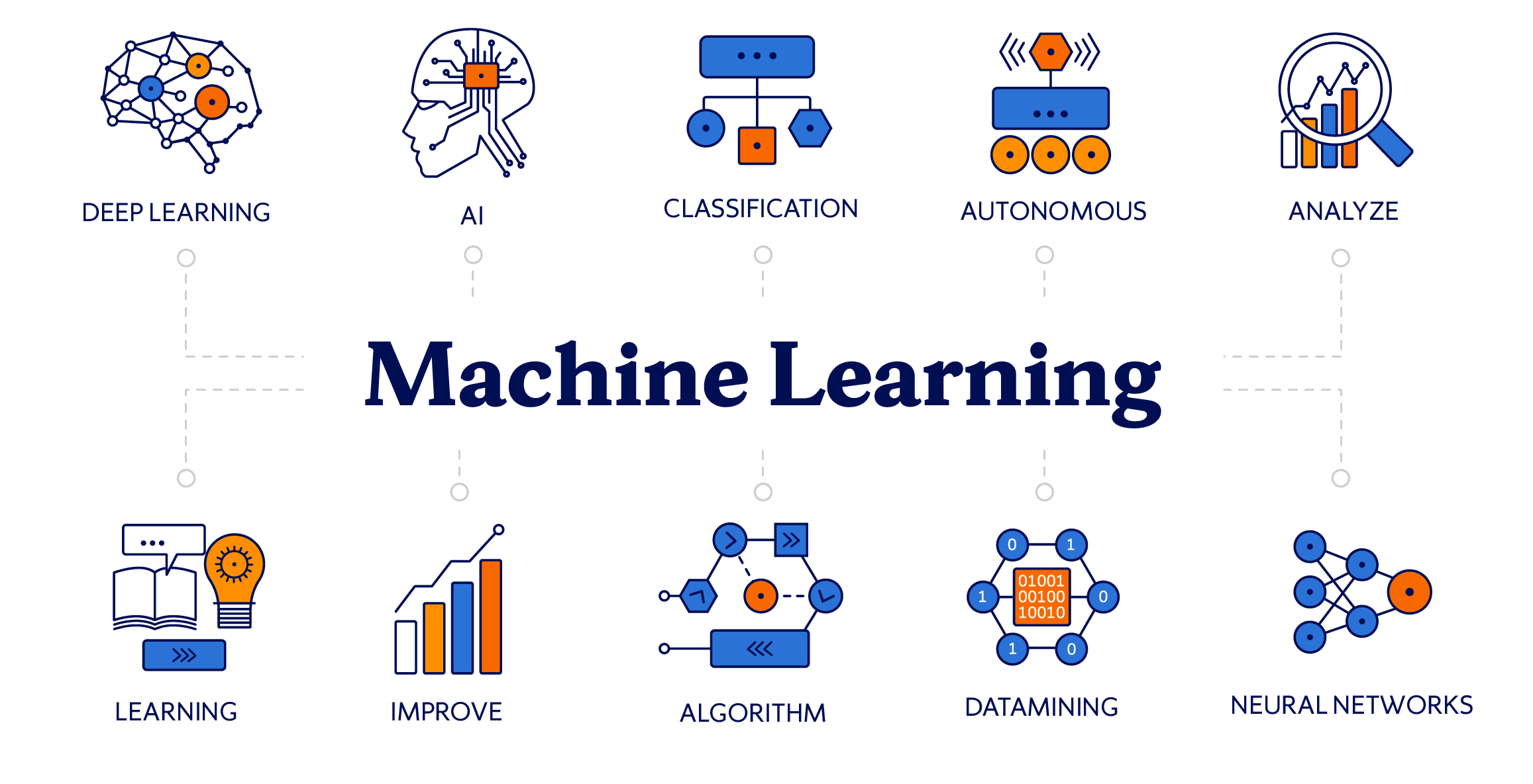
Think of Machine Learning (ML) as the transition from giving a computer a fish (programming specific rules) to teaching a computer how to fish (giving it data so it can find its own rules).
In the traditional world of computing, a human writes a program: "If X happens, do Y." In Machine Learning, we provide the "X" and the "Y," and the computer figures out the relationship between them.
1. What is Machine Learning? (The High-Level View)
At its core, Machine Learning is a branch of Artificial Intelligence (AI) focused on building systems that learn from data to improve their performance on a specific task over time. It is the engine behind the "magic" we see every day, from Netflix recommendations to self-driving cars.
The Core Mechanism: Data + Algorithms
While humans learn through experience and senses, machines learn through mathematical patterns.
-
The Input: Large datasets (images, text, numbers).
-
The Algorithm: A set of statistical instructions (like Linear Regression or Neural Networks).
-
The Model: The final "brain" created after the algorithm has finished studying the data.
Why It’s Not Just "Regular" Programming
| Feature | Traditional Programming | Machine Learning |
| Input | Data + Explicit Rules | Data + Answers (Labels) |
| Output | Results | The Rules (The Model) |
| Flexibility | Rigid; fails if a new scenario arises | Adaptive; gets better with more data |
| Best For | Calculating taxes, simple apps | Facial recognition, medical diagnosis |
2. Machine Learning Meaning: The "How" and "Why"
To understand the meaning of ML, you have to look at the three main ways machines actually "learn." Each method is suited for different types of problems.
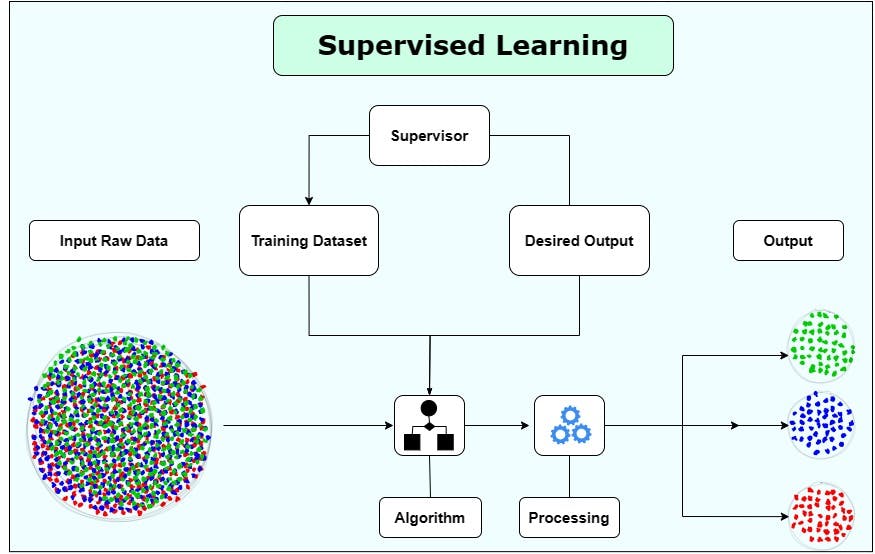
A. Supervised Learning (The Teacher Approach)
The machine is given a dataset where the "right answers" are already labeled. For example, showing a computer 10,000 photos labeled "Cat" and 10,000 labeled "Dog."
Goal: To predict the label of a new, unseen image.
B. Unsupervised Learning (The Pattern Finder)
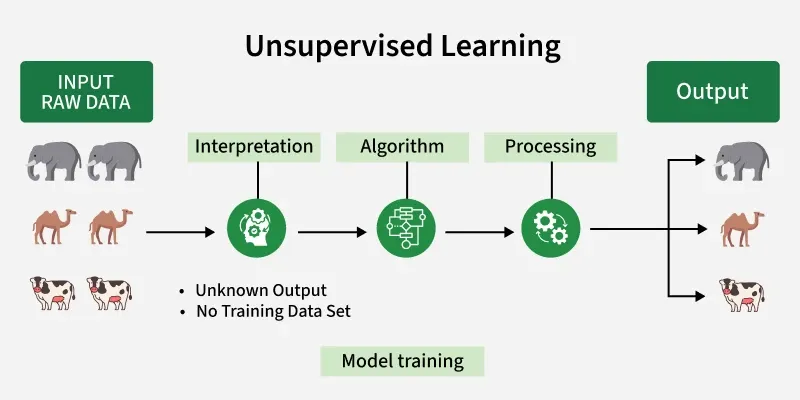
The machine gets data with no labels and no teacher. It has to find hidden structures or patterns on its own.
Example: A clothing brand gives its customer database to an ML model. The model notices that one group buys only on weekends and another group only buys luxury items. This is called Clustering.
C. Reinforcement Learning (The Reward System)
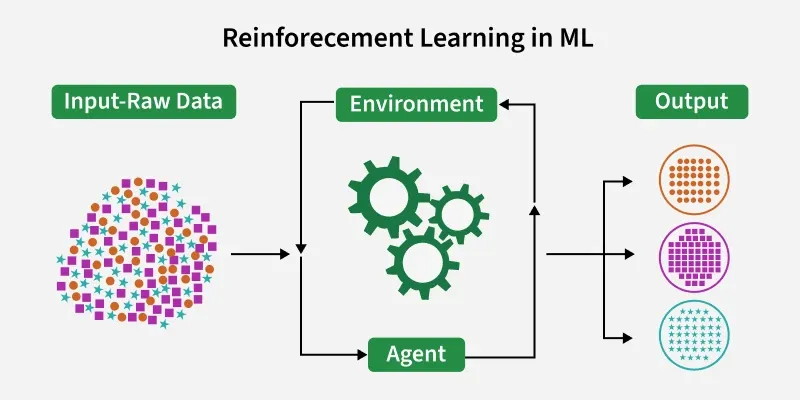
This is how we train robots or AI to play games (like Chess or Go). The machine takes an action, gets a "reward" for a good move or a "penalty" for a bad one, and learns to maximize its score over time.
3. Machine Learning Explained for Beginners: A Real-World Walkthrough
Let’s demystify ML by looking at a process you likely interact with every single day: The Spam Filter.
Step 1: Data Collection
To build a spam filter, you need thousands of emails. Some are "Ham" (good emails) and some are "Spam."
Step 2: Feature Extraction
The computer doesn't "read" the email like a human. It looks for features:
-
Does it contain the word "Free"?
-
Is the sender's address from a strange domain?
-
Are there too many exclamation points?
Step 3: Training the Model
The algorithm looks at the features of the spam emails and calculates the probability. It might find that 99% of emails containing "congratulations" and "wire transfer" are spam.
(This is a simplified version of Bayes' Theorem, a common math foundation for ML.)
Step 4: Prediction & Evaluation
Once trained, the model encounters a new email. It evaluates the features, runs them through its learned "rules," and gives a prediction: 98% chance this is Spam. It then moves the email to the junk folder.
Common Use Cases You Use Daily
-
Virtual Assistants: Siri and Alexa use Natural Language Processing (a type of ML) to understand your voice.
-
Social Media: Your Instagram feed isn't chronological; an ML model predicts what will keep you scrolling the longest.
-
Banking: ML models monitor your spending patterns. If you live in New York and a $2,000 purchase is made in London, the model flags it as "fraud" in milliseconds.
Stay connected:For code snippets,project ideas and industry new,follow us on Instagram and join our developer network on Linkedin.


Comments
No comments yet. Be the first to comment.
Leave a Comment