


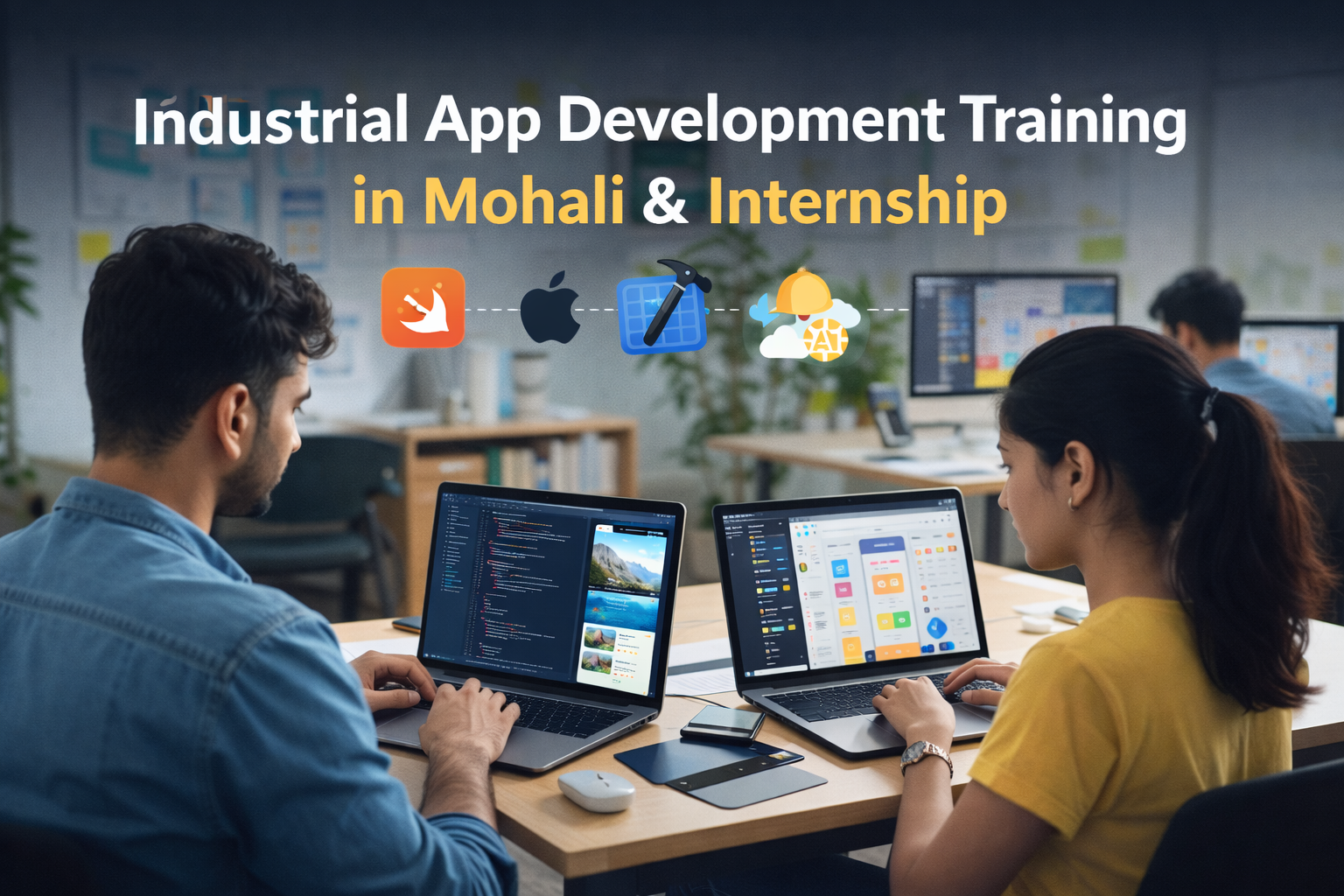
Practical Mobile App Training Mohali – Build Real Industry Skills
The demand for skilled mobile developers is growing rapidly across India. Startups, IT companies, and product-based firms are actively hiring students who have practical exposure—not just theoretical knowledge. If you are searching for an app development internship, industrial app development training, or practical mobile app training Mohali, this guide will help you understand how structured industry training can transform your career.
Mohali has emerged as a fast-growing IT hub in North India. With expanding tech parks, startup ecosystems, and proximity to Chandigarh, students now have access to real industrial exposure without relocating to metro cities.
Why an App Development Internship Matters
An internship is more than a certificate. It is your first real entry into the professional software ecosystem.
Key Benefits of an App Development Internship:
-
Hands-on project development experience
-
Exposure to real client requirements
-
Code optimization and debugging practice
-
Version control (Git) workflow understanding
-
Team collaboration in development cycles
-
Resume-building live projects
During a structured internship program, students typically work on:
-
UI design implementation
-
API integration
-
Database connectivity
-
Bug fixing and testing
-
App deployment process
This practical exposure bridges the gap between classroom learning and real industry demands.
What is Industrial App Development Training?
Industrial App Development Training is a structured, industry-aligned learning program designed to prepare students for real software development environments. Unlike short-term crash courses that focus primarily on theory or isolated coding exercises, industrial training emphasizes complete application development using professional workflows, tools, and standards.
The primary objective of industrial training is to bridge the gap between academic knowledge and industry expectations. Many students learn programming languages in college but struggle to apply them in real projects. Industrial training solves this problem by immersing learners in practical scenarios that mirror actual IT company operations.
Instead of just learning syntax, students build fully functional applications from scratch. They understand how a project moves from idea to launch. This exposure builds confidence, improves technical clarity, and enhances job readiness.
Core Elements of Industrial App Development Training
A comprehensive industrial app development program follows a structured lifecycle similar to professional software companies.
1. Requirement Analysis
Every successful app begins with a clear understanding of requirements. In this phase, students learn how to:
-
Understand client needs
-
Identify target audience
-
Define core features
-
Create functional documentation
-
Break down modules logically
Students are trained to convert vague ideas into clear development objectives. They learn how to ask the right questions before starting development. This prevents confusion and reduces errors later in the process.
Requirement analysis also teaches structured thinking. Instead of randomly coding features, students learn to follow a roadmap.
2. UI/UX Planning
User Interface (UI) and User Experience (UX) planning is a critical stage in app development. Industrial training teaches students how to:
-
Design wireframes
-
Plan screen flow
-
Maintain layout consistency
-
Focus on user-friendly navigation
-
Optimize visual hierarchy
Students understand that an app must not only function well but also feel intuitive. They learn how design decisions impact user engagement and retention. Exposure to UI planning tools and layout structuring improves their design sense, even if they are primarily developers.
This stage ensures that students think beyond coding and focus on usability.
3. Database Architecture
A strong application relies on a well-structured database. During industrial training, students learn:
-
Database design fundamentals
-
Table structuring
-
Data relationships
-
CRUD operations
-
Data security practices
They understand how backend data interacts with frontend components. This clarity is essential for developing scalable and efficient apps.
Database architecture training also introduces students to performance optimization concepts. They learn how improper data handling can slow down applications and how to prevent such issues.
4. Backend Integration
Backend integration connects the application to servers and databases. In industrial training, students practice:
-
API integration
-
Authentication systems
-
Data fetching and parsing
-
Error handling
-
Cloud-based services integration
This stage is where theoretical coding transforms into functional applications. Students experience real-time debugging when APIs fail or data formats mismatch.
Understanding backend connectivity builds problem-solving ability. Students learn to diagnose errors logically rather than guessing solutions.
5. Testing & Debugging
Testing is a vital part of professional development. Industrial training emphasizes:
-
Functional testing
-
UI testing
-
Performance testing
-
Bug tracking
-
Debugging techniques
Students learn that coding is only part of development. Ensuring that the application runs smoothly is equally important.
They practice identifying runtime errors, fixing logical bugs, and optimizing performance. This hands-on debugging exposure significantly increases technical confidence.
6. Deployment & Maintenance
The final stage of industrial training involves launching applications. Students understand:
-
App build generation
-
Store deployment basics
-
Version management
-
Post-launch updates
-
Performance monitoring
Deployment training ensures that learners are familiar with production environments. Many students graduate without ever deploying an application. Industrial training fills this gap.
Maintenance awareness also teaches long-term thinking. Applications require updates, feature improvements, and bug fixes. Students learn how real-world projects evolve over time.
Understanding Professional Development Workflow
Industrial App Development Training goes beyond technical modules. Students are introduced to professional software practices such as:
Agile Methodology
They learn how development happens in short cycles called sprints. This helps in managing workload efficiently and delivering incremental updates.
Sprint Planning
Students experience task division, deadline setting, and progress tracking. This improves time management skills.
Documentation
Professional projects require documentation. Students learn to write basic technical documentation, improving communication clarity.
Client Communication Basics
Understanding client expectations is crucial. Industrial training introduces learners to structured communication, feedback implementation, and presentation skills.
These soft skills are often ignored in regular academic courses but are essential in real IT environments.
Why Students in Mohali Prefer Industrial Training
In Mohali, industrial app development training has become increasingly popular among students from B.Tech, BCA, MCA, and diploma backgrounds. Many learners opt for training during summer breaks or final semesters to gain practical exposure before campus placements.
There are several reasons for this growing trend:
-
Strong regional IT ecosystem
-
Startup-driven app development projects
-
Affordable training opportunities
-
Internship-linked programs
-
Higher placement readiness
Students recognize that competition in the job market is intense. Companies expect freshers to contribute from day one. Industrial training equips them with real development experience, reducing the gap between academic knowledge and workplace performance.
How Industrial Training Improves Employability
Industrial App Development Training enhances employability in multiple ways:
-
Builds a strong project portfolio
-
Improves technical interview performance
-
Develops logical problem-solving ability
-
Strengthens debugging skills
-
Creates real-world coding confidence
Recruiters often prefer candidates who can demonstrate live projects instead of only theoretical understanding. Industrial training provides tangible proof of capability.
Practical Mobile App Training Mohali – Why Location Matters
Mohali has steadily become a preferred destination for technology training. Its growing IT infrastructure and startup presence make it ideal for students seeking practical exposure.
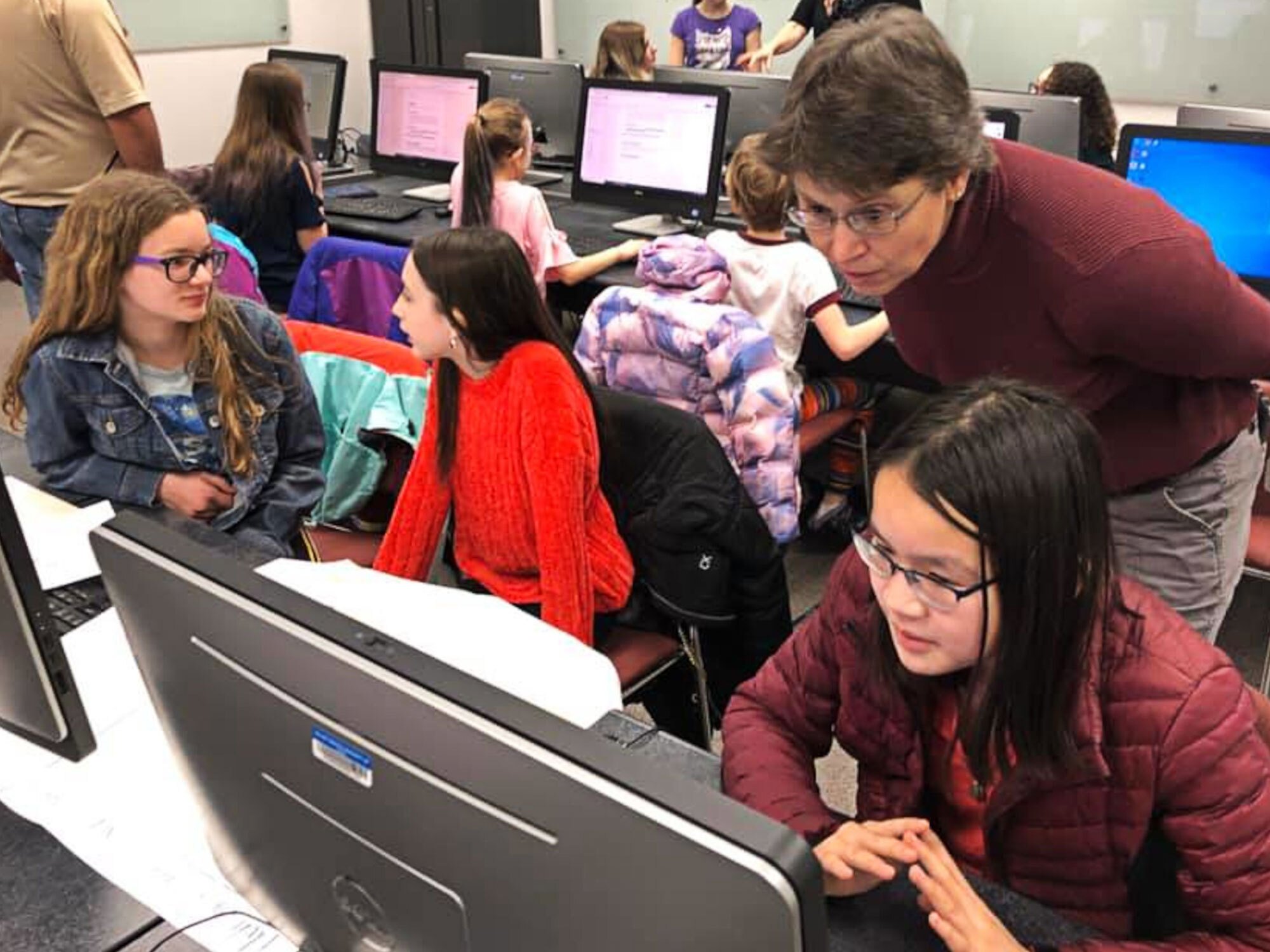

Advantages of Choosing Practical Mobile App Training in Mohali:
-
Affordable compared to metro cities
-
Access to local IT companies
-
Internship + training combination programs
-
Networking with regional tech professionals
-
Exposure to startup-based app projects
This ecosystem allows students to work on Android, iOS, and cross-platform app development technologies with hands-on guidance.
Skills You Develop During Practical Mobile Training
A quality training program focuses on both technical and professional skill development.
Technical Skills:
-
Programming fundamentals (Java, Kotlin, Swift, Dart)
-
UI/UX layout implementation
-
Firebase & API integration
-
Database handling (SQL/NoSQL)
-
App publishing basics
-
Performance optimization
Professional Skills:
-
Problem-solving approach
-
Debugging mindset
-
Project documentation
-
Client communication basics
-
Interview preparation
These combined skills significantly increase placement opportunities.
Who Should Join?
This training is ideal for:
-
12th pass students exploring IT careers
-
B.Tech / BCA / MCA students
-
Fresh graduates
-
Job seekers switching to tech
-
Students looking for summer internships
Even beginners can start from fundamentals and gradually move to advanced app deployment techniques.
Career Opportunities After Training
Completing an app development internship or industrial app development training opens multiple career paths:
-
Android Developer
-
iOS Developer
-
Flutter Developer
-
Mobile App Tester
-
UI Developer
-
Junior Software Engineer
-
Freelance App Developer
Entry-level salaries for trained mobile developers in North India range between ₹2.5–5 LPA, depending on skill level and project exposure.
Why Practical Exposure is the Real Game-Changer
Employers today look for students who can:
-
Build complete applications
-
Understand real project lifecycle
-
Solve runtime errors independently
-
Work with APIs and databases
Certificates alone are not enough. Practical execution ability defines career growth.
Final Thoughts
Choosing the right app development internship, enrolling in structured industrial app development training, and opting for practical mobile app training Mohali can significantly accelerate your entry into the IT industry.
With consistent practice, real-time projects, and industry mentorship, students can confidently move from learners to professional app developers.
If your goal is skill-based growth, job readiness, and real development exposure, industrial mobile app training is the smartest next step in your tech career journey.
Certificates may add value to your resume, but they do not guarantee employability. Recruiters and hiring managers evaluate candidates based on their ability to build, troubleshoot, and deliver functional applications. The technology industry rewards execution, problem-solving ability, and hands-on expertise. When students rely only on theory-based learning, they often struggle during technical interviews or real project assignments. This is why practical exposure plays a decisive role in long-term career growth.
An internship or structured industrial training environment teaches you how development actually works inside companies. You begin to understand timelines, client expectations, performance optimization, bug resolution, and collaboration within a team. These experiences build confidence and professional maturity. When you have developed complete applications—from design to deployment—you naturally stand out from candidates who only possess classroom knowledge.
Choosing the right app development internship ensures that your learning aligns with real industry standards. A well-designed internship exposes you to live project structures, source code management systems, documentation practices, and testing protocols. These components are critical in modern software development. By working in such environments, you develop discipline in writing clean code and maintaining structured architecture.
Enrolling in structured industrial app development training further strengthens your foundation. Industrial training simulates real-world software workflows. Students learn requirement analysis, UI planning, backend integration, debugging strategies, and deployment processes. Instead of focusing only on syntax, you begin to understand logic-building and scalability. This mindset shift is what transforms a beginner into a professional developer.
Opting for practical mobile app training Mohali provides additional strategic advantages. Mohali’s expanding IT ecosystem creates opportunities for students to interact with startups and service-based companies. Local training combined with practical exposure allows learners to gain industry-ready skills without relocating to larger cities. Access to regional tech networks also improves internship and placement prospects.
Consistent practice remains the backbone of skill development. Writing code daily, building mini-projects, solving logical challenges, and debugging errors strengthen your technical muscle. Real-time projects accelerate learning because they present unpredictable challenges. When you encounter real bugs, API failures, or performance issues, you learn far more than through theoretical exercises.
Industry mentorship is another powerful catalyst. Experienced mentors guide students through best practices, architecture decisions, and optimization techniques. They provide insights into common interview questions, portfolio building, and career direction. Mentorship shortens the learning curve and prevents common beginner mistakes.
Over time, students transition from merely following tutorials to independently building complete applications. This independence is the true sign of readiness. When you can conceptualize an idea, design the UI, connect APIs, handle databases, test functionality, and deploy successfully, you become an asset to any organization.
If your goal is skill-based growth, job readiness, and authentic development exposure, industrial mobile app training is the smartest step forward. It equips you not only with technical competence but also with professional confidence. In a competitive technology landscape, practical ability defines long-term success. By committing to hands-on learning and real execution, you build a sustainable and rewarding career in mobile app development.

Comments
No comments yet. Be the first to comment.
Leave a Comment