Civil engineering has evolved rapidly with the introduction of advanced design and construction technologies. Today, most construction companies, infrastructure firms, and architectural consultancies rely heavily on specialized software to design, analyze, and manage projects efficiently. Because of this technological shift, civil engineers must learn modern design tools to remain competitive in the industry. The Civil Software Course at TechCadd Mohali is designed to provide students with practical training in the most widely used civil engineering software.
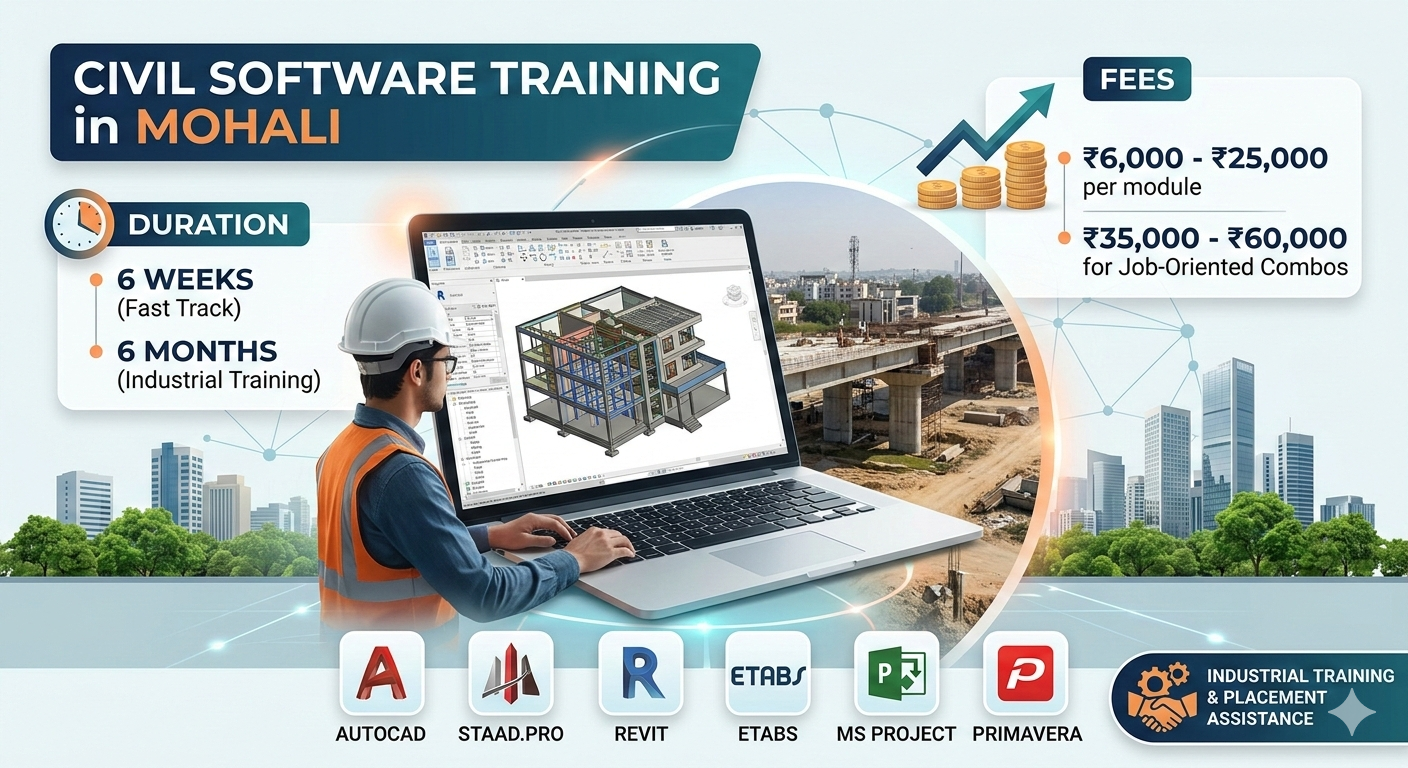
If you are planning to enroll in a professional civil software training program, one of the most common questions students ask is about the civil software course fees in Mohali, civil training cost, and course duration. Understanding these factors helps students choose the right training program that fits their career goals and budget.
At TechCadd Mohali, the civil software training programs are structured to provide a perfect balance between affordability, practical learning, and industry-focused curriculum. The institute offers comprehensive training modules that help civil engineering students and professionals gain practical design knowledge required in the construction and infrastructure sectors.
Understanding Civil Software Course Fees in Mohali
The civil software course fees in Mohali vary depending on the course level, number of software modules included, and the depth of training offered. Basic courses that focus on a single software tool usually cost less, while advanced programs that cover multiple civil engineering software applications may have higher training fees due to their extensive curriculum.
At TechCadd Mohali, the training fees are designed to be affordable so that students from different educational backgrounds can access quality technical training. The course fee structure usually depends on several important factors such as:
-
Number of software tools included in the course
-
Course duration and training hours
-
Practical lab sessions and project work
-
Certification provided after course completion
-
Placement support and career guidance
Students can choose from short-term training programs as well as comprehensive professional courses depending on their career requirements. The institute also provides flexible learning options that make it easier for students and working professionals to join the training program.
Civil Software Training Cost in Mohali
The civil training cost in Mohali typically depends on the level of specialization offered in the course. A basic AutoCAD training program may have a lower cost compared to a complete civil design course that includes structural analysis software and BIM technology.
TechCadd Mohali offers different training modules that allow students to select the course according to their career goals. Some students prefer learning only drafting software such as AutoCAD, while others choose a complete professional civil design program that includes multiple tools used in large construction projects.
The training cost usually includes:
-
Classroom training sessions
-
Practical lab practice
-
Study material and learning resources
-
Project-based assignments
-
Industry-relevant certification
By investing in professional civil software training, students gain practical technical skills that significantly improve their chances of getting hired in construction companies, engineering consultancies, and infrastructure organizations.
Civil Software Course Duration in Mohali
Another important factor students consider before enrolling is the civil software course duration in Mohali. The duration of the course depends mainly on the number of software modules included and the depth of training provided.
In most cases, civil software courses are designed to be completed within a few months while providing intensive practical training. At TechCadd Mohali, the course duration typically ranges between 3 months to 6 months, depending on the selected training program.
Students may choose from different learning formats such as:
-
Regular weekday batches
-
Weekend classes for working professionals
-
Fast-track training programs
-
Customized learning schedules
These flexible options allow students to complete their training at a pace that suits their schedule while still gaining complete knowledge of civil design software.
Software Covered in Civil Software Training
The Civil Software Course at TechCadd Mohali covers several important design and structural analysis tools that are widely used in the construction and engineering industries. Learning these tools helps students understand modern construction design processes and develop practical project skills.
Some of the commonly included software modules are:
-
AutoCAD for drafting and design
-
Revit Architecture for BIM modeling
-
STAAD Pro for structural analysis
-
ETABS for building design and analysis
-
Basic project planning concepts
These software tools help students learn how to create technical drawings, perform structural analysis, and develop building models used in real construction projects.
Benefits of Civil Software Training
Professional civil software training offers several advantages for civil engineering students and professionals who want to improve their technical skills and career opportunities.
Some major benefits include:
-
Learning modern construction design technology
-
Developing practical drafting and structural analysis skills
-
Improving job opportunities in construction companies
-
Understanding real project workflows used in industry
-
Gaining technical confidence in design software
With the increasing use of technology in construction projects, civil engineers who are trained in design software have a significant advantage in the job market.
Career Opportunities After Civil Software Course
After completing civil software training, students can explore several career opportunities in the construction and infrastructure sector. Many companies prefer hiring candidates who have practical experience with design and drafting tools used in modern engineering projects.
Some common job roles include:
These roles involve working on construction drawings, structural analysis, project design, and infrastructure planning for residential, commercial, and industrial projects.
Why Choose TechCadd Mohali for Civil Software Training
Choosing the right training institute is an important step for building a successful career in civil engineering design. TechCadd Mohali is known for providing industry-focused training programs that help students develop practical skills required by construction companies.
Some reasons students choose TechCadd Mohali include:
-
Industry-oriented course curriculum
-
Practical training with real design concepts
-
Experienced trainers with technical expertise
-
Modern computer lab facilities
-
Flexible batch options for students and professionals
-
Career guidance and placement support
These features make the training program suitable for both beginners and experienced professionals who want to upgrade their skills in civil design software.
Course Overview –
1. Introduction to Civil Engineering Software
The Civil Software Course at TechCadd Mohali begins with a strong introduction to modern civil engineering technologies used in the construction industry. In today's infrastructure and construction sector, engineers must rely on advanced design and analysis software to plan projects efficiently. This course introduces students to the importance of civil design software and how these tools are used in real-world engineering projects. Students learn how digital drafting, 3D modeling, and structural analysis help engineers create safe and accurate designs. The training program focuses on building a strong technical foundation for students who want to develop professional skills in civil engineering design. Through this introduction, students understand how civil engineering software improves project accuracy, reduces errors, and increases productivity in construction planning and structural design.
2. AutoCAD Training for Civil Drafting
AutoCAD is one of the most essential software tools used by civil engineers and designers worldwide. In this module, students learn how to create accurate technical drawings and construction layouts using AutoCAD. The training includes learning basic drafting tools, drawing commands, editing tools, dimensioning, and layout preparation. Students also learn how to prepare floor plans, elevation drawings, and section drawings used in construction documentation. AutoCAD training helps students understand industry drafting standards used by construction companies and engineering consultancies. With practical exercises and real project examples, students gain hands-on experience in creating professional engineering drawings that are used in actual construction projects.
3. Revit Architecture for BIM Modeling
Revit Architecture is widely used in the construction industry for Building Information Modeling (BIM). This module teaches students how to create intelligent 3D building models that include structural and architectural components. Students learn how BIM technology allows engineers and architects to collaborate effectively on large construction projects. The training includes creating walls, floors, roofs, structural components, and building layouts using Revit software. Students also learn how to generate construction documentation, schedules, and 3D visualizations directly from the BIM model. Understanding BIM technology helps civil engineers improve design coordination and project efficiency.
4. Structural Design with STAAD Pro
Structural design is a critical part of civil engineering, and STAAD Pro is widely used for structural analysis and design. In this module, students learn how to analyze building structures and determine the strength and stability of construction components. The training covers load calculations, structural modeling, beam design, column design, and foundation analysis. Students understand how engineers evaluate the safety of structures before construction begins. Through practical exercises, students learn how to design structures that comply with engineering standards and safety regulations used in real construction projects.
5. ETABS for Building Analysis
ETABS is a specialized software used for designing and analyzing multi-story buildings. In this training module, students learn how to perform structural analysis of buildings using ETABS. The training covers structural modeling, load analysis, earthquake load calculations, and building stability evaluation. Students understand how engineers analyze the behavior of buildings under different loads such as wind forces and seismic activity. This module helps students develop skills required for structural engineering and high-rise building design.
6. Construction Drawing Preparation
Construction drawings are essential for communicating engineering designs to construction teams. This module focuses on teaching students how to prepare detailed construction drawings used in real building projects. Students learn how to create plans, elevations, and section views required for construction documentation. The training also includes learning about engineering drawing standards, dimensioning techniques, and layout formatting. By understanding construction drawing preparation, students develop the ability to convert design concepts into clear technical documentation used by engineers, architects, and contractors.
7. Practical Project-Based Learning
Practical learning is one of the most important aspects of the Civil Software Course at TechCadd Mohali. Instead of focusing only on theory, students work on real-world project examples during the training program. These projects help students understand how civil design software is applied in actual construction scenarios. By working on practical assignments, students improve their problem-solving skills and technical understanding. Project-based training also helps students gain confidence in using engineering software tools for professional work.
8. Industry-Oriented Course Curriculum
The course curriculum is designed to match the current requirements of the construction and infrastructure industry. Civil engineering companies today expect engineers to be familiar with modern design tools and digital construction technologies. TechCadd Mohali has structured its civil software training program to include software tools that are widely used by construction companies, architectural firms, and infrastructure organizations. The course focuses on developing practical skills that are directly applicable in real engineering projects.
9. Hands-On Software Practice
Practical software training is essential for mastering civil engineering tools. In this module, students receive extensive hands-on practice using professional civil design software. Each student gets the opportunity to work on real design examples and learn how to apply different commands and tools effectively. Hands-on practice helps students gain confidence in operating the software and improves their technical abilities.
10. Understanding Engineering Drawing Standards
Engineering drawings must follow specific standards and conventions used in the construction industry. This module introduces students to the basic principles of engineering drawing standards. Students learn about drawing scales, dimensioning methods, line types, and layout preparation. Understanding these standards ensures that drawings prepared by engineers are clear, accurate, and easy to interpret by construction teams.
11. Building Layout Design
Building layout design is an important step in construction planning. In this module, students learn how to design building layouts using civil design software. The training includes preparing floor plans, site layouts, and structural component placements. Students understand how engineers plan building structures to ensure proper space utilization, structural stability, and construction efficiency.
12. Structural Analysis Concepts
This module focuses on introducing students to the basic concepts of structural analysis. Students learn how engineers analyze loads, stresses, and forces acting on structures. Understanding these principles helps students design structures that are safe and durable. The training also explains how structural analysis software helps engineers evaluate building strength before construction begins.
13. Infrastructure Project Design
Civil engineering software is widely used in infrastructure projects such as roads, bridges, and commercial buildings. In this module, students learn how software tools assist engineers in planning and designing infrastructure projects. The training helps students understand how digital design technology improves construction accuracy and project planning.
14. Real Construction Case Studies
Learning from real construction projects helps students understand practical engineering challenges. In this module, trainers explain case studies of real construction projects and demonstrate how civil design software is used to solve engineering problems. These case studies provide valuable insights into the practical applications of civil engineering technology.
15. BIM Technology in Construction
Building Information Modeling (BIM) is transforming the construction industry. This module introduces students to the concept of BIM and its importance in modern construction projects. BIM allows engineers, architects, and contractors to collaborate effectively by sharing digital building models. Understanding BIM technology helps students prepare for the future of smart construction.
16. Design Documentation and Reports
Engineering projects require detailed documentation for approval and construction planning. This module teaches students how to prepare technical reports and design documentation using civil engineering software. Students learn how engineers document project details, design calculations, and construction specifications.
17. Professional Workflow in Civil Design
Civil engineers follow a specific workflow when designing construction projects. In this module, students learn about the typical workflow used in engineering consultancies and construction firms. Understanding this workflow helps students adapt easily to professional work environments after completing the training.
18. Software Integration in Construction Projects
Modern construction projects often use multiple software tools for design, modeling, and analysis. This module explains how different civil engineering software tools work together in project planning. Students learn how engineers integrate drafting, structural analysis, and BIM modeling to complete large construction projects efficiently.
19. Career Preparation for Civil Engineers
The course also focuses on preparing students for professional careers in civil engineering design. Trainers guide students on how to apply their software skills in real job roles. Students learn about career opportunities such as CAD engineer, structural designer, and BIM engineer.
20. Job-Oriented Civil Software Training
The primary goal of the Civil Software Course at TechCadd Mohali is to provide job-oriented training that prepares students for employment in the construction industry. By the end of the course, students develop practical design skills and technical knowledge required by engineering companies. The training program helps students become confident professionals capable of working on real engineering projects.
Conclusion
Understanding the civil software course fees in Mohali, civil training cost, and course duration helps students choose the right program that fits their career goals. Professional civil software training is an important step for civil engineering students who want to build a successful career in the construction and infrastructure industry.
The Civil Software Course at TechCadd Mohali provides practical training in industry-standard tools and helps students develop the technical skills required for modern engineering projects. With flexible course duration, affordable training fees, and job-oriented learning, the program prepares students for various career opportunities in civil engineering design and construction technology.





Comments
No comments yet. Be the first to comment.
Leave a Comment