


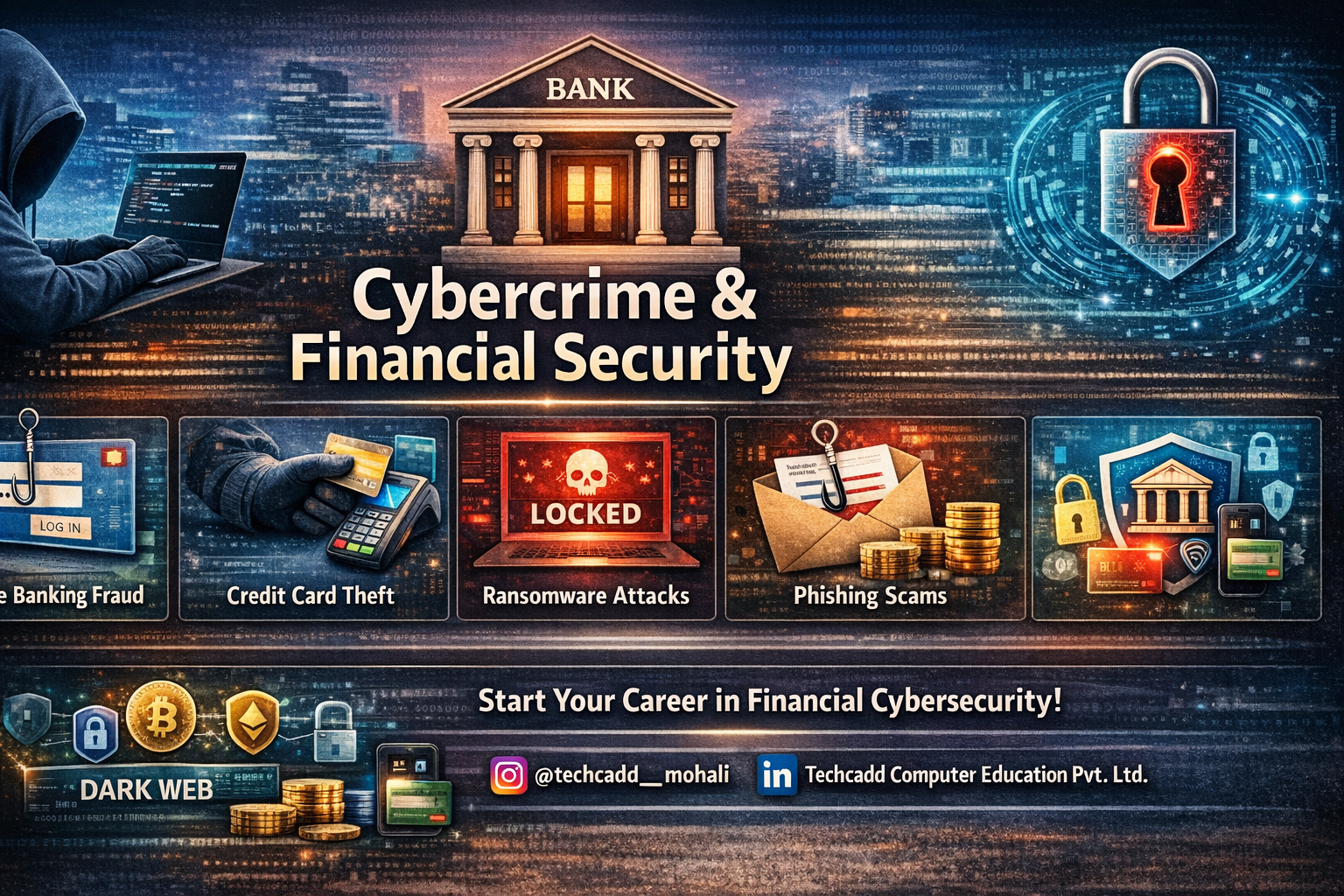
Introduction: The Growing Connection Between Cybercrime and Financial Security
The rapid growth of digital banking, online transactions, mobile wallets, and e-commerce platforms has transformed financial systems worldwide. While these innovations provide convenience and speed, they have also increased cybercrime risks significantly. Financial data has become one of the most valuable targets for cybercriminals because it directly leads to monetary gain.
Cybercrime now affects individuals, businesses, and government institutions. Hackers constantly develop new techniques to exploit digital financial systems. Understanding cybercrime and financial security topics has become essential not only for IT professionals but also for everyday users who rely on digital payment platforms.
Professional training programs like the best cybersecurity course in mohali help students learn real-world cybercrime prevention strategies and financial security practices.
Online Banking Fraud and Financial Data Theft
Online banking fraud has become one of the most common cybercrime categories. Hackers use multiple techniques to gain unauthorized access to banking credentials and financial information. These attacks often involve phishing emails, fake banking websites, and malicious applications designed to steal login credentials.
Cybercriminals also target banking systems through malware attacks that secretly capture user keystrokes or screen activities. Once hackers obtain banking credentials, they can perform unauthorized transactions or sell financial data on dark web marketplaces.
Learning banking security concepts is a crucial part of modern cyber security education. Professional training helps students understand transaction monitoring, fraud detection systems, and financial data encryption techniques.
Credit Card and Debit Card Cyber Fraud
Credit card fraud is another major cybercrime affecting millions of users worldwide. Hackers steal card details through compromised payment gateways, fake shopping websites, or malware-infected systems. Once card details are stolen, cybercriminals perform unauthorized transactions or clone cards for illegal purchases.
Cybercriminals also use card skimming devices installed in ATMs or payment machines to capture card information. This demonstrates how cybercrime is not limited to online attacks but also includes physical financial security threats.
Cyber security professionals are trained to identify payment vulnerabilities and implement advanced encryption protocols to secure financial transactions.
Phishing Scams Targeting Financial Accounts
Phishing attacks specifically targeting financial accounts have increased dramatically in recent years. Hackers send fake emails or SMS messages pretending to be banks, payment platforms, or financial institutions. These messages often create urgency by warning users about account suspension or suspicious transactions.
When users click phishing links, they are redirected to fake websites that capture login credentials. Once hackers obtain access, they perform financial fraud activities immediately.
Understanding phishing detection is a major focus in structured cyber security training. Students learn to analyze suspicious links, verify domain authenticity, and implement phishing protection mechanisms.
Ransomware Attacks on Financial Institutions
Ransomware attacks have become one of the most dangerous cybercrime methods affecting financial organizations. In ransomware attacks, hackers encrypt financial databases and demand payment to restore access. These attacks can shut down entire banking systems and disrupt financial operations.
Financial institutions are primary ransomware targets because they manage large amounts of sensitive data. Organizations invest heavily in cyber security infrastructure to prevent ransomware attacks and maintain customer trust.
Cyber security courses provide practical experience in malware analysis, ransomware detection, and incident response planning, which are essential skills for protecting financial organizations.
Digital Payment Fraud and Mobile Wallet Attacks
Digital payment platforms and mobile wallets have revolutionized financial transactions. However, these platforms have also become attractive targets for cybercriminals. Hackers exploit vulnerabilities in mobile apps, payment APIs, and authentication systems to perform fraudulent transactions.
Mobile wallet fraud often involves SIM swapping, malware attacks, or unauthorized access through weak authentication systems. Users who store financial information on mobile devices without proper security measures become easy targets.
Training programs like the best cybersecurity course in mohali teach students about mobile security frameworks and secure payment system development.
Cryptocurrency Cybercrime and Financial Security Risks
Cryptocurrency has introduced new financial opportunities but also created new cybercrime challenges. Cryptocurrency transactions are decentralized and anonymous, making them attractive targets for hackers and financial criminals.
Cybercriminals use phishing, wallet hacking, and fake crypto investment platforms to steal digital assets. Cryptocurrency exchanges are frequently targeted because they manage large volumes of digital currency.
Cyber security professionals learn blockchain security, crypto wallet protection, and transaction monitoring techniques to prevent cryptocurrency fraud.
Insider Financial Cybercrime Threats
Not all financial cybercrime originates from external hackers. Insider threats are a major concern for financial institutions. Employees with access to sensitive financial systems can misuse data for personal gain or accidentally expose confidential information.
Insider threats often occur due to lack of security awareness, weak access control policies, or improper data management practices. Cyber security training helps organizations implement identity management systems and access control mechanisms to reduce insider risks.
Follow cyber awareness updates and training events through:
Instagram: https://www.instagram.com/techcadd__mohali/
LinkedIn: https://www.linkedin.com/company/techcadd-computer-education-pvt-ltd/?originalSubdomain=in
Financial Identity Theft and Personal Data Exploitation
Financial identity theft occurs when cybercriminals use stolen personal information to perform fraudulent financial activities. Hackers collect sensitive data such as Aadhaar numbers, PAN details, bank account information, and credit card credentials.
Identity theft victims often face financial losses, credit score damage, and legal complications. Cyber security professionals work to detect identity theft patterns and implement identity protection solutions.
Dark Web Financial Data Trading
The dark web has become a marketplace for stolen financial data. Hackers sell banking credentials, credit card details, and personal financial information to other cybercriminals. These data breaches increase financial fraud cases worldwide.
Cyber security experts monitor dark web activities and track leaked financial data to prevent misuse. This advanced cybercrime investigation is a specialized skill taught in professional cyber security courses.
Importance of Cyber Security Education in Financial Protection
Cyber security education helps individuals and professionals understand cybercrime techniques and develop defensive strategies. Financial security knowledge has become essential for IT professionals, banking employees, and digital payment users.
A structured cyber security training program covers:
Ethical hacking fundamentals
Financial fraud detection
Network security
Malware analysis
Incident response
Digital forensics
The best cybersecurity course in mohali provides hands-on training that helps students understand real-world financial cybercrime scenarios.
Career Opportunities in Cybercrime and Financial Security
The demand for cyber security professionals specializing in financial security is growing rapidly. Organizations hire experts to protect financial systems and investigate cybercrime incidents.
Popular career roles include:
Financial Security Analyst
Cyber Fraud Investigator
Digital Forensics Expert
Ethical Hacker
SOC Analyst
Risk and Compliance Specialist
These career opportunities provide high salaries and global job prospects due to increasing cybercrime cases.
Best Financial Security Practices for Individuals and Businesses
Strong financial security practices help reduce cybercrime risks significantly. Individuals should use strong passwords, enable multi-factor authentication, avoid suspicious financial links, and monitor transaction activities regularly.
Businesses should implement advanced encryption, transaction monitoring systems, and cyber security awareness programs to protect financial assets.
Continuous cyber security learning ensures individuals stay updated with modern cybercrime techniques and prevention strategies.
Conclusion: Financial Security Depends on Cyber Awareness
Cybercrime continues to evolve with technological advancements. Financial institutions, businesses, and individuals must understand cybercrime risks to protect financial data and digital transactions.
Cyber security education plays a critical role in preventing financial fraud and building professional expertise. With proper training, individuals can secure financial systems while building successful cyber security careers.


Comments
No comments yet. Be the first to comment.
Leave a Comment