


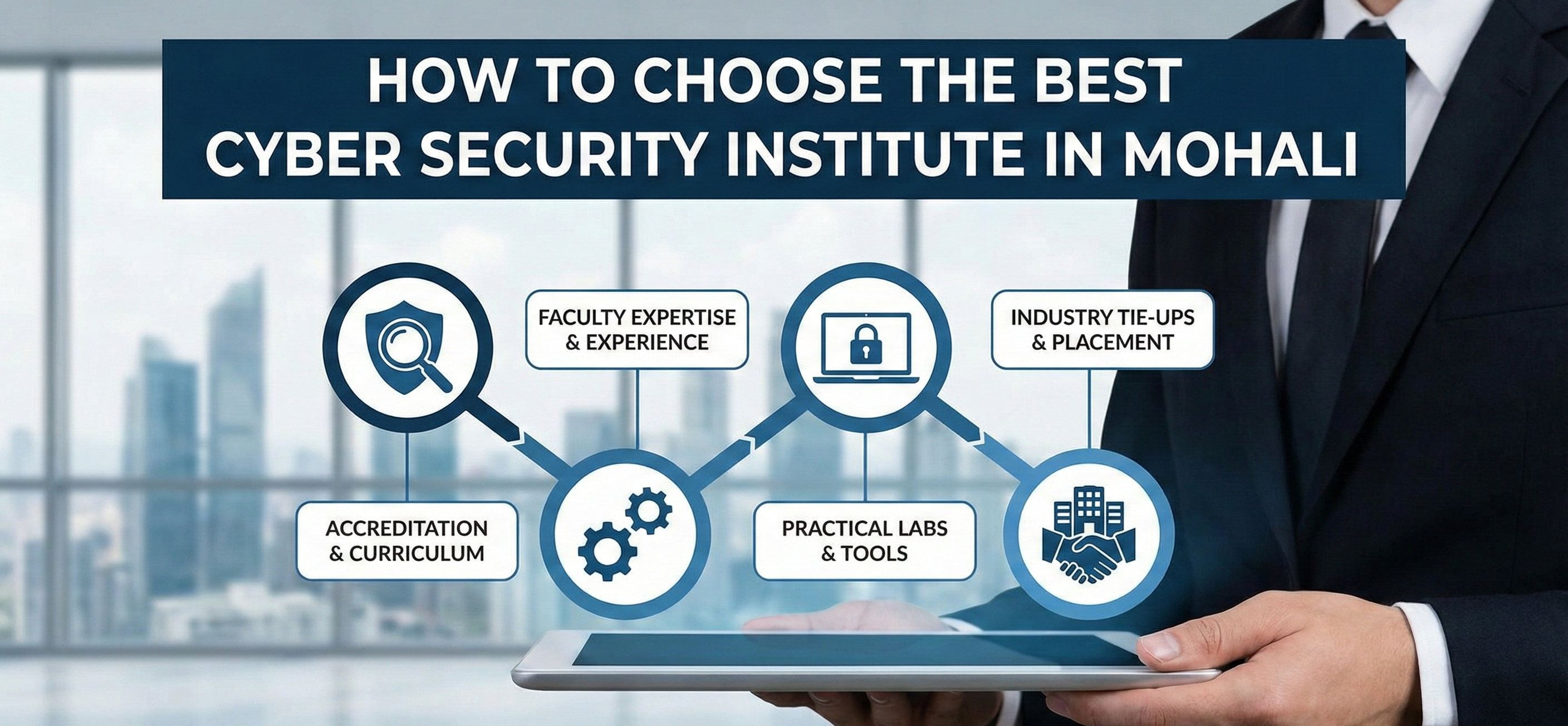
Mohali's Digital Renaissance: From Agricultural Heartland to Cybersecurity Nexus
Mohali's transformation over the past two decades represents one of North India's most remarkable economic evolutions. Once primarily known as Punjab's agricultural gateway and cricketing capital, the city has rapidly ascended as the "Silicon Valley of North India"—a strategic technology hub housing over 300 IT companies, 15+ multinational R&D centers, and India's third-highest concentration of cybersecurity operations outside Delhi-NCR and Bangalore. This metamorphosis began in earnest with the establishment of SAS Nagar (Mohali) as a planned IT corridor in the early 2000s, accelerated by Punjab's progressive IT policies, and reached critical mass with the 2015-2020 influx of cybersecurity firms establishing Security Operations Centers (SOCs) to serve global clients across time zones.
Today, Mohali's technology ecosystem spans QuarkCity's innovation campus, Sebiz Square's enterprise hub, and the emerging Aerotropolis corridor—creating an unprecedented concentration of cybersecurity employers actively seeking skilled talent. However, this employer density has catalyzed a parallel proliferation of training institutes, with over 45 organizations now offering "cybersecurity courses" across Mohali's Phases 3B2, 5, 7, and 11. For students and career-changers navigating this landscape, the abundance of choice has created a critical dilemma: selecting the wrong institute doesn't merely waste financial resources—it sacrifices irreplaceable time during a field's exponential growth phase and establishes a flawed technical foundation where misconceptions become career-limiting habits.
The Ultimate Checklist for Beginners: Seven Non-Negotiable Evaluation Criteria
When evaluating cybersecurity training options in Mohali, superficial metrics like social media follower counts or glossy brochures must yield to substantive evaluation criteria grounded in industry reality. This professional checklist separates institutes delivering genuine competence from those selling certificates.
1. The "Hands-On" Lab Infrastructure: Where Theory Meets Tactical Reality
Cybersecurity is fundamentally an experimental science—competence emerges not from reading about exploits but from executing them, analyzing consequences, and developing countermeasures in controlled environments. During institute visits, demand to see actual lab facilities (not marketing photos) and evaluate:
- Physical vs. Virtual Infrastructure: Top-tier institutes maintain dedicated servers and networking hardware (Cisco switches/routers, enterprise firewalls) alongside virtualization. Purely cloud-based labs with bandwidth throttling create artificial constraints absent in professional environments.
- Isolation and Safety: Legitimate labs operate on air-gapped networks with explicit authorization boundaries—enabling students to safely detonate malware samples, conduct penetration tests, and practice forensic analysis without legal exposure.
- Tool Licensing: Verify access to professional-grade tools (Nessus Professional vs. free OpenVAS, Burp Suite Professional vs. Community Edition, Splunk Enterprise vs. limited free tier). Tool proficiency with enterprise versions eliminates the steep learning curve that undermines new hires' early performance.
Institutes relying exclusively on theoretical lectures or restricted virtual labs produce graduates who understand concepts intellectually but lack the muscle memory required for real-world security operations—rendering them uncompetitive against candidates with genuine hands-on experience.
2. Trainer Profile and Industry Experience: The Mentorship Multiplier
Your instructor's professional background directly determines training quality. Request detailed trainer profiles including:
- Active Industry Roles: The most effective instructors maintain concurrent positions as SOC analysts, penetration testers, or security consultants—bringing fresh threat intelligence and real breach narratives into classroom discussions.
- Certification Depth: Look beyond basic credentials to advanced certifications reflecting specialization depth—OSCP (Offensive Security Certified Professional) for penetration testing, GCIH (GIAC Certified Incident Handler) for incident response, or CISSP for security architecture.
- Teaching Methodology: During demo sessions, evaluate whether instructors explain complex concepts (asymmetric encryption mathematics, buffer overflow mechanics) through relatable analogies and live demonstrations rather than abstract theory.
An instructor who recently contained a ransomware incident at a Chandigarh bank can transform SQL injection theory into a visceral learning experience by sharing redacted case details—context impossible for career academics to replicate.
3. Curriculum Depth vs. Marketing Buzzwords: Substance Over Hype
Many institutes attract students with futuristic buzzwords ("Quantum Hacking," "AI-Powered Pentesting") while delivering curricula frozen in 2019. Request the complete syllabus document and verify coverage of foundational domains:
- Network Security Fundamentals: OSI model deep dive, TCP/IP protocol analysis, firewall configuration, VLAN security, and wireless encryption protocols (WPA3)
- Offensive Security Methodology: Structured penetration testing phases (reconnaissance through reporting), OWASP Top 10 vulnerability exploitation, and post-exploitation techniques
- Defensive Operations: SIEM configuration, log analysis, incident response lifecycle, and digital forensics fundamentals
- Compliance Frameworks: ISO 27001 implementation, DPDP Act requirements, and NIST Cybersecurity Framework application
A curriculum updated quarterly based on emerging threats (Log4j, ProxyLogon) demonstrates institutional commitment to relevance—while static syllabi signal educational complacency.
4. Certification Authenticity and Verification Systems
In an era of credential fraud, certificate value derives from verifiability. Reputable institutes provide:
- ISO 9001:2015 Certification: Validating systematic quality management in curriculum delivery and assessment
- Unique Verification IDs: QR codes or portal links enabling employers to instantly confirm training completion, modules covered, and practical assessment scores
- Industry Recognition: Certificates acknowledged by Mohali IT Park employers through established relationships—not merely decorative paper
Without verification mechanisms, certificates become unverifiable claims easily dismissed during technical screening.
5. Placement Records and Transparent Outcomes
Request documented placement data for the previous three batches including:
- Company Names: Specific employers (not vague "MNCs" or "IT firms")
- Role Titles: Actual positions secured (SOC Analyst, Junior Pentester)
- Compensation Ranges: Verified salary packages with breakdowns
- Timeline Metrics: Average days-to-placement post-completion
Reputable institutes maintain relationships with 50+ local employers including QuarkCity tenants, Sebiz Square organizations, and remote-first security firms—creating direct pipelines that bypass generic job portals.
6. The "Demo Class" Litmus Test
Never commit financially without experiencing actual instruction. During demos, evaluate:
- Interactive Engagement: Instructors circulating during labs providing real-time feedback versus passive lecturing
- Tool Proficiency: Live demonstrations of security tools with student participation—not pre-recorded videos
- Question Handling: Willingness to address complex queries versus deflecting with "we'll cover that later"
- Lab Performance: Network speed and system responsiveness during tool execution
Institutes refusing demos often lack confidence in their delivery quality—a critical red flag.
7. Fee Structure Transparency and Value Engineering
Analyze fee components beyond headline pricing:
- Included Elements: Lab access duration, licensed tool subscriptions, study materials, certification exam vouchers, and placement support
- Payment Flexibility: EMI options without predatory interest rates
- Value Benchmarking: ₹35,000-45,000 for comprehensive 6-week training with enterprise labs represents market-appropriate pricing; significantly lower fees typically indicate compromised infrastructure or hidden costs
Transparent institutes itemize all components—enabling genuine value comparison versus artificially discounted packages with critical omissions.
Critical Deep Dives: Beyond the Checklist
The Non-Negotiable Importance of VAPT Labs
Vulnerability Assessment and Penetration Testing (VAPT) labs represent the cornerstone of offensive security training. Unlike theoretical vulnerability discussions, authentic VAPT labs feature deliberately vulnerable systems spanning:
- Network Infrastructure: Misconfigured firewalls, unpatched routers, and VLAN hopping vulnerabilities
- Web Applications: Custom platforms containing all OWASP Top 10 vulnerabilities across PHP, ASP.NET, and Node.js stacks
- Operating Systems: Windows Server environments with privilege escalation paths and Linux distributions with kernel exploits
Students must progress through complete VAPT cycles—scanning with Nessus, manual verification, exploitation via Metasploit, post-exploitation activities, and professional reporting—to develop the methodological rigor employers demand. Institutes without dedicated VAPT infrastructure produce graduates who can discuss vulnerabilities but cannot execute assessments—a fatal gap in security hiring.
Why "Live Projects" Are Career Catalysts
Theoretical knowledge dissolves under real-world pressure; live projects build resilience through authentic complexity. Top institutes incorporate capstone projects mirroring actual security engagements:
- Black-Box Assessments: Students receive minimal target information and must independently conduct reconnaissance, scanning, exploitation, and reporting
- Time Constraints: 48-hour simulated breach responses requiring triage, containment, eradication, and executive reporting under pressure
- Multi-Domain Integration: Projects requiring network security, web application testing, and forensics skills applied simultaneously
These experiences build the confidence and competence that transform nervous interviewees into assured professionals—directly impacting hiring decisions when candidates demonstrate project portfolios versus theoretical knowledge alone.
The Soft Skills Imperative in Security Hiring
Technical prowess alone doesn't secure offers—security professionals must articulate risks to non-technical stakeholders. Leading institutes integrate soft skills development through:
- Executive Communication Training: Translating technical vulnerabilities into business impact language ("This SQL injection could expose 50,000 customer records, triggering ₹50 crore DPDP Act penalties")
- Incident Reporting Workshops: Structuring breach notifications with factual precision, timeline clarity, and actionable remediation guidance
- Stakeholder Management Role-Plays: Navigating conflicts between security requirements and business convenience
Employers consistently cite communication skills as the differentiator between technically competent candidates and hireable professionals—making this training non-optional for career success.
Training Mode Comparison: 45 Days vs. 6 Months
|
Evaluation Criteria
|
45-Day Intensive Program
|
6-Month Comprehensive Program
|
|---|---|---|
|
Best For
|
Career-changers needing rapid entry; students seeking internship qualification
|
Graduates building deep specialization; professionals transitioning from adjacent IT roles
|
|
Learning Intensity
|
6-8 hours daily hands-on practice; concentrated immersion
|
3-4 hours daily with theoretical components; distributed learning
|
|
Skill Depth
|
Foundational competence across domains; tool proficiency
|
Advanced specialization; architecture design capabilities
|
|
Placement Pathway
|
Internships → Junior Analyst roles (₹3.5-5.5 LPA)
|
Direct Analyst/Engineer roles (₹5-8 LPA)
|
|
ROI Timeline
|
Training cost recovery in 1-2 months post-hire
|
Longer initial investment with higher starting compensation
|
|
Ideal Candidate
|
Self-motivated learners; those needing rapid career entry
|
Those seeking deep expertise; individuals with flexible timelines
|
Neither format is universally superior—optimal choice depends on career stage, learning style, and timeline constraints. Reputable institutes offer both pathways with transparent guidance on appropriate selection.
Mohali's Security-First Evolution: Historical Context
Mohali's cybersecurity ecosystem didn't emerge organically—it resulted from deliberate economic strategy responding to global market shifts. Between 2010-2015, the city's IT sector focused predominantly on software development and IT services—mirroring Bangalore's earlier trajectory. However, three converging forces catalyzed the security-first pivot:
- Global Breach Epidemic: High-profile incidents (Target 2013, Equifax 2017) demonstrated that software development without security integration created catastrophic liabilities—shifting client demands toward security-embedded development.
- Regulatory Acceleration: GDPR (2018) and India's evolving data protection framework mandated security controls regardless of organizational size—creating compliance-driven demand for security talent.
- Cost-Effective Talent Pool: Mohali offered skilled engineering graduates at 30-40% lower compensation than metropolitan hubs—making it ideal for establishing SOCs requiring 24/7 coverage across time zones.
This strategic evolution transformed Mohali from a software development satellite into a security operations nexus—creating extraordinary local demand for trained professionals without requiring relocation to expensive metropolitan centers.
Conclusion: Choosing Excellence in a Crowded Marketplace
Mohali's cybersecurity training landscape presents both opportunity and risk—abundant options exist, but quality varies dramatically. By applying this comprehensive evaluation framework—prioritizing hands-on labs over theoretical promises, industry-veteran instructors over academic credentials, curriculum relevance over buzzword marketing, and transparent outcomes over inflated claims—you can navigate this complexity with confidence.
The right institute does more than teach tools—it transforms your professional identity, builds unshakeable confidence through deliberate practice, and connects you to employers actively seeking skilled talent. In cybersecurity, where defenders are perpetually needed and competence directly impacts organizational survival, this foundation determines not just your first job, but your entire career trajectory.
Your investment in cybersecurity training represents more than financial expenditure—it's a commitment to becoming part of India's digital defense infrastructure during its most critical growth phase. Choose wisely, train intensely, and emerge not merely with a certificate, bu t with the competence, confidence, and professional network to launch a rewarding career protecting the digital assets that power our modern world. The defenders Mohali's technology ecosystem needs are being trained today—in the right lab, with the right mentor, following the right curriculum. Ensure that defender is you.
t with the competence, confidence, and professional network to launch a rewarding career protecting the digital assets that power our modern world. The defenders Mohali's technology ecosystem needs are being trained today—in the right lab, with the right mentor, following the right curriculum. Ensure that defender is you.

Comments
No comments yet. Be the first to comment.
Leave a Comment