

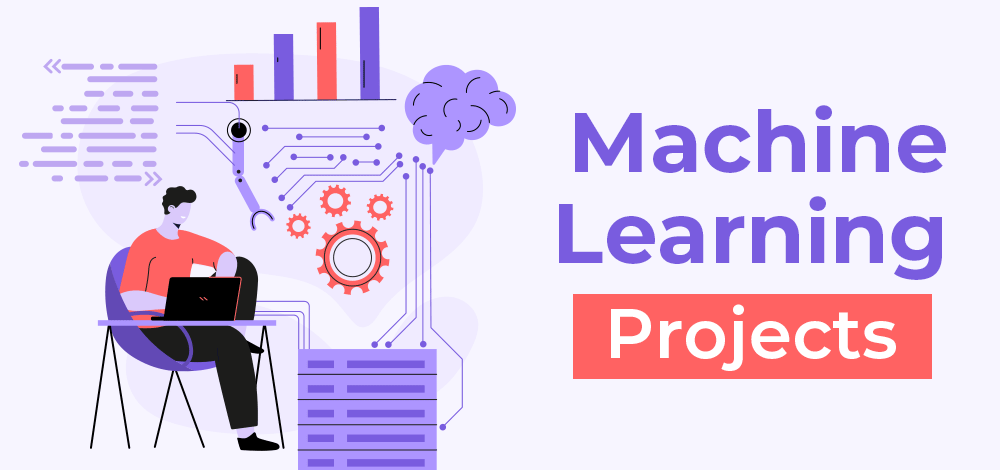
The field of Machine Learning (ML) has transcended its academic origins to become the driving force behind modern innovation. From the personalized recommendations on streaming platforms to the autonomous features in modern vehicles and breakthrough diagnostic tools in healthcare, ML is reshaping our world. For students aspiring to be part of this revolution, there is no better way to learn than by doing. Theoretical knowledge of algorithms and data structures is essential, but the true mastery of machine learning comes from the crucible of practical application.
This comprehensive guide is designed to be your roadmap through the landscape of machine learning projects. Whether you are a beginner taking your first steps with Python, an undergraduate student seeking a challenging final year project, or a budding engineer eager to build real-time, interactive systems, this article will provide you with a wealth of ideas, methodologies, and resources. We will explore the entire spectrum, from simple, educational projects to complex, real-world applications that can give you a competitive edge in your career.
The Unshakeable Value of Hands-On Machine Learning Projects
Before diving into specific project ideas, it is crucial to understand why building projects is the single most important step in your learning journey . A portfolio of well-executed projects accomplishes several critical goals:
-
Bridging Theory and Practice: Textbooks and courses explain how algorithms like regression, decision trees, or neural networks work. Projects force you to confront the messier reality of data—handling missing values, dealing with imbalanced datasets, and making subjective decisions about feature engineering. You learn which algorithm works best not from a chart, but from empirical testing and validation.
-
Building a Standout Portfolio: In a competitive job market, your resume might get you an interview, but your portfolio will get you the job. Recruiters and hiring managers want to see proof that you can apply your skills to solve tangible problems. A GitHub repository filled with well-documented, thoughtful projects is the most powerful testament to your abilities .
-
Developing an Engineering Mindset: Coding an algorithm from a tutorial is one thing; architecting a solution from scratch is another. Projects teach you how to frame a problem, break it down into manageable components, select the right tools, and evaluate your solution's success. This problem-solving mindset is more valuable than any specific technical skill.
-
Preparing for the Real World: Industry ML work involves far more than just training models. It encompasses data collection, data preprocessing, model deployment, monitoring, and maintenance . By working on end-to-end projects—especially those that simulate real-time conditions—you gain exposure to the entire machine learning lifecycle.
A Learning Roadmap: Matching Projects to Your Skill Level
One of the biggest challenges students face is selecting a project that is challenging enough to be rewarding but not so difficult that it becomes discouraging. The key is to align your project choice with your current skill level . The following roadmap provides a framework for progression.
| Skill Level | Characteristics | Example Projects | Core Skills & Tools Gained |
|---|---|---|---|
| Beginner | Basic programming knowledge (preferably Python). Familiar with core concepts like variables, loops, and functions. Limited or no experience with ML libraries. | • Handwritten Digit Recognition (MNIST) • Titanic Survival Prediction • Spam Email Classifier • Iris Flower Classification |
• Python for data analysis (Pandas, NumPy) • Data visualization (Matplotlib, Seaborn) • Basic classification algorithms (Logistic Regression, Naive Bayes, k-NN) • Model evaluation (accuracy, precision, recall) |
| Intermediate | Comfortable with Python and ML libraries like scikit-learn. Understands the ML workflow (data prep, training, evaluation). Some experience with data cleaning. | • Sentiment Analysis on Social Media • Movie Recommendation System • Customer Churn Prediction • Fake News Detection |
• Natural Language Processing (NLTK, spaCy, TF-IDF) • Recommendation algorithms (collaborative filtering, matrix factorization) • Handling imbalanced datasets • Working with real-world, messy datasets |
| Advanced | Strong programming skills. Familiar with deep learning frameworks (TensorFlow, PyTorch). Understands neural network architectures (CNNs, RNNs, Transformers). | • Real-Time Object Detection • AI-Powered Chatbot with RAG • Disease Prediction from Medical Images • Autonomous Driving Simulation |
• Deep Learning (CNNs for images, RNNs/LSTMs/Transformers for sequences) • Computer Vision (OpenCV) • Model deployment and serving • Working with large-scale, unstructured data |
This roadmap provides a general guideline. Your specific interests and coursework may allow you to progress faster in certain areas. The most important thing is to choose a project that genuinely excites you, as that passion will fuel you through the inevitable challenges.
Beginner-Friendly Projects: Building a Strong Foundation
For those just starting, the goal is not to build the next ChatGPT, but to gain fluency in the fundamental workflow of a machine learning project. These projects are classics for a reason—they are well-understood, have abundant resources, and perfectly illustrate core concepts.
1. Handwritten Digit Recognition (MNIST)
The "Hello World" of machine learning, this project involves training a model to recognize handwritten digits (0-9) using the famous MNIST dataset . It is an ideal starting point for understanding image data and neural networks.
-
Skills Gained: You will learn the basics of image preprocessing (normalizing pixel values), building a simple neural network (or using a classifier like an SVM), and evaluating its performance on a test set.
-
Tools & Libraries: Python, TensorFlow/Keras or PyTorch, scikit-learn.
-
Going Further: Once you have a working model, try visualizing the learned filters in a neural network to see what features the model is detecting, or experiment with different network architectures (adding more layers, changing activation functions) to improve accuracy.
2. Titanic Survival Prediction
This is a quintessential Kaggle competition project that introduces you to the core steps of a data science workflow: data cleaning, feature engineering, and classification . The goal is to predict which passengers survived the Titanic disaster based on features like age, gender, ticket class, and whether they were traveling alone.
-
Skills Gained: You will learn how to handle missing data (e.g., filling in missing ages), convert categorical data into numerical formats (one-hot encoding), and select relevant features. Algorithms like logistic regression and decision trees work well here.
-
Tools & Libraries: Python, Pandas, scikit-learn.
-
Going Further: Experiment with ensemble methods like Random Forests or Gradient Boosting (XGBoost). Use
GridSearchCVto find the best hyperparameters for your models.
3. Email Spam Classifier
This project introduces you to the world of Natural Language Processing (NLP) . The task is to build a classifier that can automatically detect spam emails. It teaches you how to convert text into a format that machine learning models can understand.
-
Skills Gained: You will learn text preprocessing techniques like tokenization (splitting text into words), stemming/lemmatization (reducing words to their root form), and stop word removal. You will then convert text into numerical features using methods like Bag-of-Words or TF-IDF.
-
Tools & Libraries: Python, NLTK or spaCy, scikit-learn.
-
Going Further: Try using more advanced NLP techniques like word embeddings (Word2Vec, GloVe) or even a simple recurrent neural network (LSTM) for classification and compare the results.
Intermediate Projects: Diving Deeper into Real-World Complexity
Once you are comfortable with the basics, it is time to tackle projects that involve more complex data, sophisticated algorithms, and a deeper understanding of the problem domain. These projects often feel more like "real" data science work.
4. Real-Time Sentiment Analysis Tool
Sentiment analysis is a powerful NLP technique used to gauge public opinion, monitor brand perception, and analyze customer feedback. A real-time version of this takes the project to the next level . Imagine building a tool that analyzes the sentiment of tweets about a new product launch as they are posted.
-
Skills Gained: You will need to connect to a streaming data source, such as the Twitter (X) API. The core ML task is text classification, but you will also learn about handling streaming data, building a simple processing pipeline, and visualizing results in real-time on a dashboard.
-
Tools & Libraries: Python, Tweepy (for API access), NLTK/spaCy, TextBlob (for simpler sentiment analysis), scikit-learn, and a dashboarding library like Streamlit or Dash.
-
Architecture Insight: A basic architecture would involve a script that listens to the stream, preprocesses each new text sample, passes it to a pre-trained sentiment model, and then sends the result (positive/negative/neutral) to a live-updating graph .
5. Movie Recommendation System
Recommendation systems are the engines of personalization for companies like Netflix, Amazon, and Spotify . Building one is an excellent way to learn about different types of recommendation algorithms. You can start with a simple approach and gradually increase the complexity.
-
Skills Gained: You will implement and compare two main approaches:
-
Content-Based Filtering: Recommends items similar to what a user has liked in the past, based on item features (e.g., genre, director, actors for a movie).
-
Collaborative Filtering: Recommends items that users with similar tastes have liked. This can be memory-based (user/item similarity) or model-based (using matrix factorization techniques like Singular Value Decomposition (SVD)).
-
-
Tools & Libraries: Python, Pandas, scikit-learn, Surprise library (for collaborative filtering).
-
Dataset: The MovieLens dataset is the standard choice for this project, containing millions of ratings from real users.
6. Customer Churn Prediction
For any subscription-based business, retaining customers is as important as acquiring new ones. Churn prediction is a classic and highly valuable business application of machine learning . The goal is to build a model that predicts which customers are at high risk of canceling their service.
-
Skills Gained: This project heavily emphasizes data preprocessing and feature engineering from business data. You will need to create features like account age, usage frequency, number of support tickets, and changes in usage patterns. You will also learn techniques for handling imbalanced datasets (since churn is often a rare event) using methods like SMOTE (Synthetic Minority Over-sampling Technique).
-
Tools & Libraries: Python, Pandas, scikit-learn, Imbalanced-learn.
-
Business Impact: The real value is in translating the model's predictions into action. A good project will include a plan for how the business could use these predictions (e.g., offering a discount to high-risk customers).
Advanced and Real-Time ML Projects: Pushing the Boundaries
For final-year students or those with a strong grasp of deep learning, advanced projects provide an opportunity to work on cutting-edge technology and create a truly impressive portfolio piece. These projects often involve complex architectures, real-time constraints, or integration with hardware.
7. Real-Time Cognitive Load Estimation with Wearable EEG
This project, inspired by cutting-edge research, involves building a system that can estimate a person's cognitive load (how hard their brain is working) in real-time using data from a wearable EEG headset . This has profound applications in fields like education, aviation, and human-computer interaction.
-
Skills Gained: You will work with real-time physiological data streams, learning to apply signal processing techniques (bandpass filters, noise reduction). The classification task involves building a lightweight model, such as a 1D Convolutional Neural Network (1D-CNN), that can run efficiently on streaming data with minimal latency.
-
Tools & Platforms: Python, MNE (for EEG processing), TensorFlow/PyTorch, Streamlit (for building a real-time interactive dashboard) .
-
The Challenge: The main challenge is building a pipeline that can preprocess the data, apply a sliding window, and perform inference in near real-time (latency < 50ms) to provide instantaneous feedback.
8. AI-Powered Chatbot with Retrieval-Augmented Generation (RAG)
Basic chatbots are common, but an advanced project involves building one that can answer questions based on a specific set of documents (a "chat with your data" bot) . For instance, you could build a bot that answers questions about your university's handbook or the user manual for a complex piece of machinery. This is achieved using a technique called Retrieval-Augmented Generation (RAG).
-
Skills Gained: This project combines several advanced concepts: embedding generation (turning text chunks into vectors), vector databases (for efficient similarity search), and Large Language Models (LLMs) for generating the final answer. You'll learn how to orchestrate a complex workflow, often using frameworks like LangChain.
-
Tools & Platforms: Python, LangChain, an LLM (via API or a local model like LLaMA), a vector database (ChromaDB, Pinecone).
-
Going Further: Implement an evaluation framework to automatically assess the quality of your bot's answers. This could involve generating a synthetic "golden dataset" of question-answer pairs and using another LLM to score the bot's performance .
9. AI Hammer: Real-Time Material Classification with TinyML
This project, based on a real-world technical demonstration, takes machine learning to the extreme edge . The goal is to embed a sensor and a tiny ML model into a hammer to allow it to identify the material it is striking (e.g., wood, cloth, plastic) in real-time.
-
Skills Gained: You will learn the entire TinyML pipeline: collecting sensor data (accelerometer, gyroscope) from a microcontroller, training a compact ML model (often using specialized platforms that generate highly optimized C code), and deploying that model onto resource-constrained hardware.
-
Tools & Platforms: Microcontroller (e.g., Nordic nRF52 series with an IMU sensor), TinyML platforms (Neuton AI, TensorFlow Lite Micro). The inference happens entirely on the device, with no cloud connectivity required, achieving over 99% accuracy .
-
The Impact: This project is a powerful demonstration of how ML can bring intelligence to everyday objects, enabling new classes of applications in predictive maintenance, industrial safety, and interactive tools.
10. Autonomous Driving Simulation
For students interested in the intersection of ML and robotics, building a model for an autonomous driving simulation is a challenging and highly rewarding project . Using a realistic simulator like CARLA (Car Learning to Act), you can train an agent to navigate a virtual city, obey traffic signals, and avoid obstacles.
-
Skills Gained: This project is a deep dive into Deep Reinforcement Learning (DRL). You will learn how to define a reward function (e.g., reward for moving forward, penalty for collisions), how to process visual input from the simulation's cameras using Convolutional Neural Networks (CNNs), and how to train a policy network that maps visual input to driving actions (steering, acceleration, braking).
-
Tools & Platforms: Python, CARLA simulator, PyTorch or TensorFlow, reinforcement learning libraries (Stable-Baselines3).
-
Complexity: This is a computationally intensive project and one of the most advanced on this list, making it an exceptional final-year capstone project.
Beyond the Model: The Complete Machine Learning Lifecycle
For a final-year project, especially one you intend to showcase to employers, it is critical to demonstrate an understanding of the entire ML lifecycle, not just model training. This is what separates an academic exercise from a production-ready portfolio piece .
1. Data Collection and Versioning
Explain where your data came from. If you scraped it, how did you do it ethically? If you used a standard dataset, why did you choose it? More importantly, how did you track different versions of your dataset as you cleaned and augmented it? Tools like DVC (Data Version Control) can be mentioned here.
2. Model Experimentation and Tracking
As a data scientist, you will run hundreds of experiments with different models, hyperparameters, and features. How do you keep track of what worked? Demonstrate your professionalism by using an experiment tracking tool like MLflow or Weights & Biases. A simple screenshot of a tracking dashboard in your project report speaks volumes.
3. Model Deployment and Serving
A model in a Jupyter Notebook is just a prototype. A model that has been deployed as an API is a product. For your project, consider deploying your model. This could be as simple as creating a REST API with a framework like FastAPI or Flask and containerizing it with Docker . You could then deploy this container to a cloud platform (AWS, Google Cloud, Azure) or a local Kubernetes cluster to show you understand modern deployment paradigms.
4. Building an Interactive Front-End
A model is invisible to most people. To make your project tangible, build a simple user interface for it. A Streamlit or Gradio app can be built in hours and allows users to interact with your model directly . This transforms your project from a code repository into a demonstrable application.
Conclusion: Start Building Your Future Today
The journey from a student of machine learning to a practitioner is paved with projects. The ideas presented in this guide—from foundational tasks like handwritten digit recognition to advanced feats like real-time cognitive load monitoring and TinyML on embedded devices—represent a spectrum of opportunities for growth and innovation.
The best project to start is the one that sparks your curiosity. Do not be afraid to begin small. The goal of a beginner project is not to be groundbreaking, but to be completed. Each project you finish adds a new tool to your mental toolkit, a new line to your resume, and a new proof point in your portfolio.
Embrace the challenges. You will spend hours debugging code, cleaning messy data, and wondering why your model's accuracy isn't improving. This is not a sign of failure; it is the essence of the learning process. Every practitioner, from a novice to a research scientist at a top AI lab, goes through this cycle of experimentation, failure, and refinement.
The field of machine learning is waiting for new ideas and new problem-solvers. By committing to hands-on project work, you are not just learning a set of technical skills—you are transforming yourself into someone who can build the future. So, pick an idea, gather your tools, and start building. Your journey into the world of AI begins now.

Comments
No comments yet. Be the first to comment.
Leave a Comment