

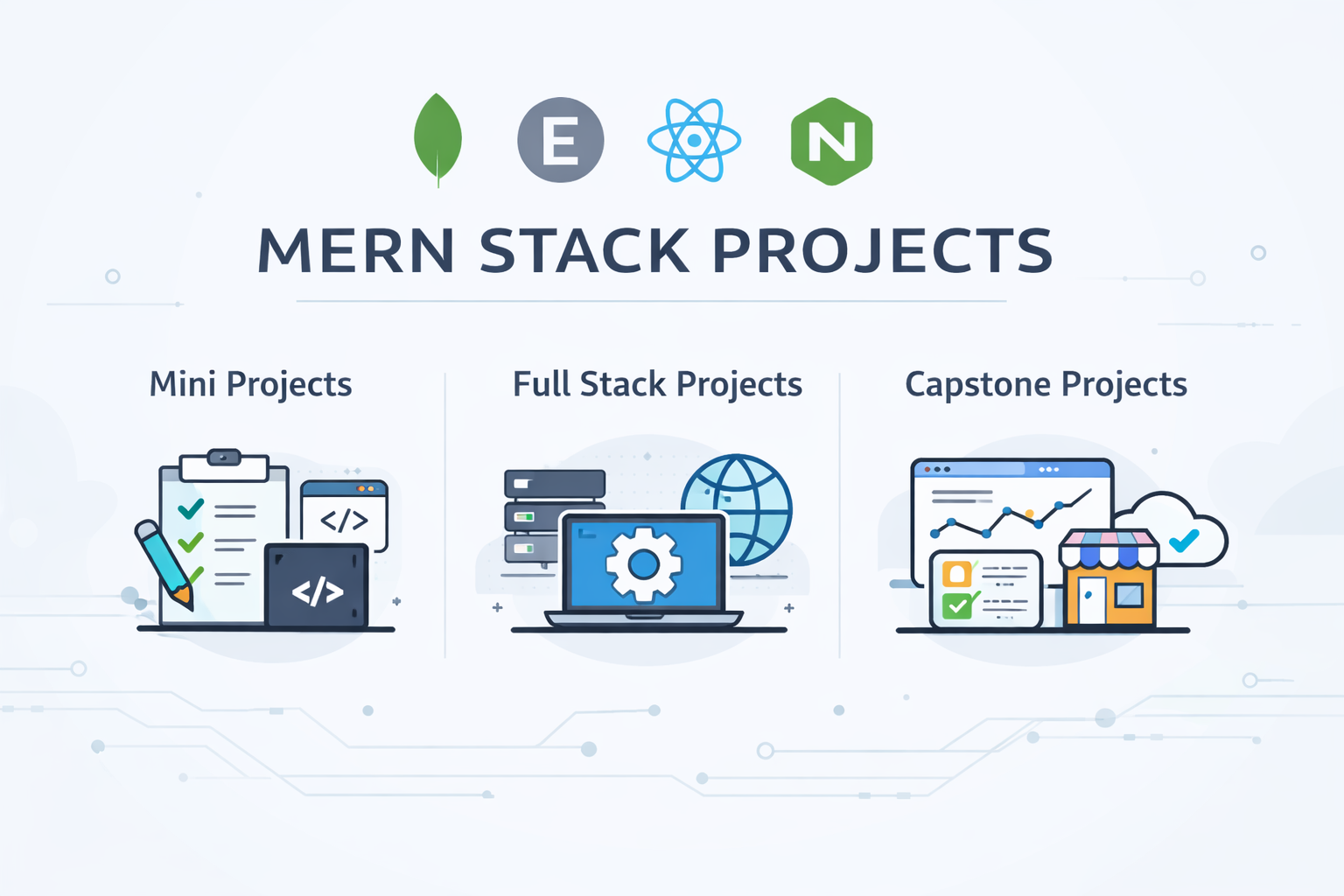
blog on this (mern stack full stack projects, mini mern stack projects, capstone mern stack projects)
Absolutely 👍 — here is a fresh, expanded blog on your topic:
(mern stack full stack projects, mini mern stack projects, capstone mern stack projects)
You can publish directly.
MERN Stack Full Stack Projects, Mini Projects & Capstone Project Ideas for Developers
Learning the MERN stack — MongoDB, Express.js, React.js, and Node.js — becomes truly effective only when applied through real projects. Projects bridge the gap between theoretical learning and practical development. Whether you are a beginner, intermediate learner, or aspiring full-stack developer, working on mini MERN projects and advanced capstone applications is essential for skill development and career readiness.
Employers, startups, and clients evaluate MERN developers primarily based on what they have built. A strong portfolio filled with mini projects and full-stack applications demonstrates real capability, problem-solving skills, and understanding of modern web architecture. This guide explains how MERN stack projects evolve from beginner mini apps to advanced capstone systems and how each stage prepares you for professional development roles.
Importance of MERN Stack Projects in Learning
MERN stack projects allow developers to understand how frontend interfaces communicate with backend APIs and databases. They teach the complete lifecycle of a web application — from user interaction to data storage and retrieval.
Building MERN projects helps learners:
-
Understand full-stack workflow
-
Practice React UI development
-
Implement Node & Express APIs
-
Manage MongoDB data
-
Integrate frontend and backend
-
Deploy applications online
This real-world development exposure is exactly what employers expect from MERN developers.
Mini MERN Stack Projects for Beginners
Mini MERN stack projects are small, focused applications designed to introduce full-stack integration concepts without overwhelming beginners. They help learners transition from frontend-only development to full-stack thinking.
Goals of Mini MERN Projects
-
Learn React component structure
-
Connect frontend to backend
-
Implement CRUD operations
-
Store and retrieve data
-
Understand API requests
Mini projects typically require limited features but demonstrate core MERN architecture.
Mini MERN Project Ideas
1. Notes Manager
Users can add, edit, delete, and view notes stored in MongoDB.
2. Contact Book App
Store and manage contacts with basic CRUD functionality.
3. Task Tracker
Track tasks with status updates and completion toggle.
4. Feedback Collector
Users submit feedback stored and displayed dynamically.
5. Student Data Manager
Store and manage student records in database.
These mini applications build foundational full-stack skills and confidence.
Intermediate MERN Full Stack Projects
After mini projects, developers should move to intermediate MERN full-stack projects. These applications include authentication, routing, and multi-component architecture similar to real business apps.
Goals of Intermediate MERN Projects
-
Implement user authentication
-
Build multi-page React apps
-
Design REST APIs
-
Manage multiple collections
-
Structure application layers
Intermediate MERN projects simulate real-world development scenarios.
Full Stack MERN Project Ideas
1. Blog Platform
Users register, create posts, edit content, and comment.
2. Expense Tracker Dashboard
Track income and expenses with charts and reports.
3. Job Portal System
Employers post jobs; users apply and manage profiles.
4. Admin Panel Application
Manage users, content, or products with role control.
5. Event Booking Platform
Users browse events and reserve slots.
These projects demonstrate full-stack capability and portfolio readiness.
Capstone MERN Stack Projects for Advanced Developers
Capstone MERN projects are large-scale, production-level applications built at the end of learning or training. They demonstrate complete MERN mastery and professional development ability.
A capstone project should:
-
Solve a real-world problem
-
Include multiple modules
-
Use authentication & authorization
-
Implement scalable architecture
-
Be deployed online
Capstone applications often serve as the main portfolio showcase for MERN developers.
Capstone MERN Project Ideas
1. E-Commerce Web Application
Product listing, cart, checkout, user login, admin panel.
2. Learning Management System
Courses, student accounts, progress tracking, instructor dashboard.
3. Social Media Platform
Profiles, posts, likes, comments, followers.
4. Project Management Tool
Tasks, team collaboration, deadlines, status tracking.
5. SaaS Subscription Dashboard
User accounts, analytics, subscription features, admin control.
These applications mirror real software products used by companies.
MERN Project Progression: From Beginner to Professional
Understanding project progression helps developers grow systematically.
Mini Projects:
-
Basic CRUD functionality
-
Simple UI
-
Single-purpose apps
Intermediate Projects:
-
Authentication
-
Multi-page structure
-
Business logic
Capstone Projects:
-
Complex architecture
-
Multiple features
-
Production-ready apps
This progression transforms learners into full-stack developers capable of real work.
How MERN Projects Build Career Readiness
Projects develop skills directly aligned with employer expectations. Through MERN projects, developers learn:
-
React component architecture
-
Backend API development
-
Database schema design
-
Authentication systems
-
Deployment and hosting
Employers prefer candidates who demonstrate these abilities through projects. Capstone MERN applications especially prove readiness for full-stack roles.
Building a Strong MERN Project Portfolio
A professional MERN portfolio should include projects from each level:
-
2–3 mini projects
-
2 intermediate full-stack apps
-
1 major capstone project
Each project should include:
-
Live deployment link
-
GitHub repository
-
Feature overview
-
Technology stack
This structure shows progression and depth to recruiters.
Importance of Deploying MERN Projects
Deployment converts projects from practice exercises into real applications. Live MERN apps demonstrate:
-
Production readiness
-
Environment configuration
-
Full application workflow
-
User interaction
Recruiters often prefer deployed applications over local demos. Deployment significantly strengthens portfolio credibility.
Career Opportunities from MERN Projects
Developers with strong MERN projects can pursue:
-
Full-stack developer roles
-
Web developer jobs
-
Freelancing projects
-
Remote development work
-
Startup opportunities
Many developers secure jobs based on MERN project portfolios rather than academic qualifications alone.
How to Choose the Right MERN Stack Project
Selecting the right MERN project is crucial for effective learning and portfolio building. Many learners either choose overly simple projects that do not demonstrate real capability or extremely complex ideas beyond their current skill level. A balanced approach ensures steady growth and successful completion.
When choosing a MERN project, consider:
-
Your current skill level
-
Required features
-
Real-world relevance
-
Full-stack integration scope
-
Time available
Beginners should focus on CRUD-based applications, intermediate learners should include authentication and multi-user logic, and advanced developers should aim for scalable capstone systems. Choosing progressively challenging projects ensures continuous skill development.
Real-World Features to Add in MERN Projects
To make MERN projects more realistic and impressive, developers should include features commonly found in professional applications. These features transform simple demos into production-style systems.
Useful features include:
-
User authentication & authorization
-
Role-based access control
-
Search and filtering
-
Pagination
-
Responsive UI design
-
API error handling
-
Form validation
-
Notifications or alerts
Adding such features shows deeper understanding of real application requirements. Recruiters often evaluate projects based on how realistic and usable they appear.
Structuring MERN Projects Professionally
Project structure plays an important role in demonstrating development maturity. Even a good application can appear weak if the codebase is disorganized. MERN projects should follow clear architecture similar to industry standards.
Recommended structure:
Frontend (React):
-
Components
-
Pages
-
Services/API calls
-
Styles
Backend (Node/Express):
-
Routes
-
Controllers
-
Models
-
Middleware
Database:
-
Schemas
-
Collections
Clean project organization improves readability, scalability, and maintainability — qualities valued in professional environments.
Mini MERN Projects for Practice Consistency
Mini MERN projects are not only for beginners. Even intermediate developers use mini apps to practice new concepts or technologies. Short projects allow experimentation without long development cycles.
Examples of mini practice projects:
-
Login authentication module
-
REST API CRUD template
-
Form submission system
-
File upload feature
-
Comment system
These smaller modules often become reusable components in larger projects. Practicing mini MERN projects regularly strengthens full-stack fluency.
Scaling Mini Projects into Full-Stack Applications
An effective learning strategy is expanding mini projects into full-stack applications. Instead of starting from scratch, developers can enhance existing mini apps by adding new features and complexity.
Example progression:
Mini Notes App →
Add login system →
Add categories →
Add sharing →
Become Notes Management Platform
This incremental approach builds depth gradually and reinforces understanding. It also demonstrates growth and iteration in portfolio projects.
Capstone MERN Projects as Portfolio Centerpiece
A capstone MERN project should represent your highest skill level. It should integrate multiple features and demonstrate full-stack architecture clearly. This project often becomes the centerpiece of your portfolio and interview discussions.
Characteristics of strong capstone projects:
-
Multi-user functionality
-
Authentication & roles
-
Complex database relations
-
Dashboard UI
-
Scalable architecture
-
Deployment
Capstone projects should resemble real software products rather than demos. Employers often judge MERN developers based on their capstone application quality.
Collaboration in MERN Capstone Projects
Advanced MERN projects can be built collaboratively to simulate real development teams. Collaboration teaches version control, code sharing, and teamwork — important professional skills.
Collaborative MERN project practices:
-
GitHub version control
-
Feature branching
-
Code reviews
-
Module division
-
API integration between teammates
Working on collaborative capstone projects mirrors real workplace environments and prepares developers for team-based development roles.
Testing and Debugging in MERN Projects
Testing and debugging are critical aspects of real MERN development. Projects should not only function but also handle errors and edge cases effectively. Including debugging awareness strengthens project quality.
Developers should practice:
-
API error handling
-
Input validation
-
Data consistency checks
-
Debugging React state issues
-
Fixing backend logic errors
Demonstrating debugging capability shows problem-solving maturity, which employers highly value.
Deployment Strategies for MERN Projects
Deployment transforms MERN projects into live applications accessible online. It demonstrates readiness for real-world environments. Developers should understand deployment workflows as part of project completion.
Deployment steps include:
-
Build React frontend
-
Configure Node server
-
Connect MongoDB database
-
Set environment variables
-
Host application
Live deployment allows recruiters and users to interact with the project directly. It significantly increases portfolio impact.
Documenting MERN Projects Professionally
Documentation explains project purpose, setup, and features. Well-documented MERN projects appear more professional and easier to understand. GitHub repositories should include clear documentation.
Documentation should contain:
-
Project overview
-
Features list
-
Tech stack
-
Installation steps
-
Screenshots
-
Live link
Proper documentation demonstrates communication skills and development discipline.
MERN Projects and Freelance Opportunities
MERN projects also enable freelance work. Many businesses require dashboards, management systems, or custom web apps. Developers with strong MERN portfolios can secure freelance projects easily.
Common freelance MERN project types:
-
Business dashboards
-
Admin panels
-
E-commerce features
-
Booking systems
-
CRM tools
Capstone MERN projects often attract freelance clients by showcasing real-world capability.
Continuous Improvement of MERN Projects
Projects should evolve as skills improve. Updating MERN applications with new features or better UI demonstrates growth. Continuous improvement keeps portfolios relevant and competitive.
Ways to enhance MERN projects:
-
Improve design
-
Optimize backend
-
Add new features
-
Refactor code
-
Enhance performance
Regular updates show dedication and long-term learning commitment.
MERN Projects and Job Interviews
During interviews, developers are often asked to explain their projects. Strong MERN projects provide discussion topics such as architecture decisions, challenges, and solutions. Candidates with real projects perform better in interviews.
Interview advantages of MERN projects:
-
Demonstrate practical knowledge
-
Show problem-solving ability
-
Explain full-stack workflow
-
Prove coding experience
Capstone MERN projects especially help candidates stand out in hiring processes.
Long-Term Value of MERN Project Experience
The experience gained from MERN projects extends beyond initial employment. Developers continue applying full-stack skills in jobs, freelancing, or product development. Early project experience builds long-term professional confidence.
Benefits include:
-
Strong technical foundation
-
Real development exposure
-
Portfolio credibility
-
Career readiness
-
Entrepreneurial potential
Consistent MERN project building therefore supports sustained growth in web development careers.
Conclusion
Mini MERN stack projects, intermediate full-stack applications, and advanced capstone projects form the core pathway to becoming a professional MERN developer. Mini projects build foundational skills, full-stack projects simulate real applications, and capstone projects demonstrate industry-ready expertise. Consistent project development and deployment create strong portfolios that open opportunities in jobs, freelancing, and web development careers. For anyone learning MERN stack, building progressive projects is the most effective route from beginner to full-stack professional.


Comments
No comments yet. Be the first to comment.
Leave a Comment