

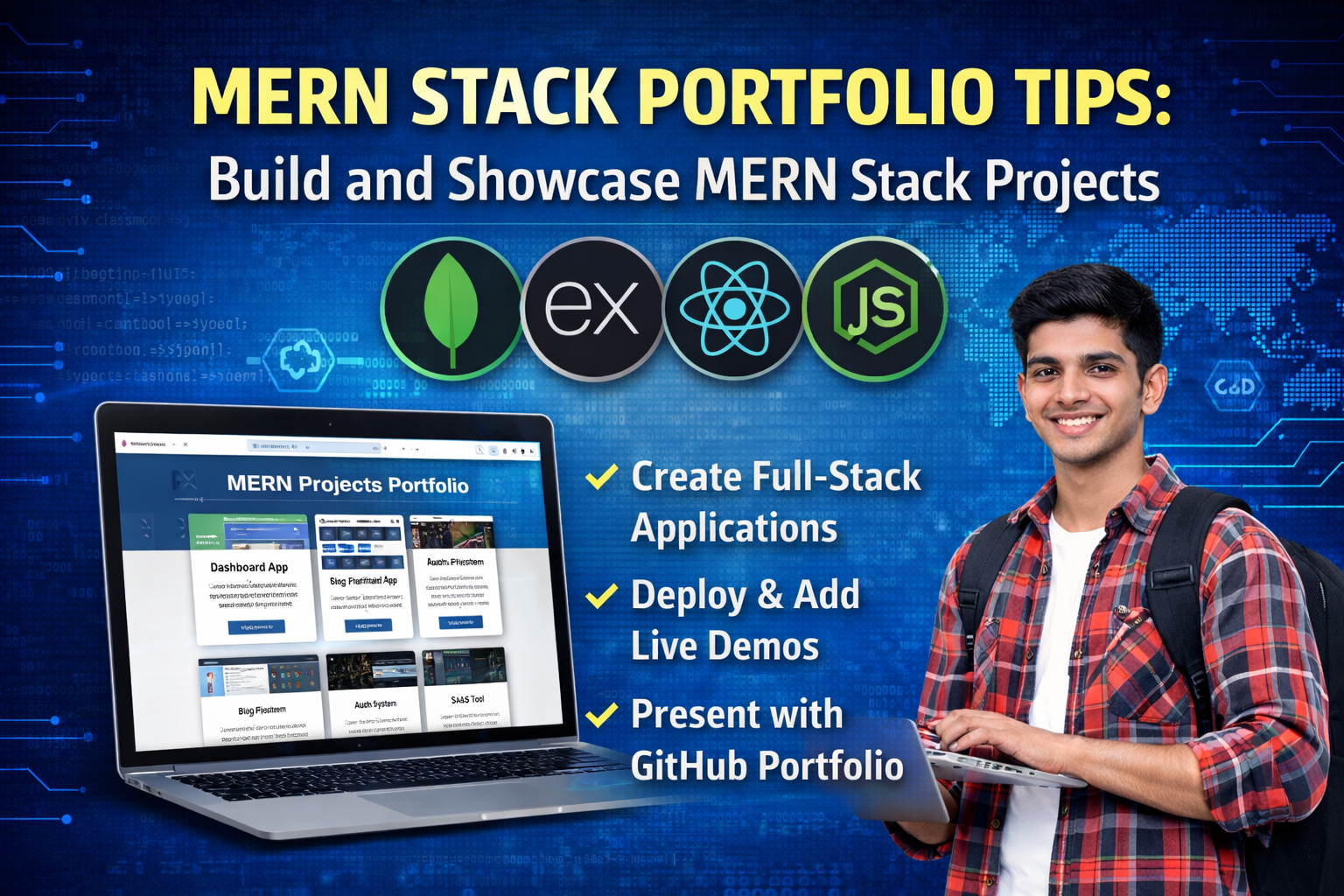
MERN Stack Portfolio Tips: How to Build and Showcase MERN Stack Projects
In today’s competitive web development industry, simply learning MERN stack technologies is not enough. Employers, clients, and recruiters want to see proof of your skills through real projects. This is where a strong MERN stack portfolio becomes essential. A well-structured portfolio demonstrates your ability to build full-stack applications, solve problems, and deliver working solutions using MongoDB, Express.js, React, and Node.js.
For aspiring developers and students learning MERN stack, building and showcasing projects is the fastest way to gain credibility and career opportunities. Whether you want a job, internship, or freelance work, your portfolio becomes your technical identity. Understanding how to build meaningful MERN projects and present them effectively can significantly improve your chances of success in the web development field.
Why MERN Stack Projects Matter for Your Portfolio
A portfolio filled with real MERN projects shows more than theoretical knowledge. It proves you can design interfaces, create backend logic, manage databases, and deploy applications. Employers often evaluate developers based on what they have built rather than what they claim to know.
MERN stack projects demonstrate:
-
Full-stack development capability
-
Problem-solving skills
-
Understanding of application architecture
-
Ability to integrate frontend and backend
-
Real coding experience
When recruiters see working projects with live links and code repositories, they gain confidence in your technical ability. A strong MERN portfolio often matters more than certificates or course completion alone.
How to Build Strong MERN Stack Projects
Building effective MERN stack projects requires planning and structure rather than random coding. Each project should solve a real-world problem and include both frontend and backend functionality. Beginners should start with manageable applications and gradually increase complexity.
1. Start with Functional Full-Stack Apps
Your first MERN projects should include basic features such as:
-
User authentication
-
Form submission
-
Database storage
-
Data display
-
CRUD operations
Examples include login systems, blog platforms, or task managers. These applications teach core MERN integration and demonstrate essential full-stack capability.
2. Add Real-World Features
After basic projects, include features used in professional applications:
-
Search and filters
-
Dashboard UI
-
Role-based access
-
API integration
-
Responsive design
These features show you understand practical development scenarios rather than tutorial-only coding.
3. Focus on Clean Architecture
A strong MERN project should have organized structure:
-
Separate frontend and backend folders
-
Modular React components
-
Structured API routes
-
Database schema design
Clean architecture makes your code readable and professional, which impresses recruiters reviewing repositories.
4. Implement Deployment
Deploying MERN applications online is crucial for portfolios. Live projects allow employers to interact with your work directly. Hosting platforms such as Vercel, Netlify, or cloud servers enable public access.
A deployed project demonstrates:
-
Production readiness
-
Environment configuration skills
-
Real application workflow
Projects without deployment appear incomplete to recruiters.
MERN Stack Portfolio Project Ideas
To build a strong portfolio, include diverse MERN projects demonstrating different skills.
Beginner Projects
-
To-Do List App
-
Blog Website
-
Contact Manager
-
Notes Application
Intermediate Projects
-
Authentication System
-
Admin Dashboard
-
E-commerce Frontend + Backend
-
Job Listing Platform
Advanced Projects
-
SaaS Web Application
-
Real-time Chat App
-
Project Management Tool
-
Learning Management System
A mix of complexity levels shows progressive learning and skill growth.
How to Showcase MERN Stack Projects Effectively
Building projects is only half the work. Proper presentation determines how recruiters perceive your ability. Many developers lose opportunities because they fail to showcase projects clearly.
1. Create a Dedicated Portfolio Website
Your MERN portfolio should be accessible through a personal website. Include:
-
Project screenshots
-
Live demo links
-
GitHub repositories
-
Technology stack used
-
Short feature descriptions
A clean portfolio site demonstrates frontend design and professionalism.
2. Highlight Full-Stack Features
Explain what parts you built:
-
React UI
-
Node APIs
-
MongoDB database
-
Authentication
-
Deployment
This helps recruiters understand your role and technical depth.
3. Show Problem-Solving Approach
Briefly describe:
-
Purpose of project
-
Challenges faced
-
Solutions implemented
This demonstrates analytical thinking and development maturity.
4. Maintain GitHub Quality
GitHub repositories should include:
-
Organized folders
-
Clean code
-
README documentation
-
Setup instructions
Recruiters often review GitHub before interviews. Well-maintained repositories increase credibility.
Common MERN Portfolio Mistakes to Avoid
Many developers build projects but fail to present them effectively. Avoid these common mistakes:
-
Only tutorial-based projects
-
No live deployment
-
Poor UI design
-
Messy code structure
-
Missing documentation
-
Too few projects
A strong MERN portfolio typically includes 3–6 complete applications demonstrating full-stack ability.
Career Benefits of a Strong MERN Portfolio
A well-built MERN portfolio creates multiple career opportunities:
-
Web developer jobs
-
Full-stack roles
-
Freelance projects
-
Remote work
-
Internships
-
Startup opportunities
Clients and employers trust developers who show real applications. A strong portfolio often leads to faster hiring and better offers compared to candidates with only theoretical knowledge.
Advanced MERN Stack Portfolio Tips for Standing Out
Once you have built a few full-stack MERN projects, the next step is differentiating your portfolio from thousands of other developers. Recruiters and clients review many similar applications, so showcasing depth, originality, and real-world thinking becomes essential. Advanced portfolio strategy focuses not only on what you built, but how professionally you built and presented it.
Demonstrate End-to-End Development Ownership
One of the strongest signals of MERN expertise is showing that you handled the entire application lifecycle. This includes planning, UI design, backend logic, database modeling, and deployment. Clearly stating that you developed the full stack independently communicates ownership and competence.
When presenting projects, specify responsibilities such as:
-
Designed React component architecture
-
Built REST APIs with Node and Express
-
Modeled MongoDB collections
-
Implemented authentication and authorization
-
Deployed application to production
This level of detail helps recruiters understand your true capability rather than assuming you followed a tutorial.
Show Real-World Use Cases Instead of Demo Apps
Many MERN portfolios contain generic tutorial projects like simple to-do apps or note systems. While useful for learning, they do not strongly impress employers. Transforming projects into realistic use cases significantly improves portfolio impact.
For example:
-
Convert a to-do app into a task management dashboard
-
Expand a blog into a multi-user content platform
-
Turn a CRUD app into an inventory management system
-
Upgrade a login system into a role-based portal
Realistic applications demonstrate understanding of practical requirements such as permissions, data organization, and workflow logic. Employers prefer developers who can build systems used by real users.
Include Responsive and Modern UI Design
Frontend presentation strongly influences how your MERN portfolio is perceived. Even technically strong applications can appear weak if the interface looks outdated or unresponsive. Recruiters often evaluate design quality as an indicator of professionalism and user-centric thinking.
Your MERN projects should include:
-
Mobile responsiveness
-
Clean layouts and spacing
-
Consistent color scheme
-
User-friendly navigation
-
Loading states and feedback
Modern UI demonstrates attention to detail and improves user experience. Since React is widely used for interface development, polished frontend design significantly strengthens your MERN portfolio.
Highlight Performance and Optimization
Advanced MERN developers consider performance and efficiency. Including optimization practices in your portfolio shows deeper technical maturity. Even simple improvements demonstrate awareness of real production requirements.
Examples of optimization to mention:
-
Efficient MongoDB queries
-
React component memoization
-
API response optimization
-
Pagination for large data
-
Lazy loading components
Explaining how you improved performance indicates understanding beyond basic functionality. This distinction helps your portfolio stand out among beginner-level projects.
Add Authentication and Security Features
Security is a critical aspect of real web applications. Projects that include authentication and secure data handling appear more professional and realistic. MERN portfolios that demonstrate security awareness are highly valued by employers.
Consider implementing:
-
User login and registration
-
Password hashing
-
Protected routes
-
Role-based access control
-
Token-based authentication
Including these features shows that you understand real-world application requirements rather than building only public demo apps.
Document Your MERN Projects Professionally
Documentation is often overlooked but extremely important. Recruiters reviewing GitHub repositories rely on documentation to understand project purpose and setup. Well-documented projects appear organized and production-ready.
Each MERN project repository should include:
-
Project overview
-
Features list
-
Technology stack
-
Installation steps
-
Screenshots or demo
-
Live link
Professional documentation signals discipline and clarity — qualities employers seek in developers.
Create a Consistent MERN Portfolio Theme
Your overall portfolio should feel cohesive rather than a collection of unrelated apps. Consistency in design, layout, and presentation improves professionalism. Using similar UI patterns or branding across projects creates a recognizable developer identity.
Consistency also helps demonstrate progression. Projects should show increasing complexity from beginner to advanced level. Recruiters appreciate seeing skill growth across applications rather than isolated examples.
Showcase Problem-Solving Stories
Beyond listing features, describe the development journey. Explaining challenges and solutions provides insight into your thinking process. Employers value developers who can analyze problems and implement solutions independently.
For each MERN project, include:
-
Problem statement
-
Key challenge
-
Approach taken
-
Outcome
This storytelling transforms projects from code samples into engineering experiences, making your portfolio more engaging and credible.
Use MERN Projects for Freelance Opportunities
A strong MERN portfolio does not only support job applications — it also attracts freelance clients. Many businesses seek developers who can build dashboards, websites, or management systems. Showing real MERN applications convinces clients of your capability.
Freelance-ready MERN portfolios typically include:
-
Business-oriented applications
-
Admin panels
-
Service platforms
-
E-commerce features
Such projects demonstrate commercial relevance, making it easier to secure paid work.
Keep Updating Your MERN Portfolio
Technology evolves continuously, and portfolios should reflect ongoing learning. Updating projects or adding new features shows growth and commitment. Recruiters prefer active developers rather than those with outdated work.
Ways to update MERN projects:
-
Improve UI design
-
Add new features
-
Optimize backend logic
-
Refactor code
-
Deploy improved versions
Continuous improvement keeps your portfolio relevant and competitive.
How Many MERN Projects Should You Include?
Quality matters more than quantity. A strong MERN portfolio typically includes 4–6 complete applications covering different complexity levels. Each project should demonstrate distinct skills.
Recommended structure:
-
2 beginner full-stack apps
-
2 intermediate applications
-
1–2 advanced systems
This range shows progression from learning to professional capability.
Portfolio Mistakes That Reduce Impact
Even good MERN developers sometimes weaken their portfolios unintentionally. Avoid these issues:
-
Copy-paste tutorial code
-
Missing backend integration
-
No live deployment
-
Broken links
-
Incomplete features
-
Poor UI consistency
A polished portfolio should feel like finished products rather than experiments.
MERN Portfolio and Career Growth
A strong MERN project portfolio becomes the foundation of long-term career growth. Developers often secure their first job or freelance project through portfolio demonstration. As experience grows, the same portfolio evolves into professional branding.
Over time, MERN portfolios can support:
-
Senior developer roles
-
Freelance agencies
-
Product development
-
Technical consulting
-
Startup creation
Your early MERN projects therefore become long-term career assets.
Final Perspective: Portfolio as Proof of MERN Mastery
Learning MERN stack technologies is only the beginning of becoming a full-stack developer. Real mastery is demonstrated through applications that solve problems and function reliably. A carefully built and well-presented MERN portfolio shows your ability to design, develop, and deploy full-stack systems independently.
By building meaningful projects, documenting them professionally, and showcasing them clearly, developers transform skills into visible capability. In the competitive web development landscape, employers and clients trust what they can see and test. A strong MERN portfolio therefore becomes your most powerful career tool — opening doors to jobs, freelancing, and entrepreneurial opportunities in modern web development.
Final Thoughts
Building and showcasing MERN stack projects is the most powerful way to establish yourself as a full-stack developer. Learning MongoDB, Express.js, React, and Node.js becomes meaningful only when applied to real applications. A structured portfolio with live MERN projects proves your skills, creativity, and readiness for professional development work.
Whether you are a student, beginner, or aspiring developer, focus on creating functional full-stack applications and presenting them clearly through a professional portfolio. In the competitive web development industry, your projects speak louder than certificates. A strong MERN portfolio is not just a collection of apps — it is your gateway to jobs, freelancing, and long-term success in the modern digital world.

Comments
No comments yet. Be the first to comment.
Leave a Comment