


1. Introduction
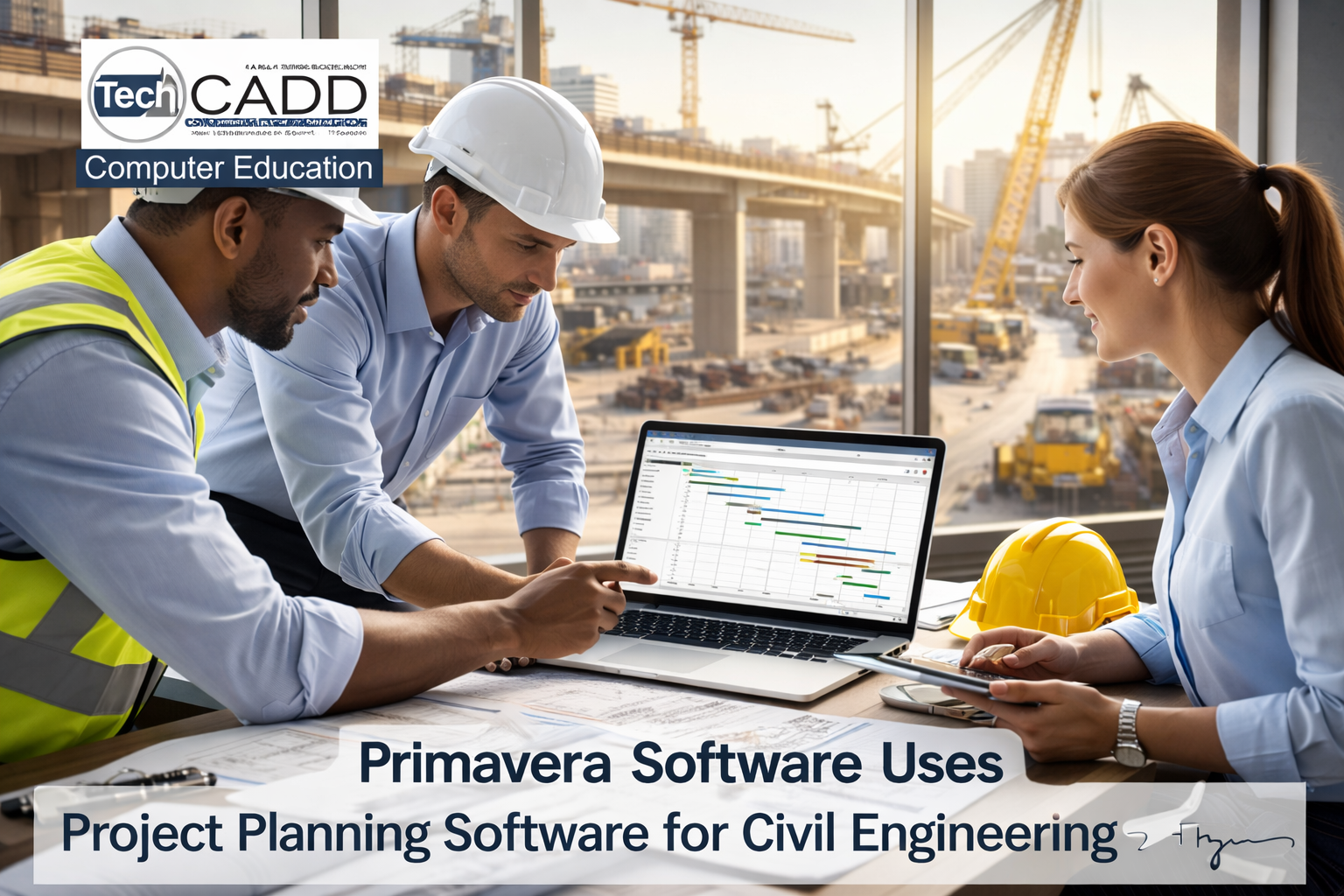
In modern civil engineering and construction projects, success depends not only on technical design but also on effective planning and management. Projects such as highways, metro rail systems, bridges, commercial buildings, and industrial plants involve thousands of activities and multiple stakeholders. Managing such complexity without software is nearly impossible.
Project planning software helps engineers and managers organize work, track progress, control costs, and meet deadlines. Among the many tools available today, Primavera P6 and Microsoft Project are the most popular in the construction and engineering industries.
This blog discusses:
-
Uses of Primavera software
-
Importance of project planning software for civil engineering
-
Detailed comparison of Primavera vs MS Project
2. What is Primavera Software?
Primavera is a professional project management and scheduling software developed by Oracle. It is mainly designed for handling large and complex projects in industries such as construction, infrastructure, oil & gas, and power plants.
Primavera allows project teams to:
-
Plan project schedules using CPM (Critical Path Method)
-
Define work breakdown structures (WBS)
-
Allocate manpower, equipment, and materials
-
Track actual progress against planned schedules
-
Analyze delays and risks
-
Generate professional reports for management and clients
Because of its advanced capabilities, Primavera is widely accepted as an industry-standard planning tool for civil engineering projects.
3. Uses of Primavera Software
Primavera software is used throughout the project lifecycle, from planning to execution and control.
3.1 Project Scheduling
Primavera is used to:
-
Create WBS and activity lists
-
Assign durations to each activity
-
Establish logical relationships between activities
-
Generate Gantt charts and network diagrams
This helps in developing a realistic and logical project schedule.
3.2 Resource Planning and Management
With Primavera, users can:
-
Assign labor, machinery, and materials to activities
-
Identify over-allocated resources
-
Perform resource leveling
-
Optimize resource usage
This improves productivity and reduces idle time and wastage.
3.3 Cost Planning and Control
Primavera supports:
-
Cost-loaded schedules
-
Budget allocation to activities
-
Tracking of actual costs
-
Earned Value Management (EVM)
This helps in monitoring project costs and avoiding overruns.
3.4 Progress Tracking and Monitoring
Primavera allows planners to:
-
Update activity progress regularly
-
Compare planned vs actual performance
-
Identify schedule delays
-
Take corrective actions
This ensures better project control and transparency.
3.5 Risk and Delay Analysis
Primavera is used for:
-
What-if analysis
-
Delay impact analysis
-
Recovery scheduling
These features are extremely useful in construction claims and dispute resolution.
3.6 Reporting and Documentation
Primavera generates:
-
Gantt charts
-
S-curves
-
Resource histograms
-
Progress reports
These reports help clients, consultants, and management understand the project status clearly.
4. Project Planning Software for Civil Engineering
Civil engineering projects are complex because they involve:
-
Multiple contractors and subcontractors
-
Large budgets
-
Long durations
-
Strict quality and safety requirements
Using project planning software improves efficiency and reduces risk.
4.1 Importance of Planning Software in Civil Engineering
Project planning software helps civil engineers to:
-
Plan work systematically
-
Reduce project delays
-
Control costs
-
Improve coordination between teams
-
Maintain proper project documentation
4.2 Key Features Required for Civil Projects
A good project planning software for civil engineering should provide:
-
CPM scheduling
-
Resource and cost management
-
Progress monitoring
-
Reporting and dashboards
-
Risk and delay analysis
Primavera is particularly suitable for:
-
Highway and road projects
-
Metro rail and railway projects
-
High-rise buildings
-
Industrial and power plant projects
5. Benefits of Primavera Software in Civil Projects
5.1 Accurate Project Planning
Primavera helps create a realistic and well-structured project plan based on logic and data rather than assumptions.
5.2 Better Time and Cost Control
With cost-loaded schedules and earned value analysis, project managers can detect delays and cost overruns at an early stage.
5.3 Improved Coordination
Primavera integrates engineering, procurement, and construction activities into a single schedule, improving coordination among departments.
5.4 Professional Reporting
Many clients and consultants require Primavera schedules for:
-
Monthly progress reports
-
Delay analysis
-
Arbitration and claims
6. Primavera vs MS Project
Both Primavera and MS Project are popular project management tools, but they differ in their features, applications, and target users.
6.1 Project Size and Complexity
Primavera:
-
Designed for large and complex projects
-
Can handle thousands of activities
-
Suitable for enterprise-level planning
MS Project:
-
Suitable for small and medium projects
-
Best for simple schedules
-
Limited performance with very large projects
6.2 Resource Management
Primavera:
-
Advanced resource allocation
-
Resource leveling and optimization
-
Multi-project resource management
MS Project:
-
Basic resource assignment
-
Limited multi-project handling
6.3 Cost Control
Primavera:
-
Strong cost management
-
Supports earned value analysis
-
Budget vs actual cost tracking
MS Project:
-
Basic cost tracking
-
Limited financial analysis
6.4 Reporting and Visualization
Primavera:
-
Highly customizable reports
-
Professional layouts
-
Powerful dashboards
MS Project:
-
Simple and limited reporting
-
Less customization
6.5 Industry Usage
Primavera:
-
Widely used in construction, infrastructure, oil & gas, and power plants
MS Project:
-
Commonly used in IT projects and small office-based projects
7. Comparison Table: Primavera vs MS Project
| Feature | Primavera P6 | MS Project |
|---|---|---|
| Project Size | Large & complex projects | Small & medium projects |
| Resource Management | Advanced | Basic |
| Cost Control | Strong | Limited |
| Reporting | Highly customizable | Simple |
| Multi-Project Handling | Excellent | Limited |
| Industry Application | Construction & infrastructure | IT & small projects |
| Learning Curve | Steep | Easy |
8. Which Software is Best for Civil Engineers?
For civil engineers and construction planners, Primavera is usually the better choice because:
-
It can manage complex project schedules
-
It supports detailed resource and cost control
-
It is accepted worldwide for infrastructure projects
-
It is widely used by top construction companies
MS Project is suitable for:
-
Beginners in project planning
-
Small contractors
-
Short-duration projects
-
Office-based project management
9. Career Scope with Primavera Software
Learning Primavera creates career opportunities such as:
-
Planning Engineer
-
Project Scheduler
-
Project Control Engineer
-
Construction Planner
These roles are in demand in:
-
Construction companies
-
Infrastructure firms
-
Consulting organizations
-
EPC companies
Primavera knowledge is especially valuable for civil engineers, mechanical engineers, and project managers.
10. Conclusion
Project planning software plays a vital role in the successful execution of civil engineering projects. Primavera stands out as a powerful and professional tool for managing large and complex construction and infrastructure projects. While MS Project is useful for small and simple projects, Primavera is preferred for advanced planning, resource management, cost control, and professional reporting.
By using Primavera software, civil engineers can improve project efficiency, reduce risks, and enhance their professional growth in the construction industry.


Comments
No comments yet. Be the first to comment.
Leave a Comment