


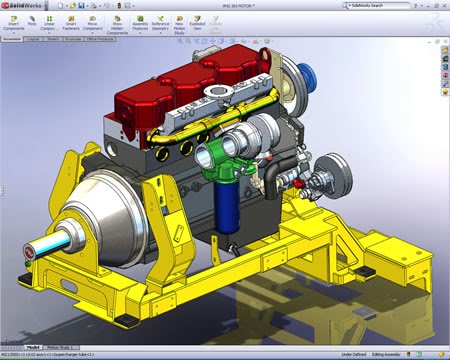
Mechanical design software plays a vital role in modern engineering industries. With advanced product development, simulation, and manufacturing needs, choosing the best mechanical design software can strongly influence career growth. Among the most popular tools are SolidWorks, CATIA, and Creo. Each software has its own strengths, industry usage, and learning curve.
In this blog, we will clearly explain SolidWorks vs CATIA, CATIA vs Creo, and guide you to select the best mechanical design software for your career.
What is SolidWorks?
SolidWorks is a feature-based 3D CAD software widely used for mechanical design and product development. It is known for its user-friendly interface and fast learning curve, making it ideal for students and entry-level engineers.
Key Features of SolidWorks:
-
Parametric 3D modeling
-
Assembly design
-
Sheet metal and weldments
-
Basic simulation and motion analysis
-
Easy drawing creation
Industries Using SolidWorks:
-
Product design
-
Manufacturing
-
Consumer goods
-
Startups and SMEs
What is CATIA?
CATIA is a high-end CAD/CAM/CAE software developed by Dassault Systèmes. It is mainly used for complex and large-scale designs, especially in aerospace and automotive industries.
Key Features of CATIA:
-
Advanced surface modeling
-
Complex assembly management
-
High-precision design tools
-
Integration with PLM systems
-
Automotive & aerospace standards
Industries Using CATIA:
-
Aerospace
-
Automotive OEMs
-
Defense
-
Heavy engineering
What is Creo?
Creo (formerly Pro/ENGINEER) is a powerful parametric 3D CAD software developed by PTC. It is well-known for its strong parametric capabilities and robustness in handling large assemblies.
Key Features of Creo:
-
Advanced parametric modeling
-
Flexible design changes
-
Sheet metal and piping modules
-
Integrated simulation tools
-
Manufacturing-focused features
Industries Using Creo:
-
Automotive
-
Industrial machinery
-
Tool & die manufacturing
-
Heavy equipment
SolidWorks vs CATIA
| Feature | SolidWorks | CATIA |
|---|---|---|
| Learning Curve | Easy | Complex |
| User Interface | Simple & intuitive | Advanced & professional |
| Project Scale | Small to medium | Large & complex |
| Surface Modeling | Basic to moderate | Advanced |
| Industry Use | SMEs, product design | Aerospace, automotive OEMs |
Conclusion:
SolidWorks is best for beginners and product designers, while CATIA is preferred for high-end industrial projects.
CATIA vs Creo
| Feature | CATIA | Creo |
|---|---|---|
| Parametric Control | Moderate | Very strong |
| Surface Design | Excellent | Good |
| Large Assemblies | Very strong | Strong |
| Manufacturing Focus | Medium | High |
| Ease of Design Changes | Moderate | Excellent |
Conclusion:
CATIA is better for complex surfaces and styling, while Creo is ideal for robust parametric and manufacturing-oriented design.
Which is the Best Mechanical Design Software?
There is no single “best” software—it depends on your career goals:
-
Students & Freshers: SolidWorks
-
Automotive & Aerospace Engineers: CATIA
-
Manufacturing & Heavy Machinery: Creo
Learning more than one software always increases job opportunities and salary potential.
Career Scope After Learning These Tools
Mechanical engineers skilled in SolidWorks, CATIA, or Creo can work as:
-
Design Engineer
-
CAD Engineer
-
Product Development Engineer
-
Tool Design Engineer
-
Automotive Design Engineer
Industries offering high demand include automotive, aerospace, manufacturing, and industrial automation.
Conclusion
SolidWorks, CATIA, and Creo are powerful mechanical design software with unique strengths. SolidWorks is beginner-friendly, CATIA excels in complex industrial designs, and Creo is ideal for manufacturing-focused projects. Choosing the right software based on your career path will help you build a strong and future-proof mechanical engineering career.

Comments
No comments yet. Be the first to comment.
Leave a Comment