

Understanding the Foundation: What is Machine Learning?
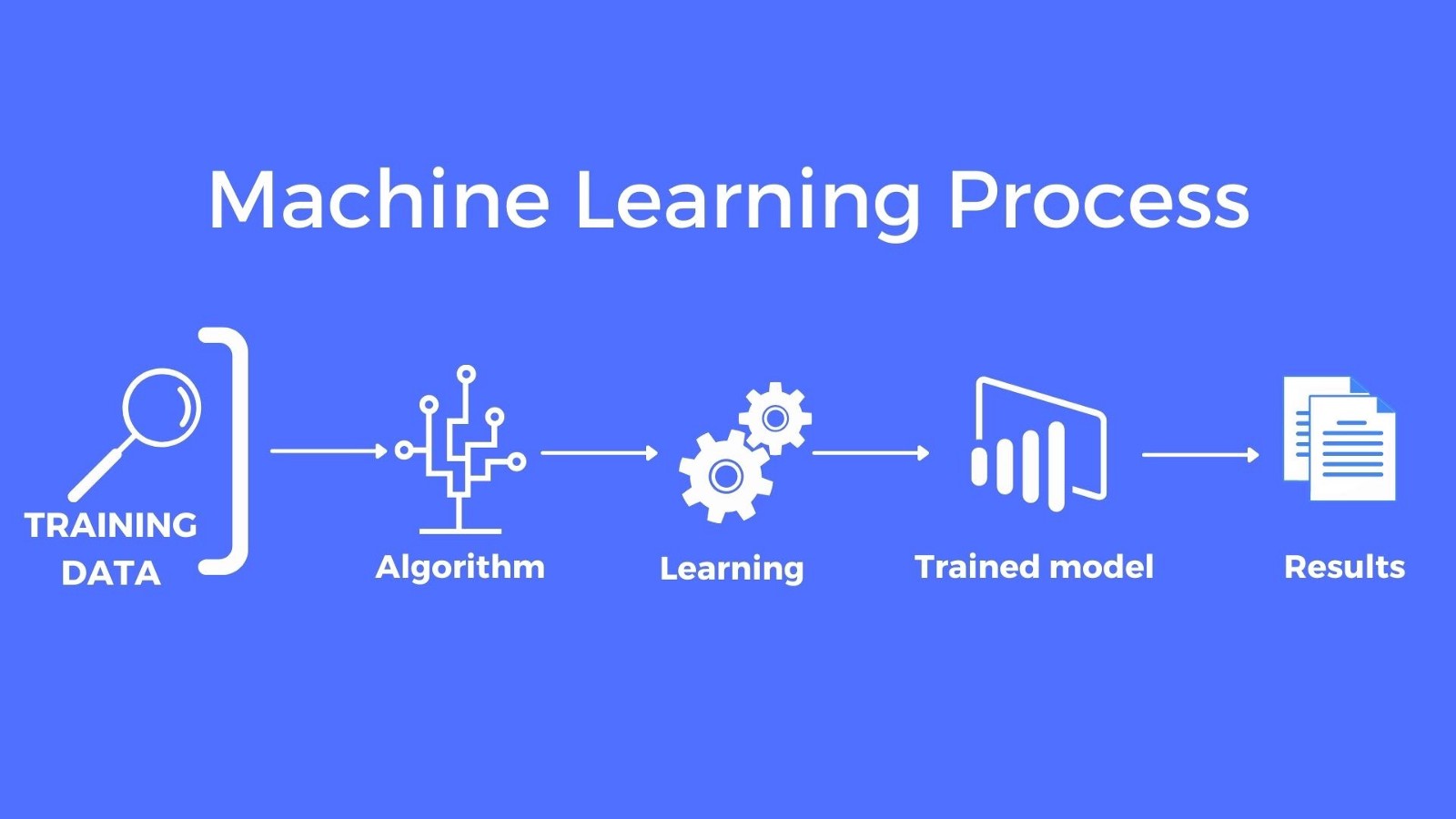
Before we dive into the technical differences between supervised and unsupervised learning, it is essential to understand what Machine Learning actually means. At its core, Machine Learning is a subset of Artificial Intelligence that enables systems to learn and improve from experience without being explicitly programmed. Instead of following rigid, predefined instructions, ML algorithms build mathematical models based on training data to make predictions or decisions.
Think of it this way: traditional programming is like giving someone a detailed recipe to bake a cake. Machine Learning, however, is like showing that person a thousand pictures of cakes, letting them figure out the patterns, and then trusting them to bake a perfect cake on their own.
At Techcadd in Mohali, we believe that mastering these concepts is the gateway to landing dream jobs in IT hubs like Chandigarh, Bengaluru, and Pune. The demand for professionals who understand ML algorithms comparison is skyrocketing, and companies are willing to pay premium salaries to those who can apply these techniques effectively.
Supervised Learning: Learning with a Teacher
Supervised Learning is the most common and commercially successful type of Machine Learning. The name itself gives away the core idea: the algorithm learns under supervision, much like a student learning with a teacher guiding them every step of the way.
How Does It Work?
In supervised learning, you provide the algorithm with a labeled dataset. This means that for every input example, you also provide the correct output. The algorithm's job is to find a mapping function that can accurately predict the output for new, unseen inputs.
For instance, imagine you want to build a system that predicts house prices in Mohali. You would feed the algorithm data that includes features like square footage, number of bedrooms, location (Sector 70, Phase 11, etc.), and age of the property. Crucially, you would also provide the actual selling price for each house. The algorithm learns the relationship between these features and the price, creating a model that can then predict the price of a new house based on its features.
Key Characteristics of Supervised Learning
-
Labeled Data: The training dataset contains both inputs and desired outputs.
-
Feedback Loop: The algorithm receives continuous feedback on its performance. If it predicts a price of ₹50 lakhs but the actual price was ₹55 lakhs, it adjusts its internal parameters to reduce that error.
-
Clear Goal: The objective is well-defined—either predict a continuous value (regression) or classify data into categories (classification).
Real-World Applications You See Every Day
Supervised learning powers many of the technologies we take for granted today. When Gmail automatically filters emails into Primary, Social, and Promotions tabs, that is supervised learning in action. The algorithm has been trained on millions of emails labeled by users, learning to classify new emails accordingly.
In the healthcare sector, supervised learning models analyze medical images to detect tumors or fractures. The model is trained on thousands of X-rays that have been carefully labeled by radiologists as "tumor present" or "tumor absent." After training, it can assist doctors by flagging potentially problematic scans for closer review.
For students at Techcadd looking to build careers in Mohali's growing tech scene, supervised learning skills are particularly valuable. Local companies in the Chandigarh tricity area are increasingly looking for professionals who can build recommendation systems, customer churn prediction models, and credit scoring algorithms—all classic supervised learning applications.
Types of Supervised Learning: Regression vs Classification
When we talk about ML algorithms comparison within the supervised learning umbrella, we must understand its two main categories: Regression and Classification. Each serves a different purpose and requires different evaluation metrics.
Regression Algorithms
Regression algorithms are used when the output variable is a continuous numerical value. In simpler terms, if your answer is a number that can theoretically take any value within a range, you are dealing with a regression problem.
Common Regression Algorithms:
-
Linear Regression: The simplest form, assuming a linear relationship between inputs and output. Perfect for beginners at Techcadd to understand the basics.
-
Decision Trees and Random Forests: These can capture non-linear relationships and are widely used in real-world scenarios.
-
Neural Networks: For complex regression tasks involving images or text.
Local Example: A startup in Chandigarh's IT park wants to forecast electricity consumption for the next month based on historical weather data and previous usage patterns. This is a regression problem where the output (electricity units) is a continuous value.
Classification Algorithms
Classification algorithms are used when the output variable is a category. The algorithm learns to assign new inputs to one of several predefined classes.
Common Classification Algorithms:
-
Logistic Regression: Despite the name, it is used for binary classification problems (yes/no, spam/not spam).
-
Support Vector Machines (SVM): Effective in high-dimensional spaces, commonly used for text classification.
-
K-Nearest Neighbors (KNN): A simple, intuitive algorithm that classifies based on the majority class of nearby data points.
-
Naive Bayes: Particularly popular for spam detection and sentiment analysis.
Local Example: An e-commerce company based in Mohali wants to classify customer reviews as positive, negative, or neutral. This is a text classification problem where algorithms analyze the language used in reviews to assign the appropriate sentiment category.
Unsupervised Learning: Finding Hidden Treasure
Now, let us shift our attention to Unsupervised Learning. If supervised learning is learning with a teacher, unsupervised learning is like giving a child a pile of puzzle pieces with no picture on the box. The child must figure out the patterns, group similar pieces, and understand the structure without any external guidance.
How Does It Work?
In unsupervised learning, the algorithm works on unlabeled data. There is no teacher providing the correct answers. Instead, the algorithm must discover hidden patterns, structures, or relationships within the data on its own. The goal is to explore the data and find some intrinsic structure.
Key Characteristics of Unsupervised Learning
-
Unlabeled Data: The training dataset contains only input data with no corresponding output labels.
-
No Feedback Loop: The algorithm does not receive any error signal or reward; it must self-organize.
-
Exploratory Goal: The objective is to find hidden patterns, groupings, or anomalies that humans might miss.
Real-World Applications Transforming Industries
Unsupervised learning is particularly powerful when you have massive amounts of unlabeled data and want to discover insights without manual effort.
In the marketing world, companies use unsupervised learning for customer segmentation. An e-commerce platform can analyze purchase history, browsing behavior, and demographic data to automatically group customers into segments like "budget-conscious students," "luxury shoppers," or "frequent returners." Each segment can then receive targeted marketing campaigns.
Netflix and Amazon use unsupervised learning for their recommendation engines. By analyzing viewing patterns and purchase histories, these algorithms find hidden similarities between users and items, suggesting content you might like based on what similar users enjoyed.
For students at Techcadd aiming to work in Mohali's analytics firms, understanding unsupervised learning opens doors to roles in market basket analysis, anomaly detection in banking transactions, and even genetic clustering in bioinformatics.
Types of Unsupervised Learning: Clustering vs Association
To complete our ML types overview, we need to explore the two primary categories of unsupervised learning: Clustering and Association. Each serves a distinct purpose in the data scientist's toolkit.
Clustering Algorithms
Clustering is the most common unsupervised learning technique. The algorithm automatically groups similar data points together based on their features. Data points within the same cluster are more similar to each other than to those in other clusters.
Common Clustering Algorithms:
-
K-Means Clustering: The most popular and intuitive algorithm. You specify the number of clusters (K), and the algorithm partitions data into K groups based on similarity. At Techcadd, we ensure students understand the mathematics behind K-Means through hands-on projects.
-
Hierarchical Clustering: Builds a tree of clusters, allowing you to see relationships at different levels of granularity. Perfect for understanding biological taxonomies or organizational structures.
-
DBSCAN (Density-Based Spatial Clustering): Excellent for finding arbitrarily shaped clusters and identifying outliers or noise in the data.
Local Example: A telecom company operating in Punjab wants to understand its customer base better. Using clustering algorithms on call detail records, data usage patterns, and recharge history, they discover distinct customer segments: heavy data users who stream videos, traditional users who prefer voice calls, and budget-conscious users who only recharge with small amounts. This insight allows them to create targeted tariff plans for each segment.
Association Rule Learning
Association rule learning discovers interesting relationships or patterns in large datasets. It answers questions like "Customers who bought X also bought Y." This is the technology behind the famous "people who bought this also bought" recommendations on e-commerce sites.
Common Association Algorithms:
-
Apriori Algorithm: The classic algorithm for mining frequent itemsets and generating association rules. It operates on the principle that if an itemset is frequent, all its subsets must also be frequent.
-
FP-Growth (Frequent Pattern Growth): A more efficient alternative that builds a compact tree structure to mine patterns without generating candidate itemsets.
Local Example: A supermarket chain in Mohali analyzes their transaction data and discovers a strong association between the purchase of diapers and beer on Friday evenings. Further investigation reveals that young fathers, tasked with buying diapers on their way home from work, often pick up beer for the weekend. The supermarket can now place these items closer together or create combo offers to increase sales.
ML Algorithms Comparison: Supervised vs Unsupervised at a Glance
Now that we have explored both paradigms in depth, let us directly compare them to solidify your understanding. This ML algorithms comparison will help you choose the right approach for any problem you encounter in your career.
| Aspect | Supervised Learning | Unsupervised Learning |
|---|---|---|
| Data | Requires labeled data with input-output pairs | Works with unlabeled data only |
| Goal | Predict outcomes or classify new instances | Discover hidden patterns and groupings |
| Feedback | Continuous feedback based on prediction accuracy | No feedback; algorithm self-organizes |
| Complexity | Generally simpler to evaluate (accuracy, precision, recall) | Harder to evaluate; requires domain expertise |
| Common Algorithms | Linear Regression, Logistic Regression, Decision Trees, SVM, Neural Networks | K-Means, Hierarchical Clustering, DBSCAN, Apriori, PCA |
| Use Cases | Spam detection, price prediction, image classification, disease diagnosis | Customer segmentation, market basket analysis, anomaly detection, genetic clustering |
| Human Effort | Requires significant manual labeling effort | Minimal human intervention; automated pattern discovery |
| Interpretability | Models are often easier to interpret (especially simpler ones) | Results can be harder to explain and validate |
When to Use Which?
At Techcadd in Mohali, we teach students a simple rule of thumb: if you have labeled data and a clear prediction goal, start with supervised learning. If you have unlabeled data and want to explore hidden patterns, unsupervised learning is your friend.
However, real-world projects often combine both. You might use unsupervised learning to discover natural customer segments and then build supervised learning models to predict which segment a new customer belongs to. This hybrid approach is common in advanced analytics roles across Chandigarh's growing tech ecosystem.
Semi-Supervised Learning: The Best of Both Worlds
Before we conclude our ML types overview, it is worth mentioning a third category that bridges the gap between supervised and unsupervised learning: Semi-Supervised Learning. This approach has gained tremendous popularity in recent years, especially in industries where labeling data is expensive but unlabeled data is abundant.
How Does It Work?
Semi-supervised learning combines a small amount of labeled data with a large amount of unlabeled data during training. The algorithm first learns patterns from the limited labeled data and then uses those patterns to pseudo-label the unlabeled data. This expanded dataset is then used to train a more robust model.
Why Is It Important?
Consider a scenario where a hospital in Chandigarh wants to build a model to detect rare diseases from medical images. Labeling these images requires expert radiologists and is extremely time-consuming and expensive. However, the hospital has thousands of unlabeled images sitting in their archives. Semi-supervised learning allows them to use a small set of expertly labeled images alongside the large pool of unlabeled images to build an accurate model at a fraction of the cost.
Real-World Applications
-
Web Content Classification: Google uses semi-supervised learning to classify billions of web pages. Only a small fraction are manually labeled; the rest are classified based on patterns learned from the labeled set.
-
Speech Recognition: Virtual assistants like Siri and Alexa continuously improve using semi-supervised learning, combining limited transcribed conversations with massive amounts of unlabeled voice data.
-
Protein Sequence Classification: In bioinformatics, labeling protein sequences requires expensive laboratory experiments, but unlabeled sequence data is abundant in public databases.
At Techcadd, we ensure our students understand that modern machine learning is not about rigidly choosing one paradigm over another. The most valuable data scientists know how to combine techniques creatively to solve real business problems.
Choosing Your Path: Career Opportunities in Mohali and Beyond
Now that you have a comprehensive understanding of supervised vs unsupervised learning and ML algorithms comparison, you might be wondering: what does this mean for my career? The answer is: plenty.
Job Roles That Demand These Skills
-
Machine Learning Engineer: Focuses on building and deploying ML models. Requires deep understanding of both supervised and unsupervised algorithms.
-
Data Scientist: Analyzes complex data to drive business decisions. Must know when to apply regression vs clustering, classification vs association.
-
AI Research Scientist: Pushes the boundaries of what is possible with ML. Often works on novel combinations of supervised and unsupervised techniques.
-
Business Intelligence Analyst: Uses ML to generate insights for stakeholders. Unsupervised learning is particularly valuable for discovering hidden patterns.
-
Computer Vision Engineer: Works with image and video data. Requires expertise in supervised learning for object detection and unsupervised learning for image segmentation.
Why Mohali Is the Perfect Launchpad
Mohali, along with the broader Chandigarh tricity area, has emerged as a significant IT hub in North India. The presence of the Chandigarh IT Park, Phase 8-B Industrial Area, and numerous startup incubators has created a thriving ecosystem for tech professionals.
Companies in this region are actively hiring ML talent for:
-
Fintech: Building credit scoring models and fraud detection systems
-
Healthcare Analytics: Developing predictive models for patient outcomes
-
E-commerce: Creating recommendation engines and customer segmentation tools
-
Agriculture Tech: Applying ML to optimize crop yields for Punjab's farmers
Your Journey Starts at Techcadd
At Techcadd, we do not just teach theory. Our comprehensive curriculum ensures you get hands-on experience with real datasets, industry-standard tools like Python, Scikit-learn, and TensorFlow, and personalized mentorship from experienced professionals.
Whether you are a 12th-pass student exploring your options or a working professional looking to upskill, our courses are designed to take you from beginner to job-ready. We understand the local job market in Mohali and Chandigarh and tailor our training to meet the specific needs of employers in this region.
The world of Machine Learning is vast and exciting. By mastering the fundamentals of supervised and unsupervised learning, you are taking the first step toward a rewarding career in one of the most dynamic fields of the 21st century. And with Techcadd by your side in Mohali, you have the perfect partner for this journey.
Why Techcadd is Mohali's Premier Destination for Machine Learning Training
Choosing the right training institute is arguably the most critical decision in your learning journey. With countless options available in Mohali and the Chandigarh tricity area, you deserve a partner who genuinely cares about your success, not just your fees. At Techcadd, we have built our reputation on exactly that principle.
Our Legacy of Excellence in Mohali
For years, Techcadd has stood as a beacon of quality technical education in Mohali. We are not just another coaching center that opened yesterday. Our longevity in this competitive market speaks volumes about our commitment to student success and the trust the local community places in us.
When you walk through our doors in Mohali, you are not just enrolling in a course. You are joining a family of learners, alumni, and industry professionals who support each other at every step. Our students come from all across Punjab—from Ludhiana, Jalandhar, Amritsar, and Patiala—specifically to experience the Techcadd advantage.
Industry-Aligned Curriculum That Works
The biggest complaint we hear from employers in Chandigarh's IT Park is that fresh graduates are not job-ready. They know the theory but cannot apply it to real business problems. At Techcadd, we have solved this problem through our carefully designed curriculum.
Our Machine Learning course, which covers comprehensive supervised vs unsupervised learning concepts, ML algorithms comparison, and detailed ML types overview, is not based on outdated textbooks. Instead, it is developed in consultation with industry experts currently working at leading companies in Mohali, Chandigarh, and beyond.
What Makes Our Curriculum Different:
-
Project-Based Learning: You do not just learn definitions. You build working ML models from day one. By the end of the course, you will have a portfolio of at least 5 real-world projects to showcase to employers.
-
Current Tools and Technologies: We teach the latest versions of Python, Scikit-learn, TensorFlow, and Keras. No obsolete software here.
-
Local Context Examples: Our case studies use data relevant to the Punjab region—agriculture patterns, local e-commerce trends, Punjabi language processing, and more.
-
Regular Updates: The ML field evolves rapidly. We update our curriculum every six months to ensure you learn what the industry actually uses today.
Faculty Who Have Been There, Done That
Theory is easy to teach. Real-world experience is not. At Techcadd, our faculty members are not just academics who have read books about machine learning. They are practitioners who have built and deployed ML systems in production environments.


Comments
No comments yet. Be the first to comment.
Leave a Comment