

The Ultimate Guide: Career Scope of Cloud Computing with DevOps in 2026
Introduction: The Great Convergence
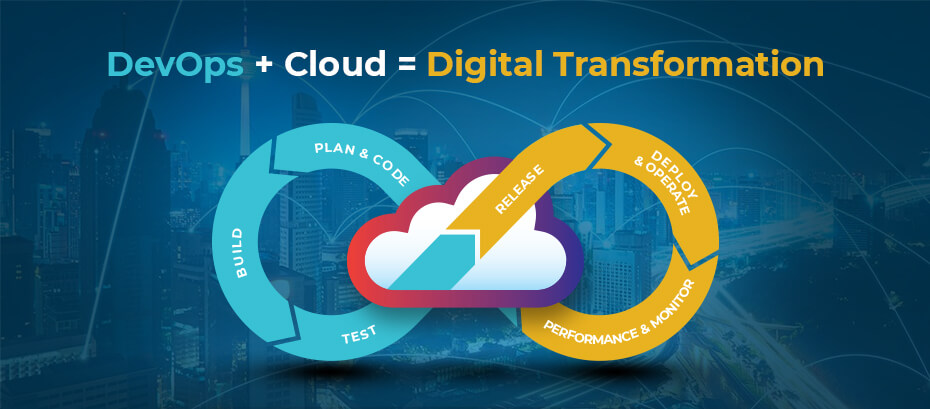
In the early 2020s, Cloud Computing and DevOps were often discussed as two separate departments. One provided the infrastructure (the "where"), and the other provided the methodology (the "how"). However, as we move through 2026, that distinction has effectively vanished.
Today, we live in the era of Cloud-Native DevOps. You cannot be a modern Cloud Architect without understanding CI/CD, and you cannot be a DevOps Engineer without mastering hyperscale cloud providers like AWS, Azure, or Google Cloud. This convergence has created one of the most lucrative and stable career paths in the global tech economy.
1. Why the Demand is Skyrocketing in 2026
The global shift toward digital-first business models is no longer a "trend"—it is a survival requirement. Several factors are driving the massive demand for Cloud-DevOps professionals:
A. The Proliferation of Multi-Cloud Strategies
Most enterprises have moved away from being locked into a single vendor. They now use a mix of AWS for computing, Azure for enterprise integration, and GCP for data analytics. This complexity requires experts who can manage cross-platform deployments using tools like Terraform and OpenTofu.
B. The Rise of Platform Engineering
In 2026, the industry has shifted from "doing DevOps" to "Platform Engineering." Companies are building Internal Developer Platforms (IDPs) to reduce cognitive load on developers. This has opened a new niche for Cloud-DevOps engineers to act as "Product Managers" for internal infrastructure.
C. Edge Computing and 5G Integration
With the maturity of 5G, data processing is moving closer to the user (the Edge). Managing thousands of micro-data centers requires the automated, "hands-off" approach that only DevOps-trained cloud specialists can provide.
2. Core Pillars of a Cloud-DevOps Career
To understand the scope, one must understand the pillars that support this career path:
Pillar 1: Infrastructure as Code (IaC)
The days of manually clicking through a console to launch a server are over. In 2026, infrastructure is written in code. Professionals must be proficient in:
-
Terraform/HCL: The industry standard for provisioning.
-
Ansible/Chef: For configuration management.
-
Pulumi: For those who prefer using general-purpose languages like Python or TypeScript for infra.
Pillar 2: Containerization and Orchestration
Kubernetes (K8s) has become the "Operating System of the Cloud." Whether you are working on a small startup or a Fortune 500 company, knowing how to manage clusters, handle scaling, and ensure service discovery via Kubernetes is the baseline for a high-paying role.
Pillar 3: Continuous Integration & Continuous Deployment (CI/CD)
The heartbeat of DevOps. In 2026, the focus has shifted toward GitOps. Tools like Argocd and Flux ensure that the state of your cloud environment always matches what is in your Git repository, providing unmatched security and auditability.
3. High-Paying Job Roles in 2026
The "Cloud Computing with DevOps" umbrella covers several distinct, high-impact roles:
| Role | Primary Focus | Avg. Salary Range (Global) |
| Cloud DevOps Engineer | Automating deployment pipelines and managing cloud resources. | $110k - $160k |
| Site Reliability Engineer (SRE) | Using software engineering to solve operations/reliability problems. | $130k - $190k |
| DevSecOps Architect | Injecting security protocols into the automated CI/CD pipeline. | $140k - $200k+ |
| Platform Engineer | Building the internal tools that other developers use to ship code. | $125k - $180k |
| AIOps Specialist | Using AI/ML models to predict and fix infrastructure failures. | $150k - $210k |
4. The Impact of Artificial Intelligence (AIOps)
One cannot discuss the career scope in 2026 without mentioning AI. While some feared AI would replace engineers, it has actually acted as a force multiplier.
-
Self-Healing Infrastructure: AI now monitors cloud logs in real-time and can automatically trigger DevOps scripts to scale up or roll back a buggy deployment before a human even notices the error.
-
Coding Assistants: Tools like GitHub Copilot have evolved to help write complex YAML files and Terraform scripts, allowing engineers to focus on high-level architecture rather than syntax.
-
Predictive Scaling: Instead of waiting for traffic to spike, AI models predict load based on historical patterns, optimizing cloud costs and performance.
5. Regional Scope: The Indian and Global Context
For students and professionals in regions like Mohali, Chandigarh, or Bangalore, the scope is particularly bright. India has evolved from a "back-office" hub to a "Product Engineering" powerhouse.
-
Remote Work Flexibility: Cloud-DevOps is one of the most "remote-friendly" niches. Many engineers based in India are working for North American or European firms, earning competitive global salaries.
-
The Startup Boom: As more Indian startups go global, they require robust cloud architectures from Day 1, fueling local demand for certified AWS and Azure professionals.
6. How to Future-Proof Your Career (A 2026 Roadmap)
If you are starting today, here is the roadmap to reaching a senior level within 18–24 months:
-
Master a Linux Environment: Everything in the cloud runs on Linux. Learn the terminal, shell scripting, and security basics.
-
Pick One Major Provider: Don't be a "jack of all trades" immediately. Get certified in AWS (Solutions Architect) or Azure (AZ-400) first.
-
Learn a Programming Language: Python and Go (Golang) are the winners here. You don't need to build apps, but you must be able to write scripts to automate tasks.
-
Embrace Networking & Security: Understand VPCs, Subnets, DNS, and IAM (Identity and Access Management). Security is no longer an afterthought; it’s a prerequisite.
-
Soft Skills Matter: DevOps is a culture of collaboration. Being able to communicate between the "Dev" (developers) and "Ops" (operations) is what separates a good engineer from a great one.
7. The New Frontiers: FinOps, GreenOps, and DevSecOps
By 2026, a Cloud-DevOps professional isn't just an "automation engineer"; they are a cost-optimizer and a security architect.
A. FinOps: The Era of Cloud Financial Management
In 2026, organizations are no longer just asking "How do we scale?" but "How much did that scale cost?"
-
The Trend: 98% of practitioners now manage AI-specific spend.
-
The Role: Cloud FinOps Analysts act as translators between the engineering team and the CFO.
-
The Impact: Professionals who can use AI to predict "cloud waste" and implement automated right-sizing are commanding 20–30% higher salaries.
B. GreenOps: Sustainability as a KPI
With data centers contributing significantly to global energy consumption, Green Cloud Computing has become a corporate mandate.
-
What you'll do: Choose cloud regions based on carbon intensity and optimize workloads to run during "off-peak" green energy hours.
-
Career Edge: "Sustainability-focused Cloud Architects" are being hired by Fortune 500 companies to meet ESG (Environmental, Social, and Governance) goals.
C. DevSecOps: Security is the Perimeter
The traditional firewall is dead. In 2026, Zero Trust Architecture is the baseline.
-
Shift-Left Security: Over 80% of businesses now integrate security scans directly into the developer's IDE.
-
The Goal: To ensure that any code reaching production has already passed through an automated "security gauntlet" of vulnerability scanners and compliance checks.
8. The 2026 Tools Landscape: What to Learn First
To succeed this year, you must master the "Essential 10" toolset. These are the tools that dominate current job descriptions in the Indian and Global markets:
-
Git: The absolute foundation for Version Control and GitOps.
-
Docker & Podman: For creating immutable application environments.
-
Kubernetes (K8s): The "Heart" of 2026 infrastructure. Mastery of EKS (AWS), AKS (Azure), or GKE (Google) is non-negotiable.
-
Terraform & OpenTofu: For managing Multi-Cloud Infrastructure as Code.
-
GitHub Actions / GitLab CI: The current leaders in CI/CD automation.
-
Ansible: The go-to for agentless configuration management.
-
Prometheus & Grafana: Essential for real-time observability and 2.0 monitoring.
-
AWS/Azure/GCP: Deep specialization in at least one hyperscaler.
-
ArgoCD: The leading tool for implementing GitOps in Kubernetes.
-
AIOps Platforms (e.g., Dynatrace/Datadog): For predictive incident management.
9. Salary Trends and Market Reality (2026 Focus)
The career scope is heavily reflected in the compensation packages. Based on current 2026 data:
In India (Tier-1 Cities like Bangalore, Hyderabad, Pune):
-
Entry Level (0-2 years): ₹6 - ₹12 LPA.
-
Mid-Level (3-7 years): ₹15 - ₹35 LPA.
-
Senior/Architect (8+ years): ₹40 - ₹80+ LPA.
Specialization Premiums:
-
Multi-cloud expertise: Adds +15-25% to base pay.
-
AI/ML Infrastructure (MLOps): Adds +30-45% to base pay.
-
FinOps & Cost Optimization: Adds +20% to base pay.
10. Industry-Specific Scope: Where are the Jobs?
Cloud and DevOps have penetrated every sector. Here is where you should look for opportunities:
-
FinTech & Banking: Migrating legacy systems to "Cloud-Native" for security and speed.
-
HealthTech: Using the cloud to process massive genomic data and patient records securely.
-
E-commerce: Handling massive traffic spikes (like Black Friday or Diwali sales) through automated autoscaling.
-
AutoTech (Self-driving): Utilizing Edge Computing to process data in real-time within the vehicle.
11. Final Word: Is Cloud-DevOps Still Worth It?
The Verdict: Yes. By 2026, Cloud Computing is projected to account for 8% of India's GDP. The skills gap is still massive, meaning the demand far outweighs the supply of qualified engineers.
If you can bridge the gap between "writing code" and "running code at scale," you are not just getting a job—you are becoming the engine of the modern economy.
Key Takeaways for your Readers:
-
Don't just learn tools, learn the "Why": Understanding the culture of DevOps is more important than knowing every Jenkins plugin.
-
Get Certified: In 2026, certifications in AWS or Kubernetes (CKA) still act as the "gold pass" for getting past HR filters.
-
Build a Portfolio: Use GitHub to showcase your Terraform scripts and Kubernetes manifests.
Conclusion: Embracing the Cloud-First Future
As we navigate through 2026, it is evident that the synergy between Cloud Computing and DevOps has evolved from a technical advantage to a fundamental business necessity. The career scope in this domain is no longer just about managing servers or writing deployment scripts; it is about architecting the digital backbone of the global economy. Whether it is through the lens of AIOps, the fiscal responsibility of FinOps, or the environmental stewardship of GreenOps, the role of the Cloud-DevOps professional has become multifaceted, strategic, and indispensable.
The transition from traditional IT roles to integrated Cloud-DevOps positions offers a trajectory of unparalleled growth. With the cloud market projected to expand into every niche—from autonomous vehicles to personalized healthcare—the demand for skilled practitioners who can bridge the gap between development and operations remains at an all-time high. For those starting today, the path is clear: mastery of automation, a commitment to continuous learning, and an adaptable mindset are the keys to long-term success.
However, the true value of a career in this field lies in its resilience. While other tech roles may fluctuate with market trends, the infrastructure that powers our world is non-negotiable. By positioning yourself at the intersection of Cloud and DevOps, you are not merely chasing a high salary; you are securing a front-row seat to the future of innovation. The "power couple" of the tech world is here to stay, and for the prepared professional, the horizon is limitless. As you move forward, remember that the tools will change, but the principles of efficiency, reliability, and speed will always be the currency of the digital age.


Comments
No comments yet. Be the first to comment.
Leave a Comment