

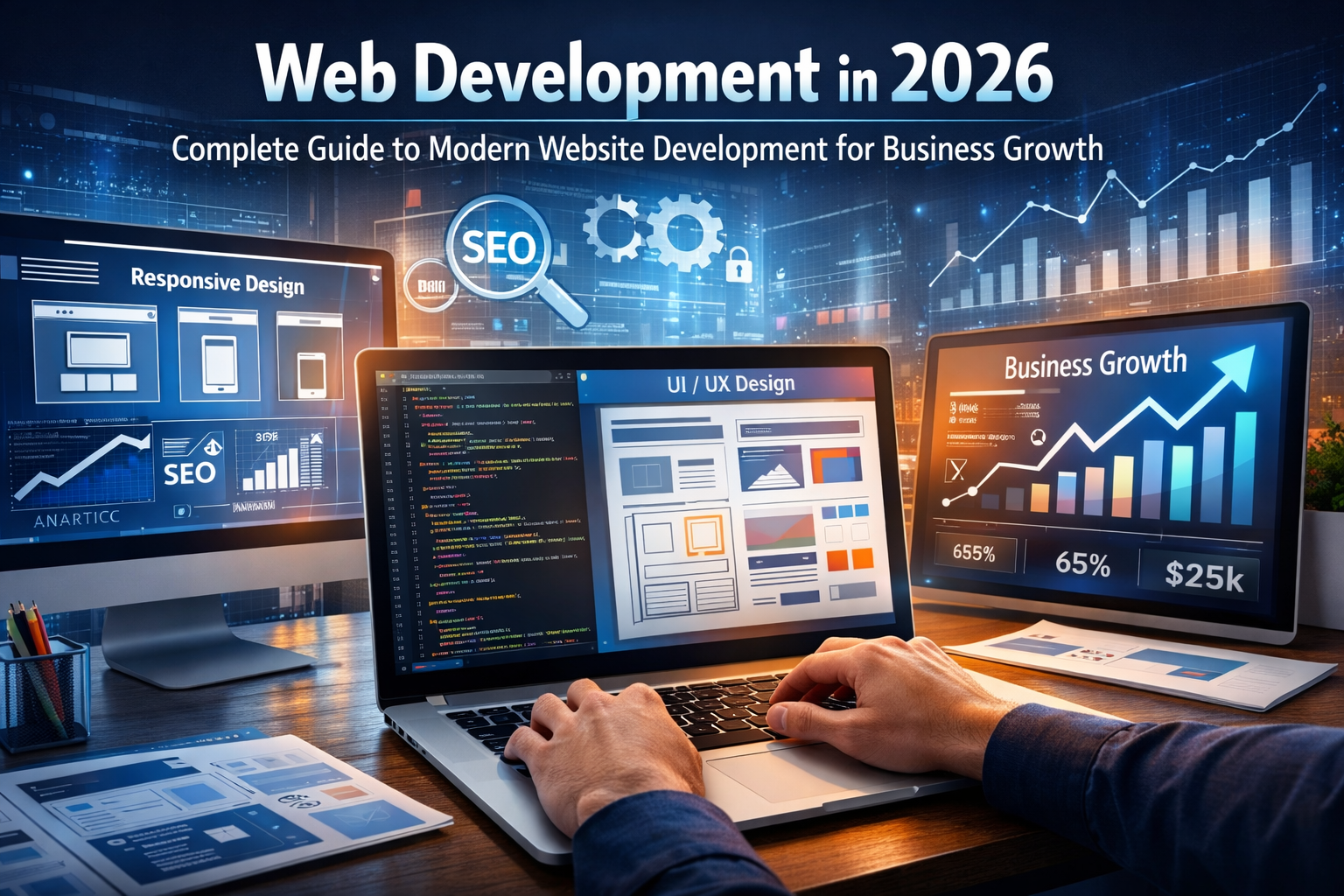
Web Development in 2026: Complete Guide to Modern Website Development for Business Growth
In today’s digital-first economy, web development is no longer just about building a website — it’s about creating high-performing, secure, scalable, and SEO-optimized digital experiences that directly impact business revenue. Whether you are a startup, small business, or enterprise brand, investing in professional website development is one of the most powerful decisions you can make for long-term growth.
A modern website acts as your 24/7 sales representative. It builds trust, generates leads, nurtures prospects, and converts visitors into paying customers. In this comprehensive guide, you’ll learn everything about modern web development, trending technologies, technical strategies, and how to build a high-ranking website that dominates search engines in 2026.
What is Web Development?
Web development refers to the complete process of designing, building, launching, and maintaining websites or web applications. It includes both the visible user interface and the invisible server-side infrastructure that powers functionality.
In simple terms, website development consists of:
-
Designing the structure and layout
-
Coding front-end interfaces
-
Developing server-side logic
-
Managing databases
-
Ensuring website security
-
Optimizing for performance and SEO
There are three main types of web development services businesses rely on.
1. Front-End Development
Front-end development focuses on what users see and interact with. It plays a crucial role in user experience (UX) and user interface (UI) design.
Key front-end technologies include:
-
HTML5 – Structure of the website
-
CSS3 – Styling and layout
-
JavaScript – Interactive functionality
-
React.js – Component-based UI library
-
Vue.js – Lightweight progressive framework
A professionally built responsive web design ensures your website adapts perfectly across desktops, tablets, and smartphones. Since Google uses mobile-first indexing, having a mobile-friendly website is essential for ranking.
A clean and engaging front-end increases:
-
Session duration
-
Lower bounce rate
-
Higher conversion rate
-
Better search rankings
2. Back-End Development
Back-end development handles server-side operations that users don’t see but rely on. It ensures that forms work, data is stored correctly, and dynamic content loads properly.
Core back-end components include:
-
Server-side programming
-
Database management
-
API integrations
-
Authentication systems
-
Website security implementation
Popular back-end technologies:
-
Node.js
-
PHP
-
Python
-
Laravel
-
Django
A strong back-end ensures your website is fast, secure, and scalable — especially important for eCommerce website development and enterprise platforms.
3. Full-Stack Development
A full-stack developer manages both front-end and back-end systems. Many businesses prefer full-stack web development services because they:
-
Reduce development time
-
Improve system compatibility
-
Lower overall cost
-
Speed up deployment
For startups and growing companies, full-stack website development provides flexibility and efficiency.
Why Web Development is Critical for SEO in 2026
A beautiful website means nothing if it doesn’t rank. SEO-friendly web development ensures your website is structured properly for search engines like Google.
Without technical optimization, even high-quality content will struggle to rank.
Professional SEO-focused web development ensures:
-
Fast website loading speed
-
Clean and optimized URL structure
-
Proper heading hierarchy (H1–H6)
-
Mobile responsiveness
-
Secure HTTPS setup
-
Schema markup integration
-
Optimized core web vitals
-
XML sitemap creation
Google prioritizes websites that deliver excellent user experience, speed, and security.
Core Elements of Modern Website Development
To rank high in 2026, your website must include these essential elements.
1. Responsive Web Design
More than 70% of global web traffic comes from mobile devices. A mobile-responsive website ensures:
-
Seamless browsing experience
-
Higher engagement
-
Lower bounce rate
-
Improved SEO rankings
Responsive design is no longer optional — it’s mandatory for high-ranking web development.
2. Website Speed Optimization
Speed directly affects SEO and conversions. Studies show that users leave if a website takes more than 3 seconds to load.
Effective website performance optimization techniques include:
-
Image compression
-
Lazy loading images
-
Browser caching
-
CDN (Content Delivery Network) integration
-
Minified CSS, HTML & JavaScript
-
Server response optimization
Faster websites rank higher and convert better.
3. Secure Web Development
Security builds credibility and protects your data.
Essential website security practices include:
-
SSL certificate installation
-
HTTPS configuration
-
Firewall setup
-
Malware protection
-
Regular software updates
-
Secure login systems
Google favors secure websites in search rankings.
4. SEO Optimization & Technical Structure
Modern SEO web development integrates optimization from the start.
Important elements:
-
Optimized meta titles and descriptions
-
Structured data markup
-
Internal linking strategy
-
Canonical tags
-
Robots.txt configuration
-
Optimized images with alt tags
SEO must be integrated during development — not added later.
Latest Trends in Web Development (2026)
To stay competitive, businesses must adopt emerging technologies.
1. AI-Powered Web Development
Artificial intelligence is transforming website development services. AI tools now assist with:
-
Code generation
-
UX personalization
-
Chatbots
-
Automated testing
-
Predictive analytics
AI enhances efficiency and improves user engagement.
2. Progressive Web Apps (PWA)
Progressive Web Apps combine the best of websites and mobile apps. They offer:
-
Offline access
-
Push notifications
-
Faster load speeds
-
App-like experience
PWAs are excellent for eCommerce development and service platforms.
3. Voice Search Optimization
With smart devices growing, voice search SEO is crucial. Websites must be structured with:
-
Conversational keywords
-
FAQ schema
-
Long-tail keyword targeting
Voice-optimized websites rank better for future search trends.
4. Serverless Architecture
Serverless computing reduces infrastructure management and increases scalability. It’s ideal for startups needing scalable web development solutions.
5. Headless CMS
A headless CMS separates front-end and back-end systems, allowing greater flexibility and faster performance.
Benefits include:
-
Improved page speed
-
Multi-platform publishing
-
Better scalability
Benefits of Professional Web Development Services
Hiring experienced developers gives your business a competitive edge.
Key benefits of custom web development services:
✔ Tailored website solutions
✔ Higher search engine visibility
✔ Improved brand authority
✔ Better lead generation
✔ Enhanced user experience
✔ Long-term scalability
✔ Stronger security architecture
Professional website development companies align your website with your business goals and digital marketing strategy.
Web Development for E-Commerce Businesses
Online stores require advanced functionality. High-quality eCommerce website development must include:
-
Secure payment gateway integration
-
Shopping cart functionality
-
Product page SEO optimization
-
Inventory management systems
-
Order tracking systems
-
Conversion rate optimization (CRO)
Popular platforms for online store development include:
-
Shopify development
-
WooCommerce development
-
Custom eCommerce development
A well-developed online store improves sales and customer retention.
How to Choose the Right Web Development Company
Selecting the right web development agency can determine your online success.
Consider the following factors:
1. Portfolio & Case Studies
Review previous projects to assess quality.
2. Technical Expertise
Ensure they specialize in modern web development technologies.
3. SEO Knowledge
A strong development team must understand technical SEO.
4. Client Reviews & Testimonials
Check credibility and reliability.
5. Post-Launch Support
Websites require ongoing maintenance and updates.
Choosing the right partner ensures long-term digital growth.
Cost of Web Development in 2026
The cost of professional website development depends on:
-
Website complexity
-
Custom features
-
eCommerce integration
-
Design requirements
-
SEO implementation
-
Maintenance plans
Basic business websites are affordable, while custom enterprise platforms require higher investment. However, a well-built website delivers strong ROI through increased traffic and conversions.
Advanced Technical Web Development Strategies for Higher Rankings
To dominate competitive search results in 2026, businesses must go beyond basic website development and implement advanced technical strategies that improve crawling, indexing, and performance.
1. Core Web Vitals Optimization
Google’s ranking algorithm heavily prioritizes Core Web Vitals. These performance metrics measure real user experience:
-
Largest Contentful Paint (LCP) – Loading performance
-
First Input Delay (FID) – Interactivity
-
Cumulative Layout Shift (CLS) – Visual stability
Improving these metrics through clean coding, optimized images, and efficient server response significantly boosts technical SEO performance.
Websites that meet Core Web Vitals standards often experience:
-
Higher organic rankings
-
Increased user engagement
-
Lower bounce rates
-
Better conversion rates
2. Structured Data & Schema Markup
Implementing schema markup helps search engines better understand your website content. Structured data enhances search listings with:
-
Rich snippets
-
FAQ sections
-
Star ratings
-
Product pricing
-
Event information
Advanced SEO web development services integrate structured data during the coding phase to maximize search visibility.
Rich results improve click-through rates (CTR), which indirectly strengthens your SEO performance.
3. API-First Development Approach
Modern platforms rely on multiple integrations such as payment gateways, CRMs, marketing tools, and analytics platforms.
An API-first web development approach ensures seamless communication between:
-
Front-end interfaces
-
Back-end databases
-
Third-party services
-
Mobile applications
This improves scalability and prepares your website for future expansion.
Importance of Website Maintenance & Ongoing Optimization
Launching a website is just the beginning. Continuous website maintenance services are essential to ensure performance, security, and search rankings remain stable.
Ongoing optimization includes:
-
Software updates
-
Security patches
-
Broken link fixes
-
Performance audits
-
Content updates
-
SEO improvements
Search engines reward websites that stay updated and relevant.
Ignoring maintenance can result in:
-
Security vulnerabilities
-
Ranking drops
-
Slow performance
-
Loss of customer trust
Professional website management services help businesses maintain consistent digital growth.
Custom Web Development vs Template-Based Websites
Many businesses struggle to decide between custom-built websites and pre-made templates.
Template-Based Websites
Pros:
-
Lower upfront cost
-
Faster setup
-
Beginner-friendly
Cons:
-
Limited customization
-
Slower performance
-
Generic design
-
SEO limitations
Custom Web Development
Pros:
-
Unique brand identity
-
Optimized code structure
-
Better performance
-
Stronger SEO foundation
-
Scalable architecture
For businesses serious about growth, custom web development services provide better long-term ROI.
Local SEO & Web Development Integration
For small and medium businesses, combining local SEO optimization with strategic web development can dramatically increase local visibility.
Essential elements include:
-
Google Business Profile integration
-
Local schema markup
-
Location-specific landing pages
-
NAP (Name, Address, Phone) consistency
-
Embedded Google Maps
-
Local keyword optimization
A well-structured local business website development strategy ensures higher rankings in local search results.
Web Accessibility & Inclusive Design
Accessibility is no longer optional. Modern accessible web development ensures websites can be used by everyone, including users with disabilities.
Key accessibility practices:
-
Alt text for images
-
Keyboard navigation support
-
Proper color contrast
-
ARIA labels
-
Screen reader compatibility
Accessible websites not only expand audience reach but also improve SEO and compliance standards.
Content Management Systems (CMS) in Modern Web Development
Choosing the right content management system (CMS) is critical for long-term scalability.
Popular CMS options include:
-
WordPress for flexibility
-
Headless CMS for performance
-
Custom CMS for enterprise solutions
A properly configured CMS improves:
-
Content publishing workflow
-
SEO control
-
Security management
-
Scalability
Businesses investing in optimized CMS-based website development gain better content control and marketing agility.
Data-Driven Web Development & Analytics Integration
Successful websites rely on data insights.
Modern data-driven web development integrates tools such as:
-
Google Analytics
-
Heatmaps
-
Conversion tracking
-
CRM integration
-
Marketing automation tools
Analyzing user behavior helps businesses:
-
Improve UX design
-
Increase conversions
-
Optimize landing pages
-
Identify content gaps
Data-backed decisions lead to continuous website improvement.
Web Development for Lead Generation
For service-based businesses, the goal is often lead generation rather than direct sales.
Effective lead generation website development includes:
-
Optimized landing pages
-
Clear call-to-action buttons
-
Contact forms with minimal friction
-
Live chat integration
-
Trust-building elements
A strategically built website can become a powerful lead generation machine that consistently brings qualified prospects.
Conclusion: Building a Future-Proof Website in 2026
The digital landscape is evolving rapidly. Businesses that treat web development as a strategic investment — not just a design project — will outperform competitors in visibility, engagement, and revenue.
A successful website in 2026 must be:
-
Fast
-
Secure
-
Mobile-optimized
-
SEO-friendly
-
Scalable
-
Data-driven
From technical SEO web development to custom eCommerce solutions, every component should align with business goals and user expectations.
If your objective is sustainable growth, higher rankings, and long-term digital authority, prioritizing modern website development strategies is no longer optional — it is essential.
Web Development & Conversion Rate Optimization (CRO)
Traffic alone is not enough. Your website must convert visitors into customers.
Key conversion optimization strategies include:
-
Clear call-to-action buttons
-
Fast-loading landing pages
-
Optimized contact forms
-
Trust signals & testimonials
-
Simple navigation structure
Strategic UX-focused web development increases revenue without increasing traffic.
The Future of Web Development
The future of website development is centered around:
-
Automation
-
AI integration
-
Hyper-personalization
-
Enhanced cybersecurity
-
Faster performance standards
Businesses that invest early in modern web development strategies will outperform competitors in search rankings and customer acquisition.
Final Thoughts
In 2026, a website is not just a digital presence — it is your most valuable marketing asset. Strategic web development, strong technical SEO, optimized performance, and secure architecture are essential for online success.
A fast, responsive, secure, and scalable website improves rankings, builds trust, and increases conversions.
If your goal is to dominate search engines, generate leads, and grow revenue, investing in professional web development services is the smartest long-term strategy.
Your website is your digital foundation — build it right, optimize it properly, and scale it strategically.

Comments
No comments yet. Be the first to comment.
Leave a Comment